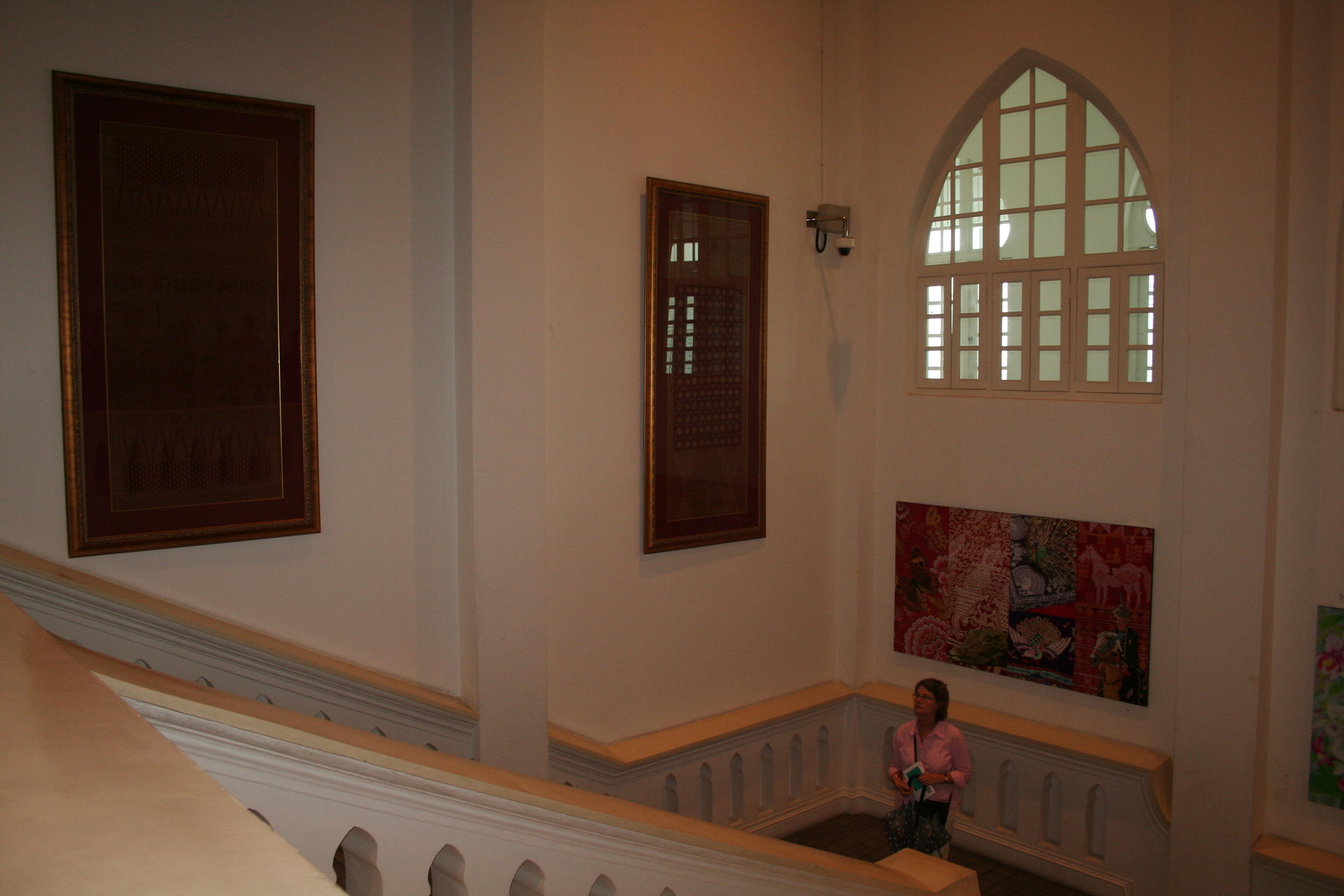
While exploring the centre of Kuala Lumpur we came across the National Textile Museum. The museum has four huge halls filled with examples of magnificent fabrics (batik, beaded, threaded with gold and silver, and many others) specific to the various ethnic groups that make up the population of Malaysia. Also on display are beaded slippers, gold and silver belts, headdresses and jewellery. It is a visual feast!There is a wonderful museum shop where pleasant Malay women will help you to find the perfect authentic garment, sarong or piece of fabric. The museum is housed in a beautiful building adjacent to Merdeka (Independence) Square, which in turn is beside the padang (field) and the Royal Selangor Club. This was the centre of British colonial life in what was then Malaya. Cricket was played on the padang and the colonials would meet at the club for tea, drinks or dinner. The Square is where Malaysia formally gained its independence from Britain. This is represented by a black marble plaque and an enormous flag on a 95-metre flagpole. All this and the array of splendid buildings that surround the Square is a good way to find out something about the history and people of Malaysia.
Sightseeing in Kuala Lumpur

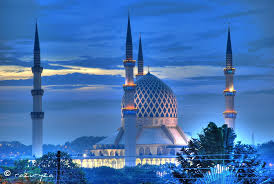
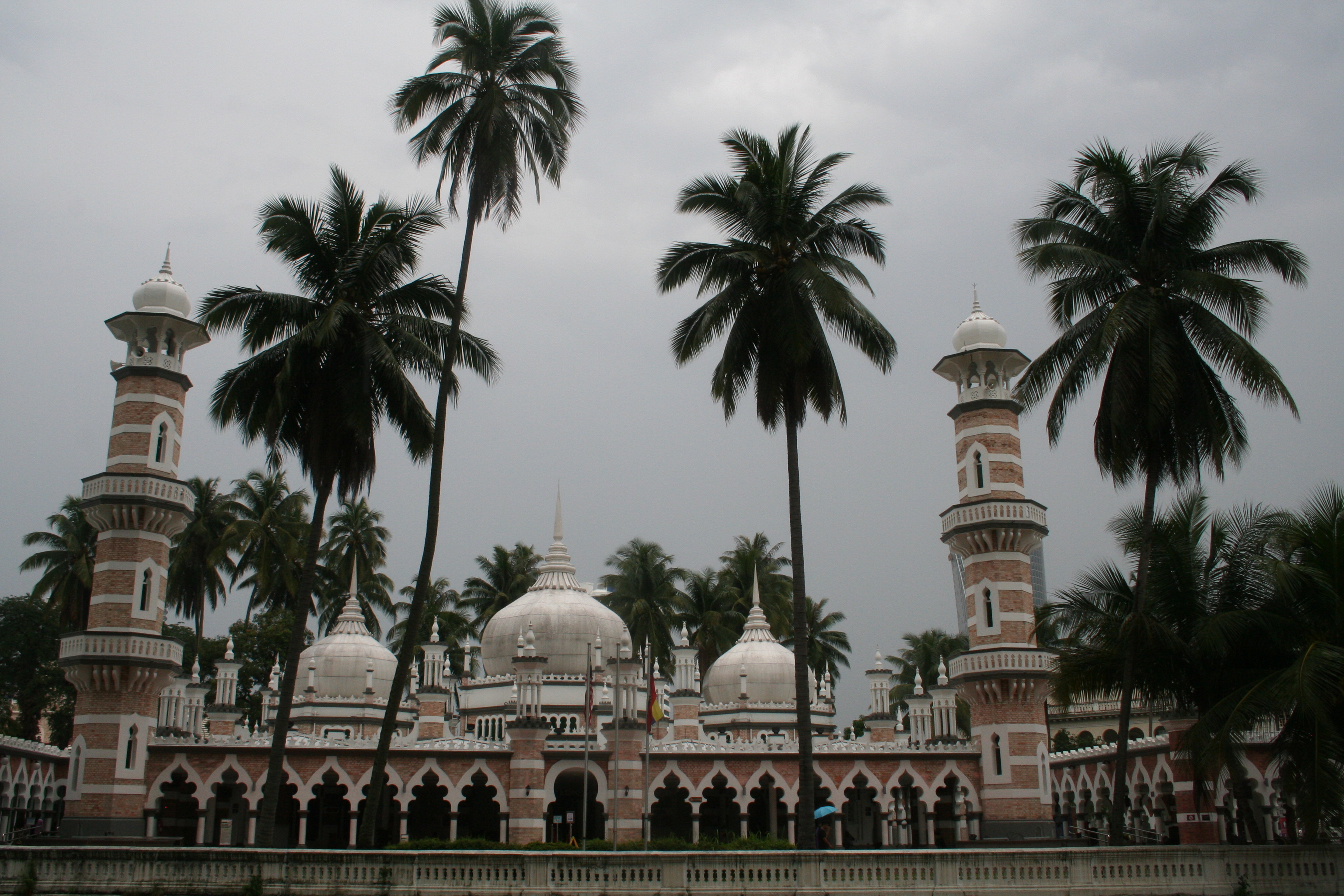
Instead of going down to Kuala Lumpur and back in a day when Jim has meetings down there, we went down last Sunday, did some exploring and spent the night, ahead of Jim going into the Shah Alam office on Monday morning. KL is a huge, bustling, bewildering city so we decided we’d find a shopping centre, park and then use public transport to get around. We drove into the frenetic Bukit Bintang area and parked in the first underground parking building we came across. On leaving the lift, we found ourselves in a hellish shopping centre, full of tiny shops and kiosks and hundreds of people, with no indication of where the exits were. All the overhead signs said “Shops” or “More shops”! We knew we were on the ground floor but, when we asked someone how to get out to the road, he said we had to go down two more levels. So “ground floor” didn’t mean we were at ground level! I have never been more thankful to leave a building. Things improved rapidly after this. We found a wonderful bakery, which also smelled of the coffee they served, and then got onto the monorail. This is an efficient, cheap way of getting around the centre of KL. From the monorail station, the sight of this beautiful mosque (see pic above) greeted us. It is the India Mosque and was built in late nineteenth century. Since only worshippers are allowed in, it was as well that we also came across St Mary’s Cathedral (see pic below), where evensong had just begun on this Easter Sunday.

Easter
Today is Good Friday but Jim is at work and I am at my desk (where I am very pleased to be editing a thesis). Easter is not officially celebrated in Peninsula Malaysia. Christians make up just over 9% of the Malaysian population and the majority live in East Malaysia, where Good Friday is a state holiday (in Sabah and Sarawak). It feels very strange for this to be a ordinary working day and underlines the fact that we are living in a Muslim country. I also feel nostalgic about the Easter holidays as that was when we went on our annual family vacation when I was a child. We usually travelled inland from the coast and had a farm-stay type holiday, which was novel for us who otherwise spent almost all our leisure hours at the beach. We would visit the nearby farm and watch the milking, tramp around the surrounding hills and play long games of football or tennis in the afternoons. It was idyllic, as was our stay last Easter in a bach on the Raglan harbour. I guess you could say I am feeling a bit homesick today!
Bukit Kledang
Last Sunday we awoke to a cooler morning – we have had a lot of rain recently (usually as part of spectacular afternoon storms accompanied by thunder and lightning) so the temperatures have been more bearable. This is relative though – it still gets up to 31-33 degrees most days, but not up to 37-40 degrees as it did during the recent dry spell. We decided to try the walk up Bukit Kledang. Bukit means hill in Malay and this particular hill is the highest at 800m of all the many hills around Ipoh. You can drive all the way to the top if you like and we can do so when you visit so that you can enjoy the view. We parked the car near a waterfall and then walked up the rest of the way. There are walkways that take you away from the road and many covered rest areas where you can take a breather on benches in the shade. The higher you get, the cooler it is and the denser the vegetation. We heard birdsong but did not actually see many birds. We also heard some reverberating calls presumably made by monkeys, although again we didn’t see them. We didn’t go all the way to the top where there is a broadcasting tower. Instead we found a beautiful spot to sit and gaze through the tall trees into the greenery beyond, having rounded the hill so the city of Ipoh was no longer visible. We made quick work of the walk down, the temperature having risen substantially. It was good to get home and stand under a cool shower!
Qingming
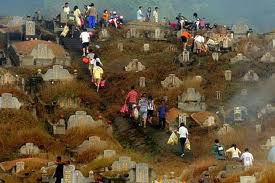
This has been observed by Chinese communities for over 2000 years. It is celebrated around 5 April because that is springtime in the northern hemisphere. It is also the time to tend to the graves of those who have gone before. Families sweep the area around the tombs and leave offerings. They may also burn joss sticks and paper replicas of the things that the ancestors need in the afterlife. We pass a large cemetery on the way from our house to the city centre and have seen large family groups cleaning up around the tombs. There is a lot of smoke from the small fires and splashes of bright colour where people are holding up umbrellas to ward off the hot Malaysian sun.
The Listener
First a disclaimer – I am not employed by Listener or the Bauer Media Group (though I wish I was!). When we decided to move to Malaysia, I bought a subscription to the Listener and decided to get it delivered to us in Ipoh, rather than opting to read the online version. How glad I am! It is wonderful to get the latest copy every week (some weeks two magazines, the next none, due to the vagaries of PosMalaysia!) and settle down to read it from cover to cover. We enjoy the Quips&Quotes, the crossword and the quizword, Jane Clifton’s column and the indepth articles. It ensures that we feel connected to life in New Zealand. More than all that though I love the Books & Culture section. To get 10+ pages of book, music and movie reviews is such a gift in this digital age.
Passports
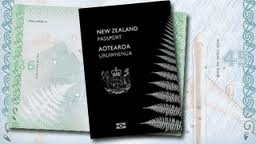
Since I made my first overseas trip at age 19, I have always had a valid passport. My reasoning is that the expense is justified by the ability to travel at a moment’s notice. The reality though is that I’ve never had to do any such thing. My travel has always been planned and looked forward to for many months. Now that we live in Malaysia and our children live in New Zealand, my passport feels like a talisman – it means that I can see the girls within half a day if I want to. Imagine then how disconcerted I felt when, last week, our passports were kept for three days by a Malaysian immigration official in order to insert our permits – a work permit for Jim and a ‘dependant’s pass’ for me – and my relief when I got my passport back yesterday. Having it back almost makes up for being called a ‘dependant’, with a ‘pass’ (ironic – some might say, poetically just – for a former white South African!) that strictly prohibits ‘any form of employment’.
Perak Tong
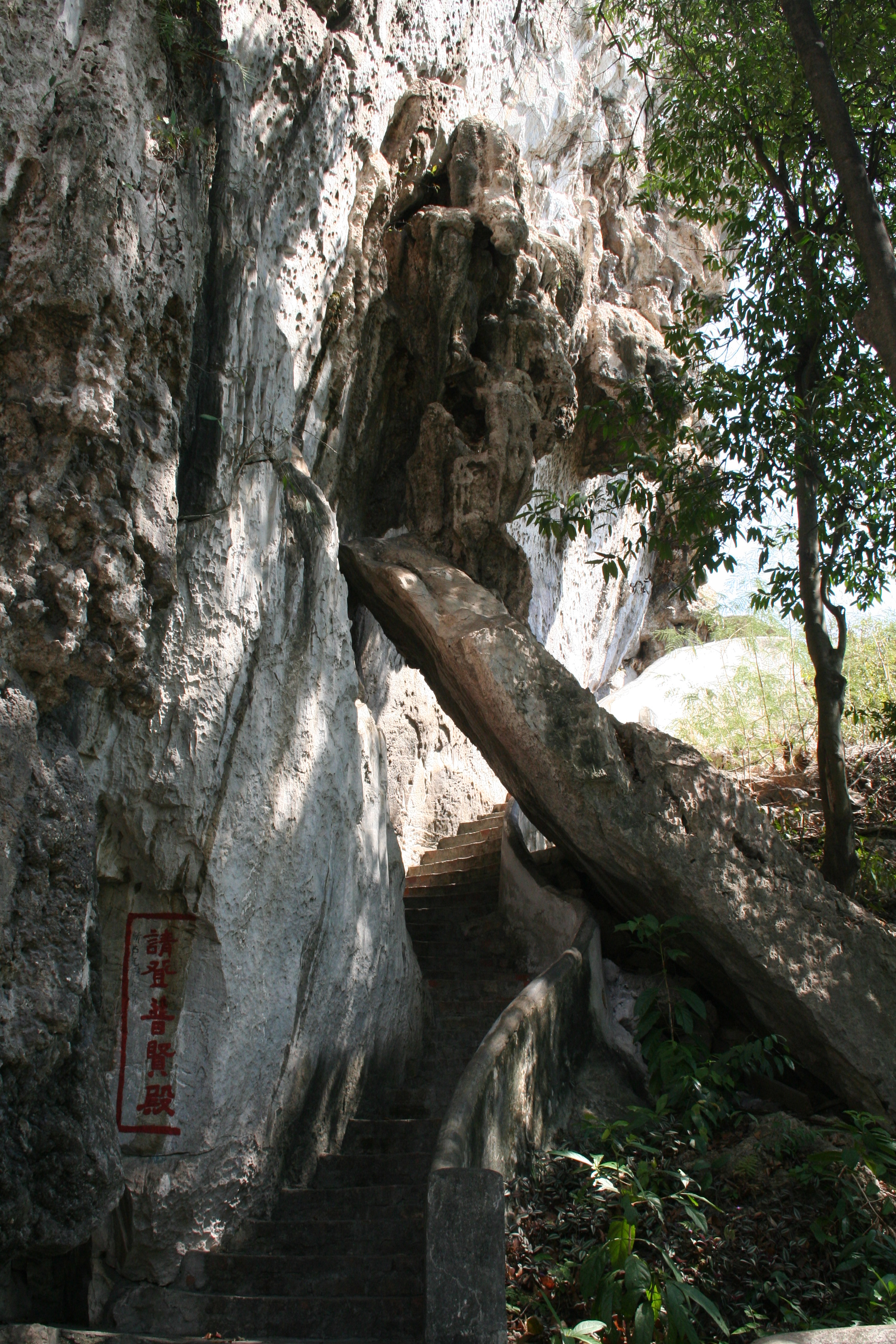
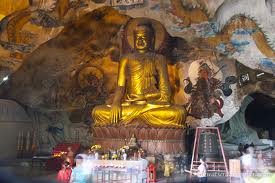
Perak Tong is a temple created in some limestone caves just north of Ipoh. It was the life’s work of Chong Sen Yee and his wife, Choong Chan Yoke, and is maintained by their descendants. Chong Sen Yee came to Ipoh from Guangdong province in China to work in the tin industry here. When he saw the possibilities of the limestone topography, he applied for a development permit from the Perak government and spent the next 50 years developing the caves into a temple. The temple spaces are sculpted out of the rock and the walls are decorated with paintings, murals and calligraphy. There are numerous Buddhist and Taoist statues, including a 13-metre high gold Buddha (see pic below). It is a breath-taking place to visit. Then there are the 450 steps that lead you through the temple and up to the top of the limestone cliff (see pic above). There are views over Ipoh from the top and numerous stone benches in shady spots for taking a rest.
Sultan Salahuddin Abdul Aziz Mosque
This is the largest mosque in Malaysia and the second largest mosque in the world. It is named after the late Sultan who commissioned the mosque when he declared Shah Alam, where the mosque is situated, as the capital of Selangor. It was built between 1982 and 1988. I visited this impressive building yesterday and was given an enveloping cape and head scarf to wear. A charming volunteer took me around and explained the history of the mosque and the significance of some of its features. All the marble used for the expansive floors was locally sourced – they gleam and are very warm under your bare feet. There are high windows of coloured glass that catch the light and intricately carved wooden panels. But the most impressive sight is the huge dome, which is more than 50 metres in diameter. There were very few men praying in the mosque while we were there but it has a capacity of 24000 and is much busier on Friday afternoons. We were staying in Shah Alam because one of Jim’s offices is nearby. My guide was surprised to learn that we lived in Ipoh and even more surprised that we had stayed in the nearby Grand Blue Wave Hotel (is that not a marvellous name!). Clearly these are things that Westerners don’t often do but I am glad we did.
In praise of dishwashers
Housekeeping in Malaysia is very different from what normally happens in New Zealand. There are usually two kitchens in a Malaysian house – the wet kitchen, in which there is a sink, a cooker and a washing machine, and the dry kitchen, which has a smaller sink, storage cupboards and perhaps also the fridge. There is usually no dishwasher because most households have a maid, one of whose many tasks is to wash the dishes. It is also fairly unusual to find dishwashers in appliance stores. However, we found one, bought it and had it installed beside the washing machine in our wet kitchen by an extremely obliging plumber who spoke no English and, I suspect, has not installed many dishwashers. On using the dishwasher for the first time, the floor of our wet kitchen was flooded, which you might say is quite appropriate! So we’ll have to get the plumber back and ask our neighbour to interpret for us as we explain that the outlet pipe is not working properly. Nevertheless I love having a dishwasher!


![dishwasher[1]](https://janeburnett.com/wp-content/uploads/2014/03/dishwasher1.jpg?w=300&h=300)