Shrines

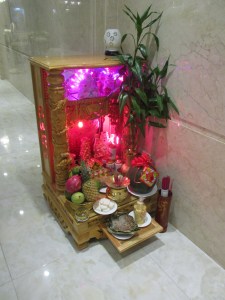
Although most Vietnamese people are not very religious (surveys indicate that only 20% identify with a particular faith), we were struck by the shrines we saw everywhere.  Most of them are well-maintained and many have burning candles and incense sticks, which are lit and tended to. We were wary about taking photos in case this was offensive but were assured that it was not. The little reading I’ve done on the subject reveals that many Vietnamese subscribe to Tam Giao, which is a fusion of Chinese (Confucian, Taoist and Buddhist) beliefs and ancient Vietnamese animism. The state, of course, is Communist and we were granted our visitor’s visas by the Socialist Republic of Viet Nam.

Hari Raya

Hari Raya

Muslims in Malaysia celebrated Hari Raya last weekend and we all enjoyed a four-day break. Hari Raya is the end of Ramadan and many Muslim families mark the holiday with ‘balik kampung’ (going back to the village) so the roads are very busy. The symbol of Hari Raya on many posters and greeting cards is the ‘ketupat’, baskets woven from coconut palm leaves which are stuffed with rice and then boiled. Not surprisingly food is central to Hari Raya and family gatherings. We were invited to an evening meal on the third night by our Muslim neighbours. The table was beautifully laid with all sorts of traditional dishes, many of them deliciously spicy. There was another table filled with sweet dishes. We tried to to do justice to it but when we got up the dishes were scarcely dented. Our neighbours had all their children and grandchildren staying over and the house was filled with the excited chatter and laughter of the children, dressed in their shiny new clothes. They were enchanting.

Sightseeing in Kuala Lumpur

IMG_3372
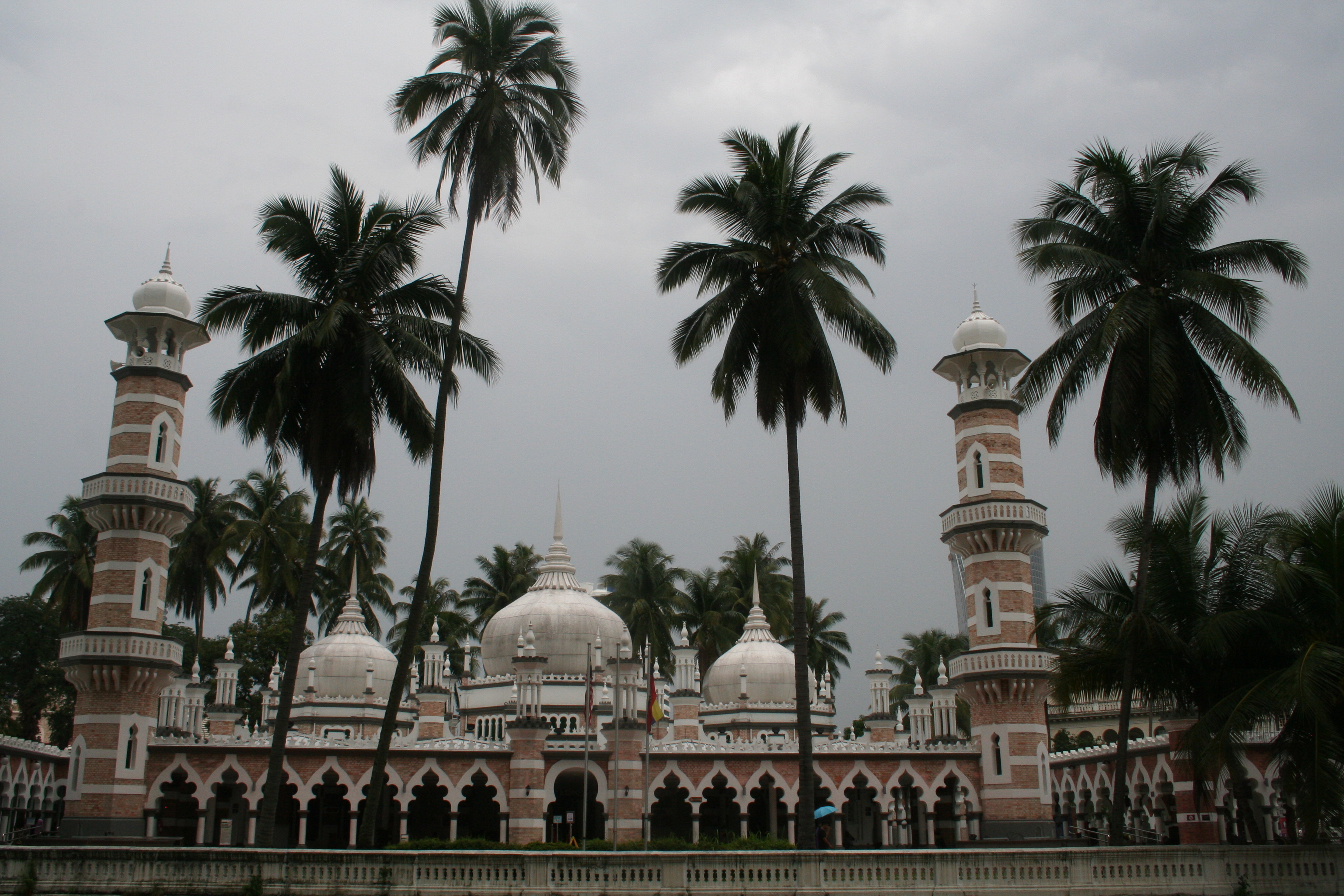
Instead of going down to Kuala Lumpur and back in a day when Jim has meetings down there, we went down last Sunday, did some exploring and spent the night, ahead of Jim going into the Shah Alam office on Monday morning. KL is a huge, bustling, bewildering city so we decided we’d find a shopping centre, park and then use public transport to get around. We drove into the frenetic Bukit Bintang area and parked in the first underground parking building we came across. On leaving the lift, we found ourselves in a hellish shopping centre, full of tiny shops and kiosks and hundreds of people, with no indication of where the exits were. All the overhead signs said “Shops” or “More shops”! We knew we were on the ground floor but, when we asked someone how to get out to the road, he said we had to go down two more levels. So “ground floor” didn’t mean we were at ground level! I have never been more thankful to leave a building. Things improved rapidly after this. We found a wonderful bakery, which also smelled of the coffee they served, and then got onto the monorail. This is an efficient, cheap way of getting around the centre of KL. From the monorail station, the sight of this beautiful mosque (see pic above) greeted us. It is the India Mosque and was built in late nineteenth century. Since only worshippers are allowed in, it was as well that we also came across St Mary’s Cathedral (see pic below), where evensong had just begun on this Easter Sunday.
IMG_3388

Perak Tong

IMG_3344

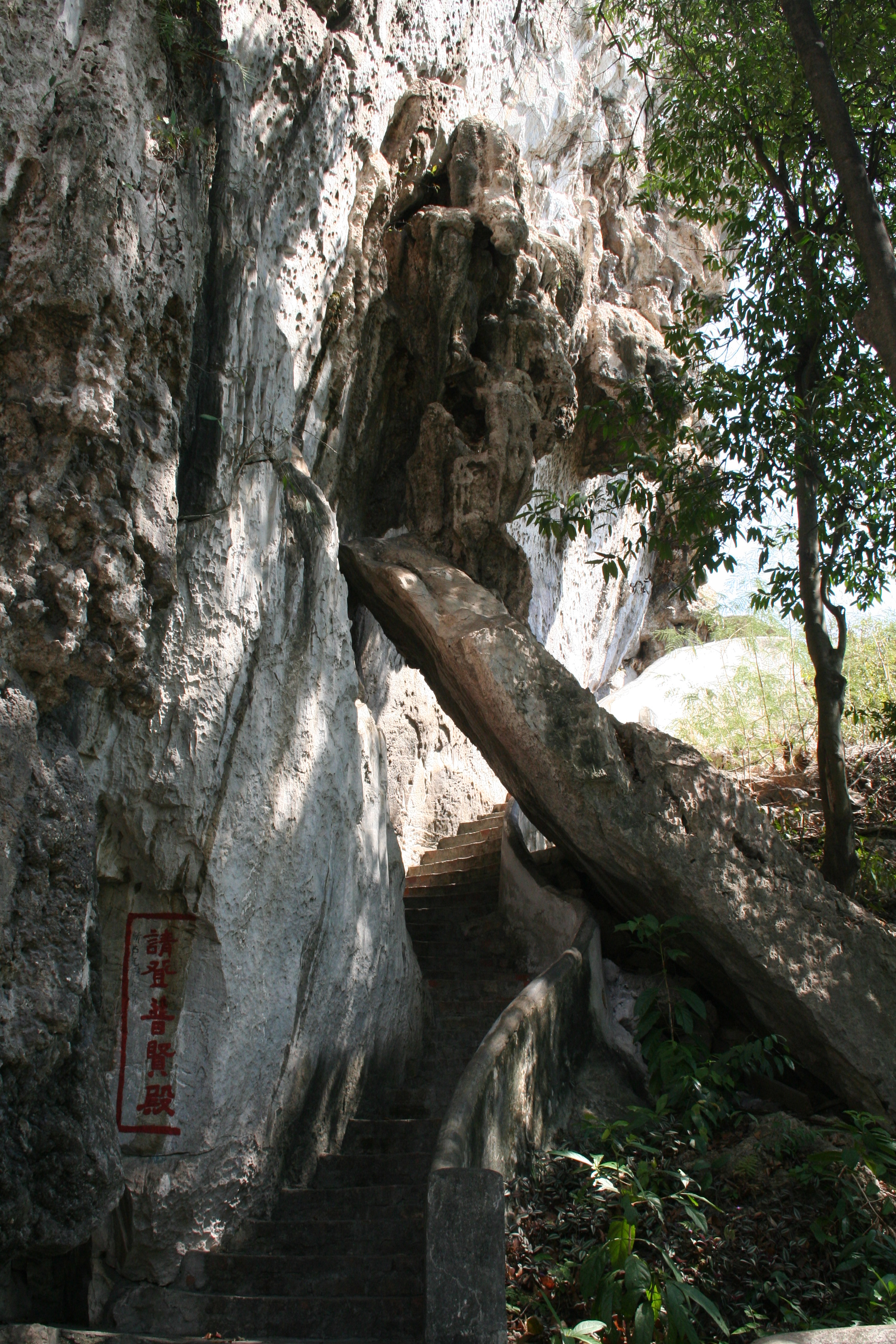
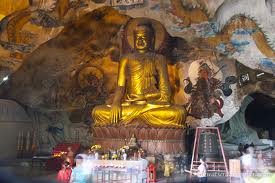
Perak Tong is a temple created in some limestone caves just north of Ipoh. It was the life’s work of Chong Sen Yee and his wife, Choong Chan Yoke, and is maintained by their descendants. Chong Sen Yee came to Ipoh from Guangdong province in China to work in the tin industry here. When he saw the possibilities of the limestone topography, he applied for a development permit from the Perak government and spent the next 50 years developing the caves into a temple. The temple spaces are sculpted out of the rock and the walls are decorated with paintings, murals and calligraphy. There are numerous Buddhist and Taoist statues, including a 13-metre high gold Buddha (see pic below). It is a breath-taking place to visit. Then there are the 450 steps that lead you through the temple and up to the top of the limestone cliff (see pic above). There are views over Ipoh from the top and numerous stone benches in shady spots for taking a rest.

Perak tong

Sultan Salahuddin Abdul Aziz Mosque

Blue mosque Shah Alam

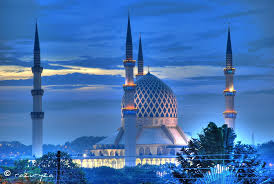
This is the largest mosque in Malaysia and the second largest mosque in the world. It is named after the late Sultan who commissioned the mosque when he declared Shah Alam, where the mosque is situated, as the capital of Selangor. It was built between 1982 and 1988. I visited this impressive building yesterday and was given an enveloping cape and head scarf to wear. A charming volunteer took me around and explained the history of the mosque and the significance of some of its features. All the marble used for the expansive floors was locally sourced – they gleam and are very warm under your bare feet. There are high windows of coloured glass that catch the light and intricately carved wooden panels. But the most impressive sight is the huge dome, which is more than 50 metres in diameter. There were very few men praying in the mosque while we were there but it has a capacity of 24000 and is much busier on Friday afternoons. We were staying in Shah Alam because one of Jim’s offices is nearby. My guide was surprised to learn that we lived in Ipoh and even more surprised that we had stayed in the nearby Grand Blue Wave Hotel (is that not a marvellous name!). Clearly these are things that Westerners don’t often do but I am glad we did.