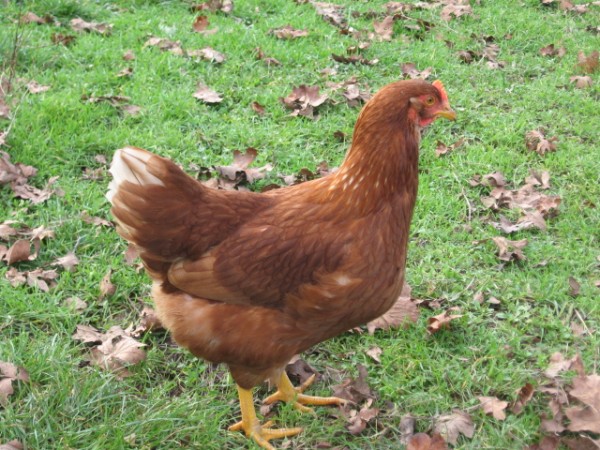
One of my New Zealand friends who grew up in Ipoh has been over here visiting her parents. She and her mother took me to their local market early yesterday morning. I had expressed a wish to buy free-range chicken so they took me to the appropriate stall. There was my chook running around with several others in a cage beside the chopping block. Having ascertained what I wanted, the stall vendor grabbed it and expertly despatched it. With typical meat-eating hypocrisy, I felt really sorry for the chook. We wandered around the market, looking at the inviting piles of fresh vegetables and fruit on offer. When we got back to the chicken stall, the beautiful brown chicken, which had been alive just minutes before, was in two bags – one of filleted, skinned chicken pieces and the other of bones, which I will use to make stock. Will the experience make me a vegetarian? I doubt it. But I console myself with the thought that this was a kampung (village) chicken and it got to experience some fresh air before being served up for dinner in my house.

Category: Ipoh
Moon cakes
Hari Raya dates have been replaced in all the shops by displays of moon cakes. These cakes are round pastries filled with a rich thick filling usually of red bean or lotus seed paste. They are eaten as part of Mid-Autumn Festival celebrations. This festival dates from the fifth century, involves lunar worship and is associated with the legends of Chang’E, the mythical moon goddess of immortality. I found a lovely tea shop in central Ipoh this week. It has a beautiful cafe where one can drink tea from delicate china cups and eat Chinese delicacies, including moon cakes. Since I was on my own I didn’t stay but I did buy some cakes – I chose green tea pastries filled with date paste (and no sugar added!). It is an acquired taste but, having just eaten the last wedge of the first cake, I can report that it is growing on me. Perhaps next time we’re in town, we’ll sit down for tea and moon cakes – join us if you like!
Living in a Graham Greene novel
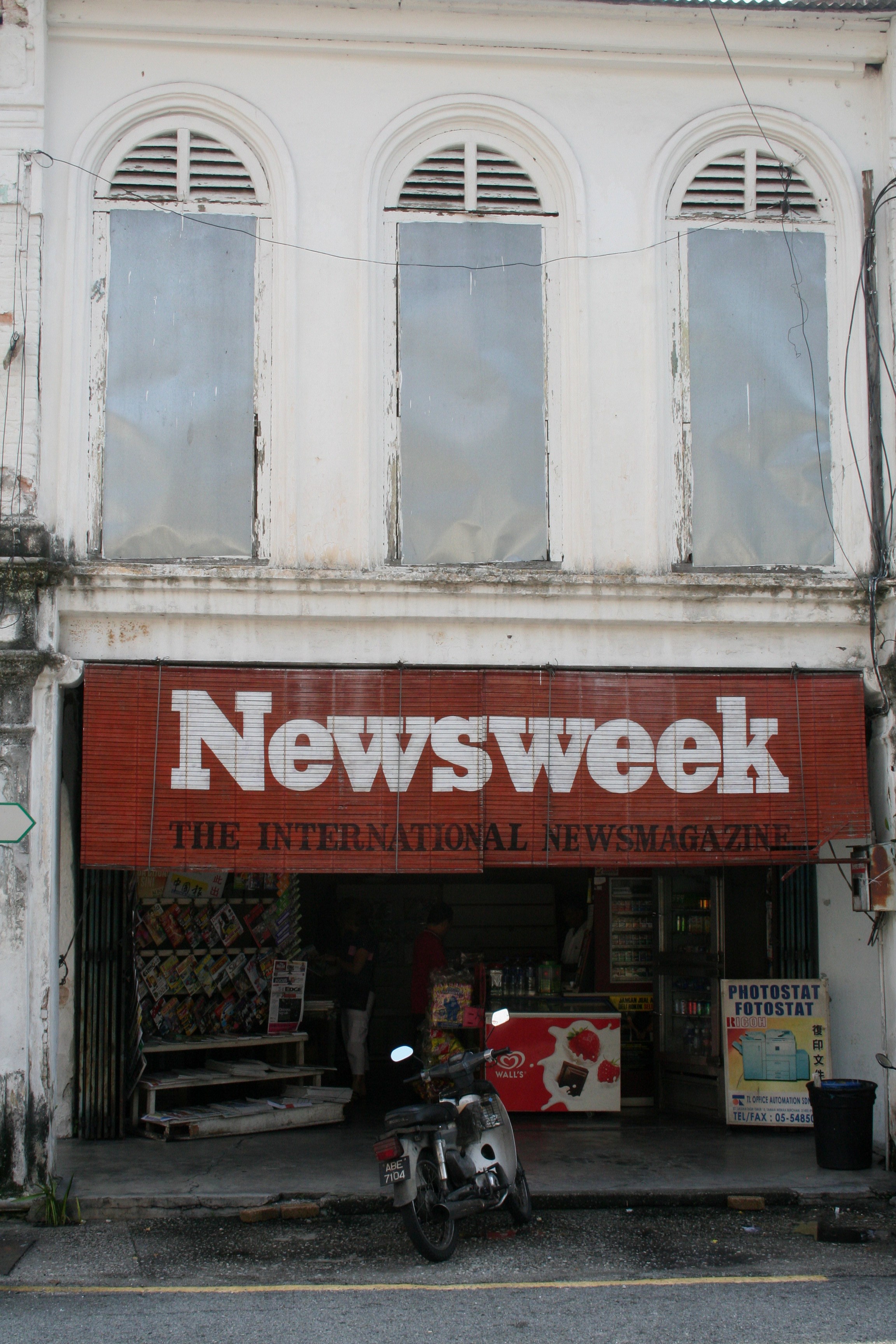
I don’t necessarily want to live the life of a Graham Greene character but this news agency in the old town is reminiscent of a film version of one of his novels. It sells newspapers, magazines, drinks and snack food. I go in there to buy the parking tickets that we need for parking in most places around the city streets. These tickets are nifty in that they are like scratch cards – you scratch out the appropriate date and time and leave it on your dashboard. They cost RM1.50 (55 NZ cents) for an hour’s parking but many locals don’t bother. Then they incur a RM40 (NZ$15) fine, which they don’t pay. These fines build up till the next election when a general amnesty is declared as a way of garnering votes. And so the world goes round Ipoh-style!
The old town
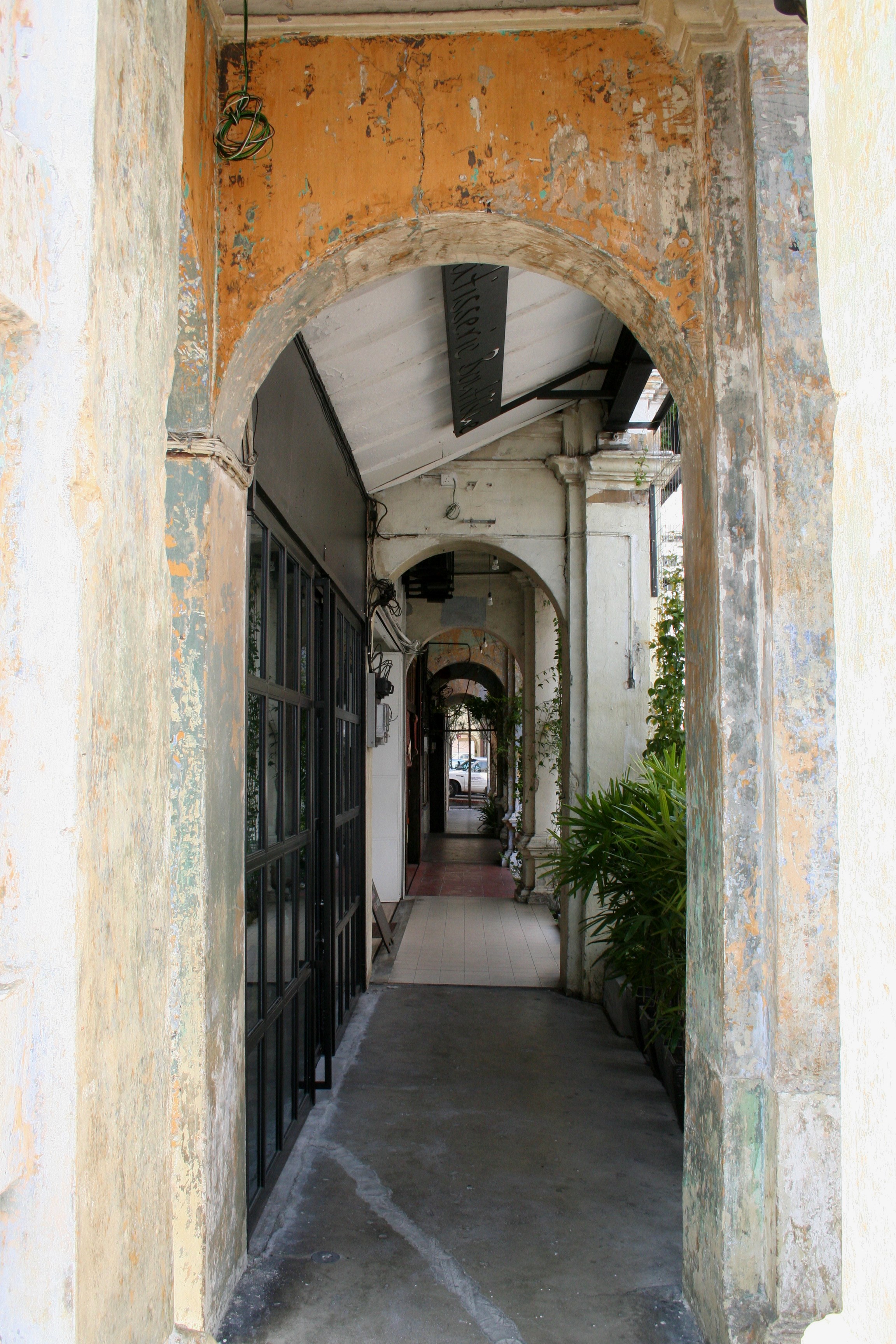
One of our favourite Ipoh outings is to the old town, where the buildings date back to the beginnings of the 19th century mining town and the footpaths are uneven stretches of beautiful tiles. Some of the buildings have been sympathetically restored, with the facades reflecting their history but the interiors suiting their modern uses as cafes, galleries or specialist stores. One can stand at one corner and look along the arches that span the length of the block. We usually have a coffee at one of the cafes where we are now regarded as locals and greeted accordingly. Then we wander the alleyways and always find some feature that we’d not noticed before or meet someone new. Last Saturday I met a friendly florist who had recently opened her charming shop, styled after a similar store in New York. She’s just returned to Ipoh after spending time in the Big Apple.
Bukit Kledang
Last Sunday we awoke to a cooler morning – we have had a lot of rain recently (usually as part of spectacular afternoon storms accompanied by thunder and lightning) so the temperatures have been more bearable. This is relative though – it still gets up to 31-33 degrees most days, but not up to 37-40 degrees as it did during the recent dry spell. We decided to try the walk up Bukit Kledang. Bukit means hill in Malay and this particular hill is the highest at 800m of all the many hills around Ipoh. You can drive all the way to the top if you like and we can do so when you visit so that you can enjoy the view. We parked the car near a waterfall and then walked up the rest of the way. There are walkways that take you away from the road and many covered rest areas where you can take a breather on benches in the shade. The higher you get, the cooler it is and the denser the vegetation. We heard birdsong but did not actually see many birds. We also heard some reverberating calls presumably made by monkeys, although again we didn’t see them. We didn’t go all the way to the top where there is a broadcasting tower. Instead we found a beautiful spot to sit and gaze through the tall trees into the greenery beyond, having rounded the hill so the city of Ipoh was no longer visible. We made quick work of the walk down, the temperature having risen substantially. It was good to get home and stand under a cool shower!
Perak Tong
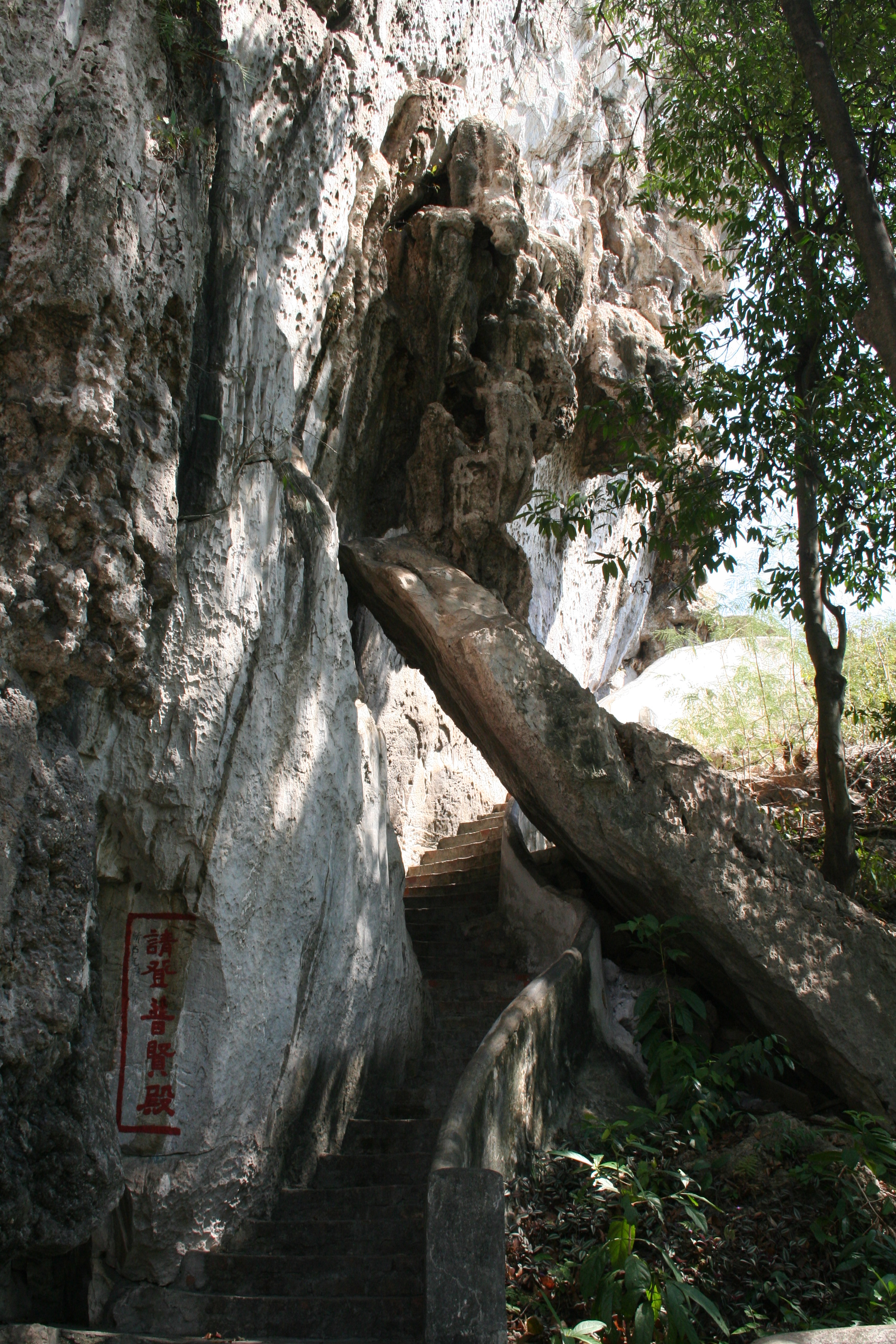
Perak Tong is a temple created in some limestone caves just north of Ipoh. It was the life’s work of Chong Sen Yee and his wife, Choong Chan Yoke, and is maintained by their descendants. Chong Sen Yee came to Ipoh from Guangdong province in China to work in the tin industry here. When he saw the possibilities of the limestone topography, he applied for a development permit from the Perak government and spent the next 50 years developing the caves into a temple. The temple spaces are sculpted out of the rock and the walls are decorated with paintings, murals and calligraphy. There are numerous Buddhist and Taoist statues, including a 13-metre high gold Buddha (see pic below). It is a breath-taking place to visit. Then there are the 450 steps that lead you through the temple and up to the top of the limestone cliff (see pic above). There are views over Ipoh from the top and numerous stone benches in shady spots for taking a rest.
Haze
This is a view of the sunset over the limestone hills that surround Ipoh. When the air is clear (or clearish!) as on the evening we took this photo, it is very attractive. However, there is usually some haze caused by the heat and also the pollution from the numerous factories around the city. In the last couple of weeks, the haze has been very bad because we haven’t had rain for many weeks. It is extremely hot and the dry conditions are conducive to fires, which add greatly to the haze. It all makes me long for rain in a way that I haven’t since living in New Zealand. I think it is fortunate that I lived previously in South Africa – otherwise this kind of experience might do me in! Our neighbours tell me that a drought like this is very unusual and they are also disconcerted by the brown grass, wilting plants and trees shedding their leaves. May it rain soon and return our tropical surroundings to their usual lush greenness.
Cheers
I only drink three things – water, coffee and dry, white wine. All three present problems now that I am living in Ipoh. We can’t drink the water from the tap here. There is an abundance of cheap bottled water in the shops but I have a conscience around all those plastic bottles going into the landfill. So we have this system of boiling and refrigerating water every day, though I have this small anxiety about opening the fridge and finding no water in the jug – almost nightmarish because one needs to drink a lot in this hot climate! The coffee is usually sweet and white, and comes in already mixed sachets. Finding a strong coffee without sugar in a café is very difficult. However, we came across a small café in the old town, where you could actually smell the coffee and they were happy to serve me a cup with a little jug of milk on the side. It felt like a victory! The absence of wine is remarkable, given that there is plenty of beer, Scotch, and other spirits to be had wherever you go. There is a very small selection of wines in supermarkets and they are all very expensive. When we went to a roof top bar for the view of Ipoh and sun-downers, I resorted to a cocktail – hence this pic. I guess I’ll be healthier with only boiled water to drink!
Thaipusam

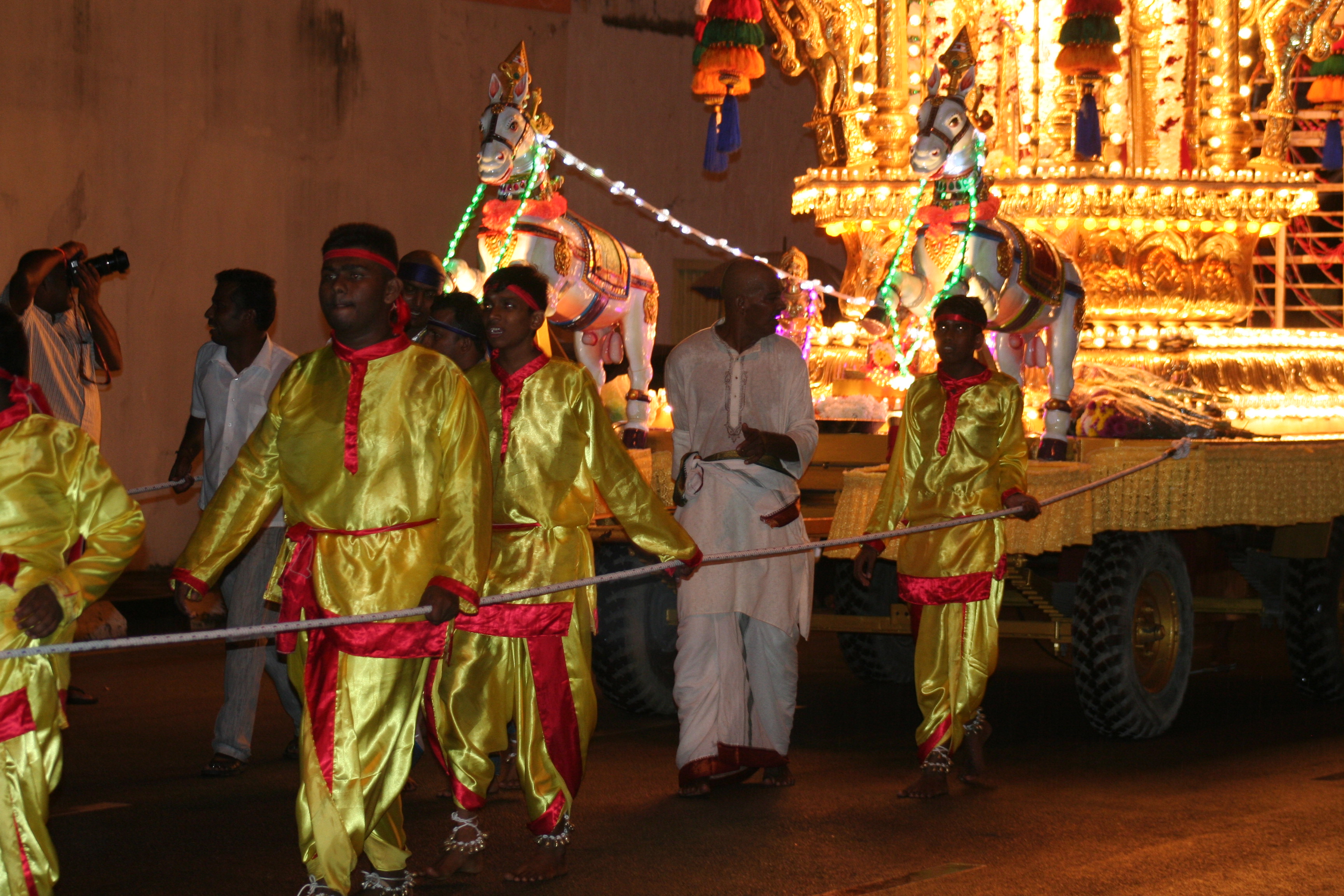
Last Friday and Saturday was the Hindu festival of Thaipusam. There are celebrations wherever there are significant Tamil communities and Ipoh is one such centre. Thai is the Tamil month coinciding with January/February and Pusam is a star, which is at its highest point at the time of the festival. Thaipusam is a commemoration of Murugan, the Tamil god of war, and devotees carry kavadi to the temple in penance and also to entreat the god for good fortune in the future. Kavadi may be as simple as carrying a pot of milk to the temple but it may also involve piercing of the skin, tongue or cheeks with skewers, or pulling a decorated cart by means of hooks inserted into the back. We went into central Ipoh on Friday night to watch the procession of carts. A family sitting on the steps of a bank invited us to join them at this vantage point. They were local Indians – a father, his daughter and twin sons – who had all come into the city on one little scooter. The children were very excited though their father told us that they were Christians. The Hindu people around us were beautifully dressed, the women and girls in magnificently coloured saris and bright bangles, the men in embroidered shirts. The carts came by pulled by men with hooks in their backs, some of whom also had skewers through their tongues and cheeks. They were accompanied by dancers and drummers. It was an amazing spectacle for these two pale Protestant New Zealanders and a fantastic introduction to the diversity of our new home city.