Greek idyll

The island of Astypalea is a rocky outcrop in an azure Aegean sea. It is so rocky and barren that it’s a wonder anything grows here. But it does. Beside the cottage that we’ve been staying in this week, there is a productive garden in which there are grape vines, pomegranate trees, tomato bushes, fig trees and some flowers. Our Greek neighbour came into the garden two nights ago to harvest some of the fruit and very generously gave us a pomegranate, some tomatoes and grapes and a fig. There are farms on the island, which we’ve seen on our travels around it on our rented scooter. They look completely barren except for bee hives, goats and olive groves.

The appeal of this island for tourists is easy to see. There are many beautiful beaches with shady trees and amazingly clear, blue water for swimming. There are also myriad tavernas, some of which set their tables and chairs in the sand right on the beach, and interesting little shops and cafes in the main settlement of Chora. There are only just over 1000 permanent inhabitants and no harbour big enough for cruise ships, which makes it an ‘unspoilt’ Greek island, unlike Mykonos or Santorini. However, with falling amounts of rainfall due to climate change, water may soon become an issue and there is talk of establishing a desalination plant, though that is costly.
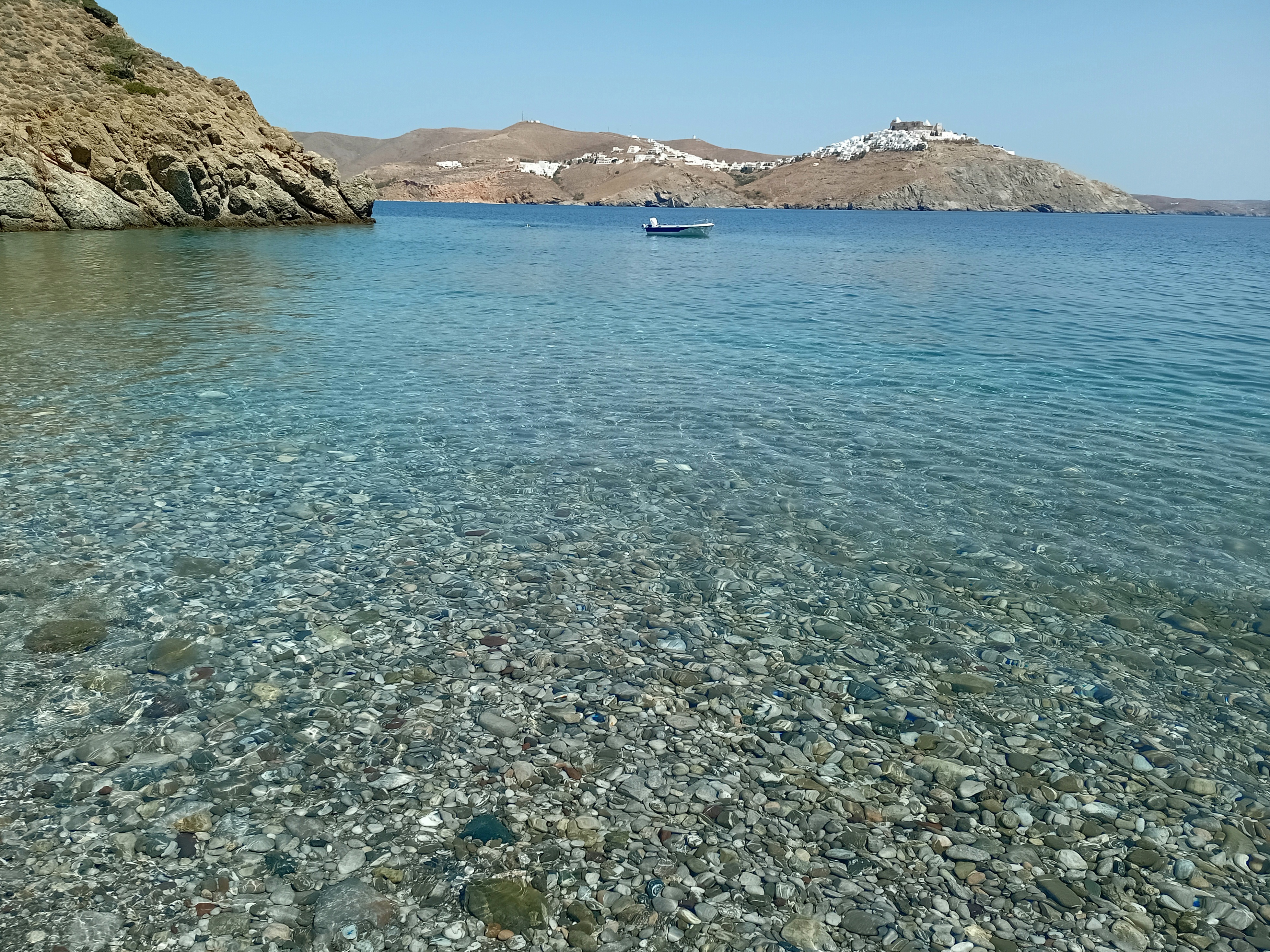
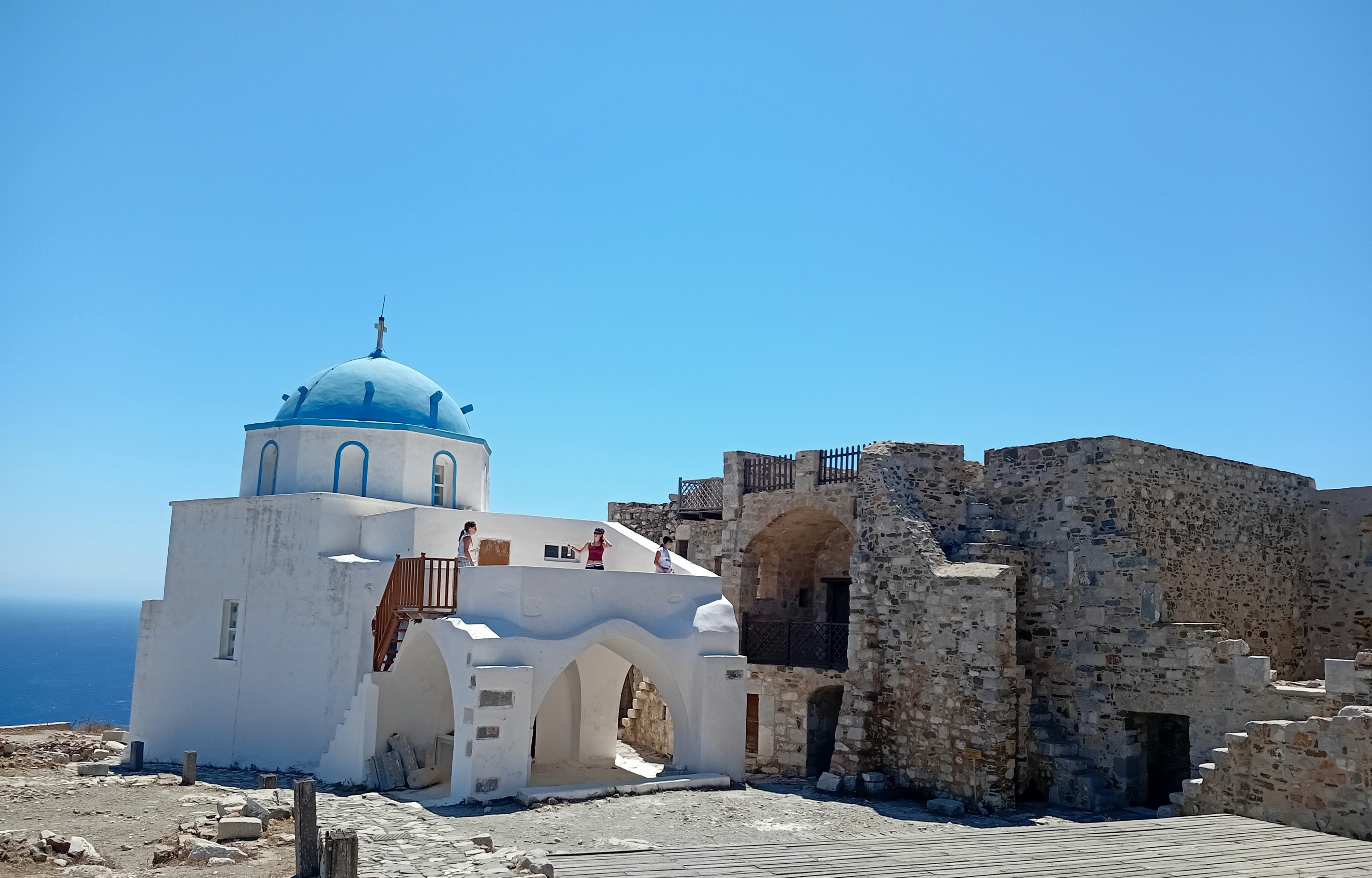
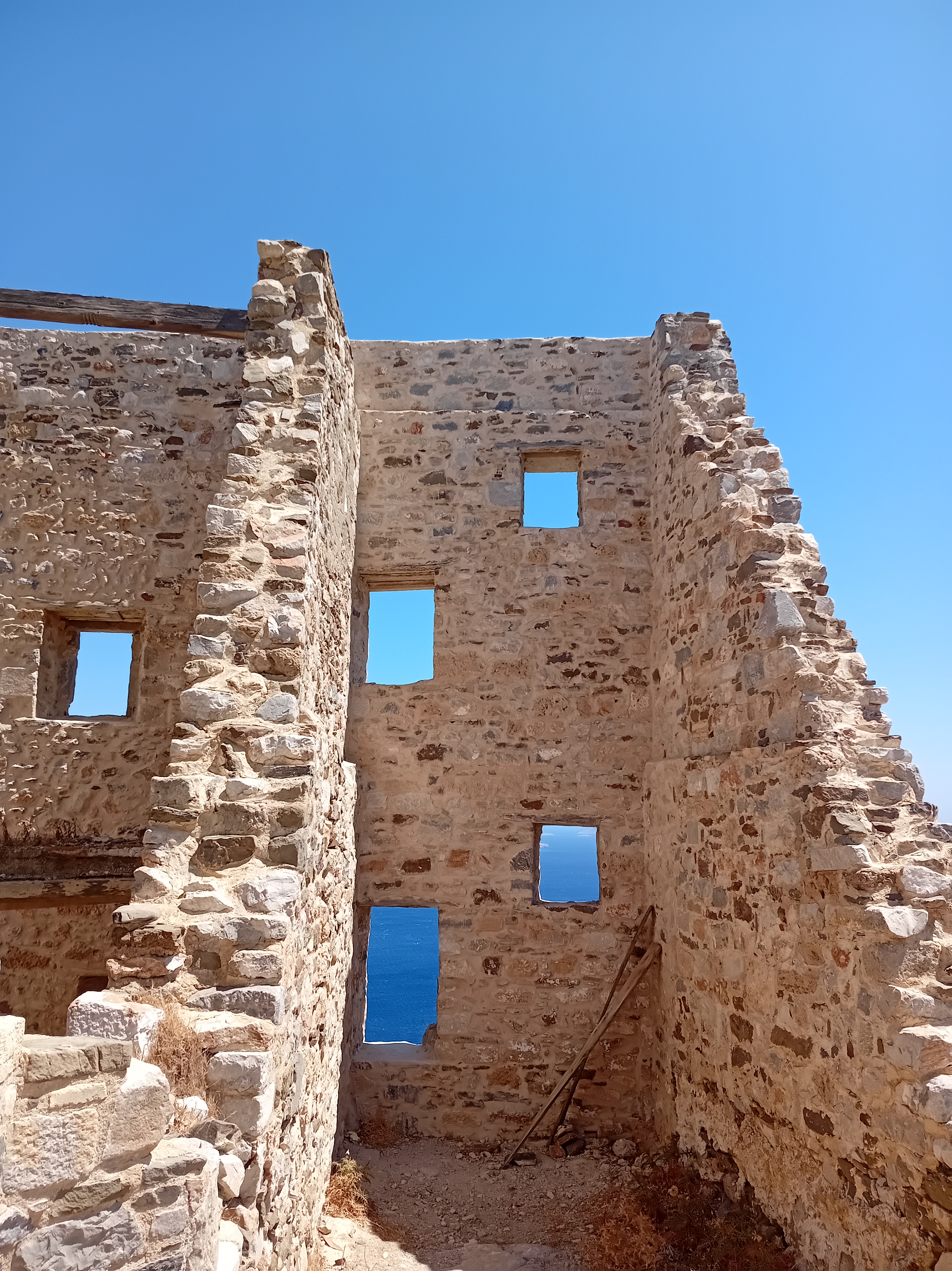
At the highest point on the island are the remains of a Venetian fortress, built in the 15th century as protection against pirates who terrorised the Mediterranean. A huge earthquake in 1956 brought much of the fortress down and there are still areas cordoned off because they are dangerous. There are two churches on the site, picturesque in their whitewash with blue trim and bells that chime in the wind.

Our cottage has a courtyard complete with olive tree and the remains of the well and outside oven that would have served the original house. We’ve enjoyed eating our breakfast out there when there is still enough shade to keep us cool and then again in the evenings as the sun is losing its heat and the shadows lengthen. Our days on this idyllic island have been spent exploring on the scooter and finding unbelievably beautiful beaches, where we can swim and lie the shade to dry off and doze. It will be hard to leave and return to a New Zealand winter. But it will be good to be home!
Vibrant Vienna

Vienna is a beautiful city, perhaps the most beautiful city I’ve visited. You walk along a cobbled street, you look up and see lines of Baroque buildings surrounding a wide courtyard, often with a sparkling fountain in its centre. Or you head for the shade of an avenue of trees and at the end, you see a pair of perfectly matched museums – the Naturhistorisches (Natural History) and the Kunshistorisches (Art History) museums. They were commissioned by Franz Joseph 1 and built between 1871 and 1889.

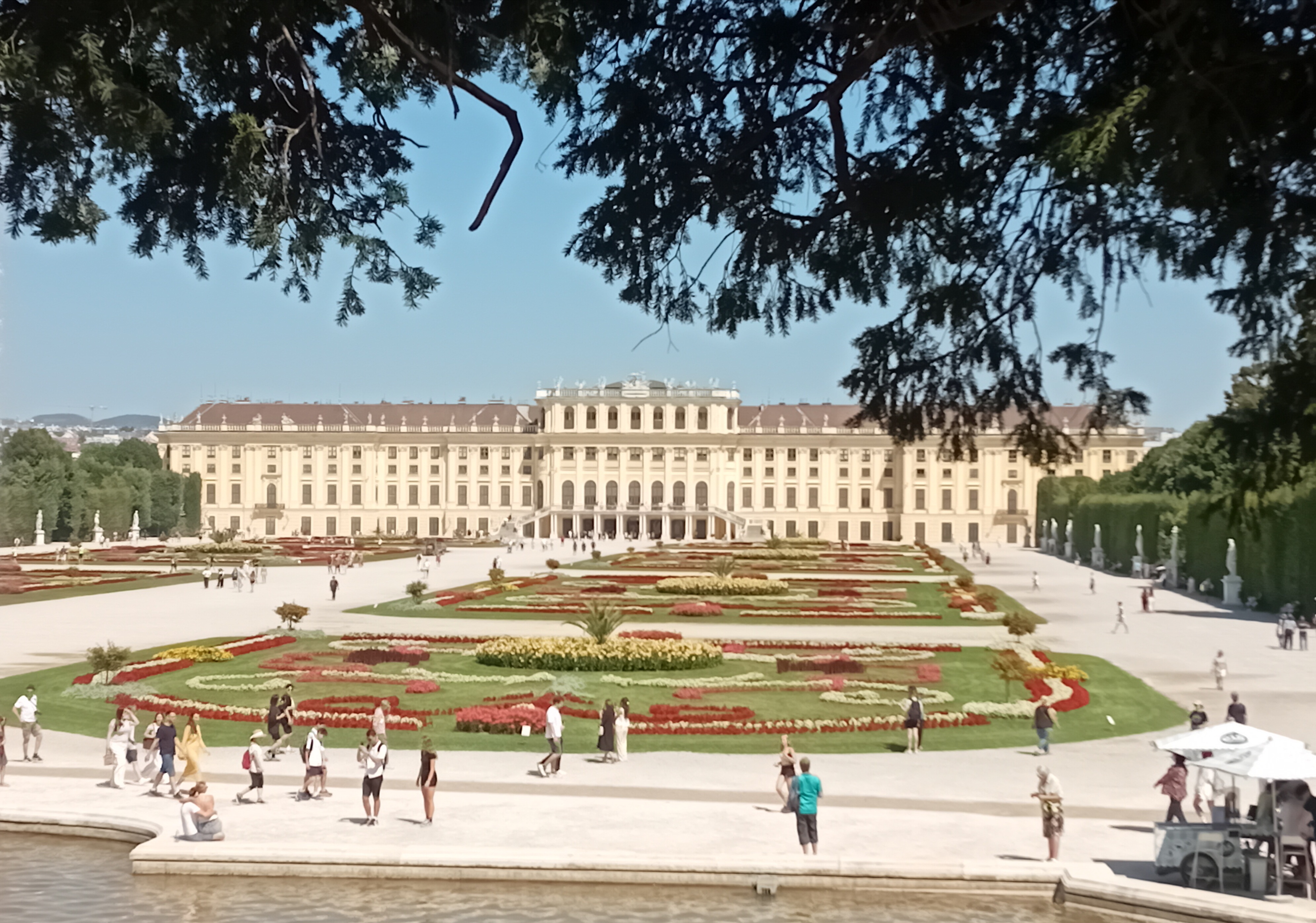
Vienna’s majestic vistas owe much to its past as the capital of the Austro-Hungarian Empire, which was ruled by the Habsburgs for over 600 years. They had access to immense wealth and this shows in the palaces and churches they commissioned. Most impressive of all is their vast summer residence, the Schonbrunn Palace, which has over 1,400 rooms and expansive gardens. We ambled through the estate along with hundreds of other tourists and there was room for us all. We enjoyed coffee and apple strudel in the Gloriette cafe, which has a wonderful view of the gardens and the palace.

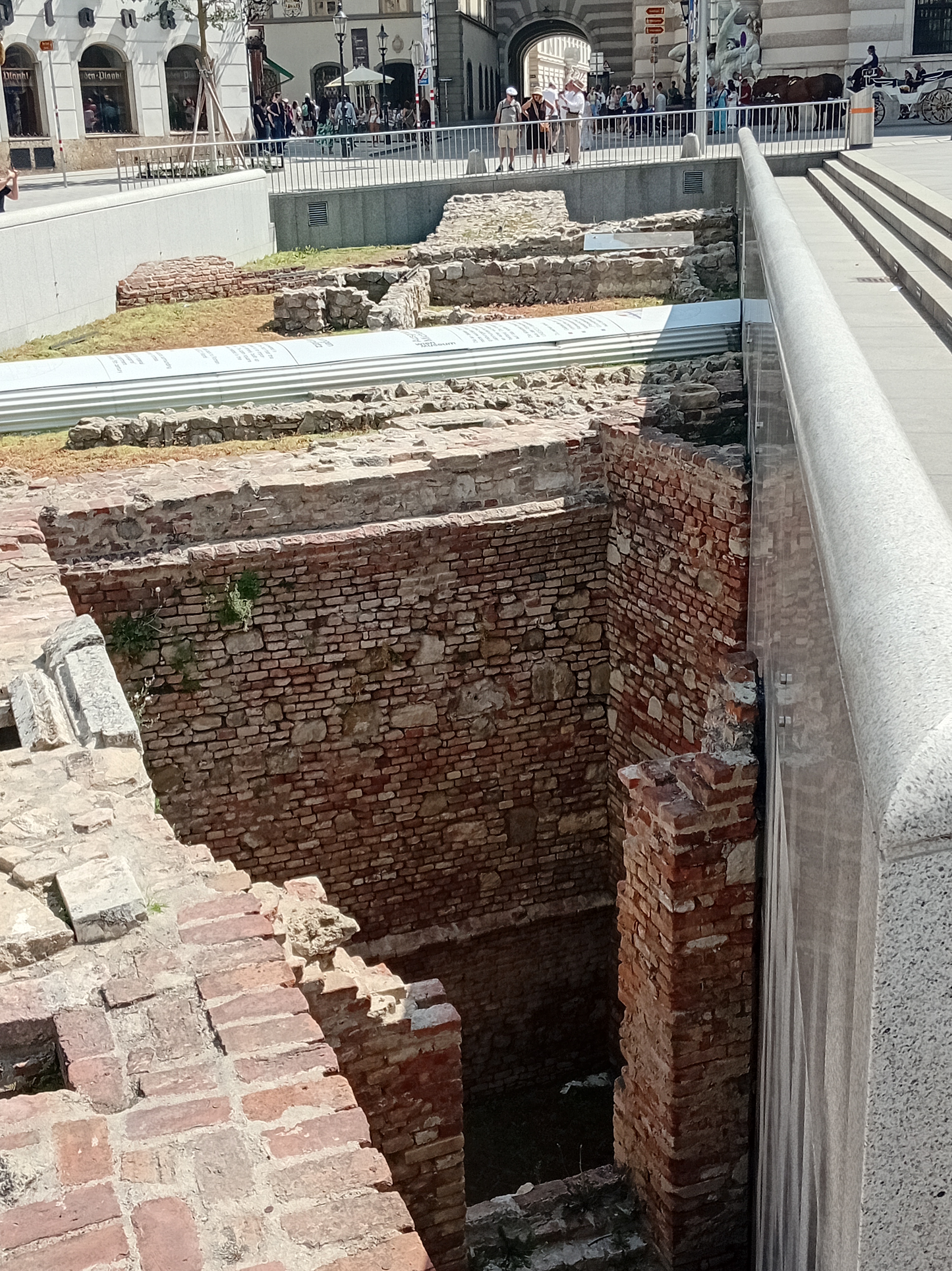
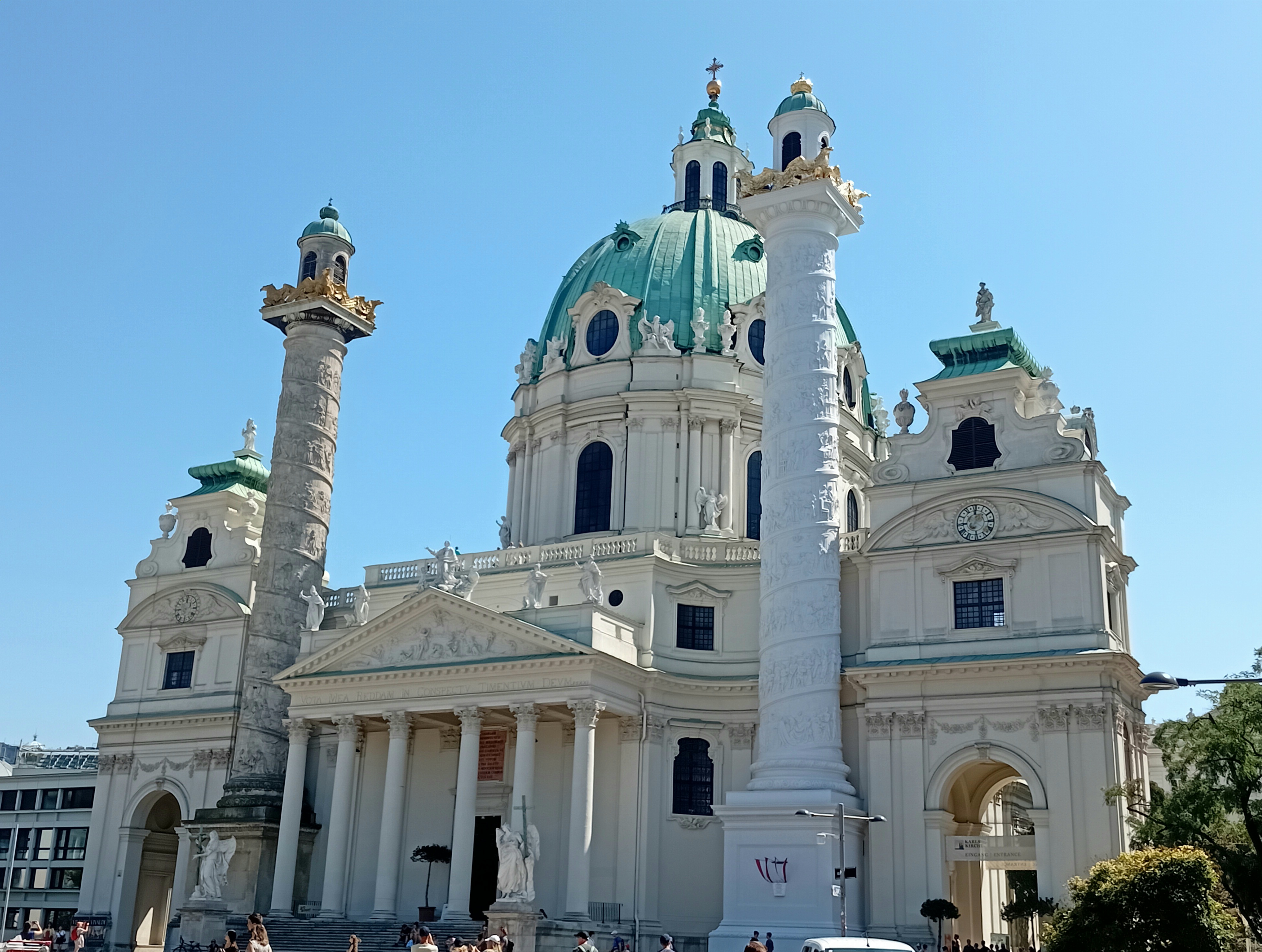
The two main churches in Vienna are the Romanesque/Gothic St Stephen’s Cathedral and the Baroque St Charles’s Church. The former is the seat of the Archbishop of Vienna and its spires dominate the Vienna skyline. It was built on an ancient Roman site and was eventually completed in 1578. The latter is dedicated to Saint Charles Borromeo, who was a leader of the Counter-Reformation. It was commissioned by Charles VI in 1713 in gratitude after a major plague epidemic and completed in 1737.

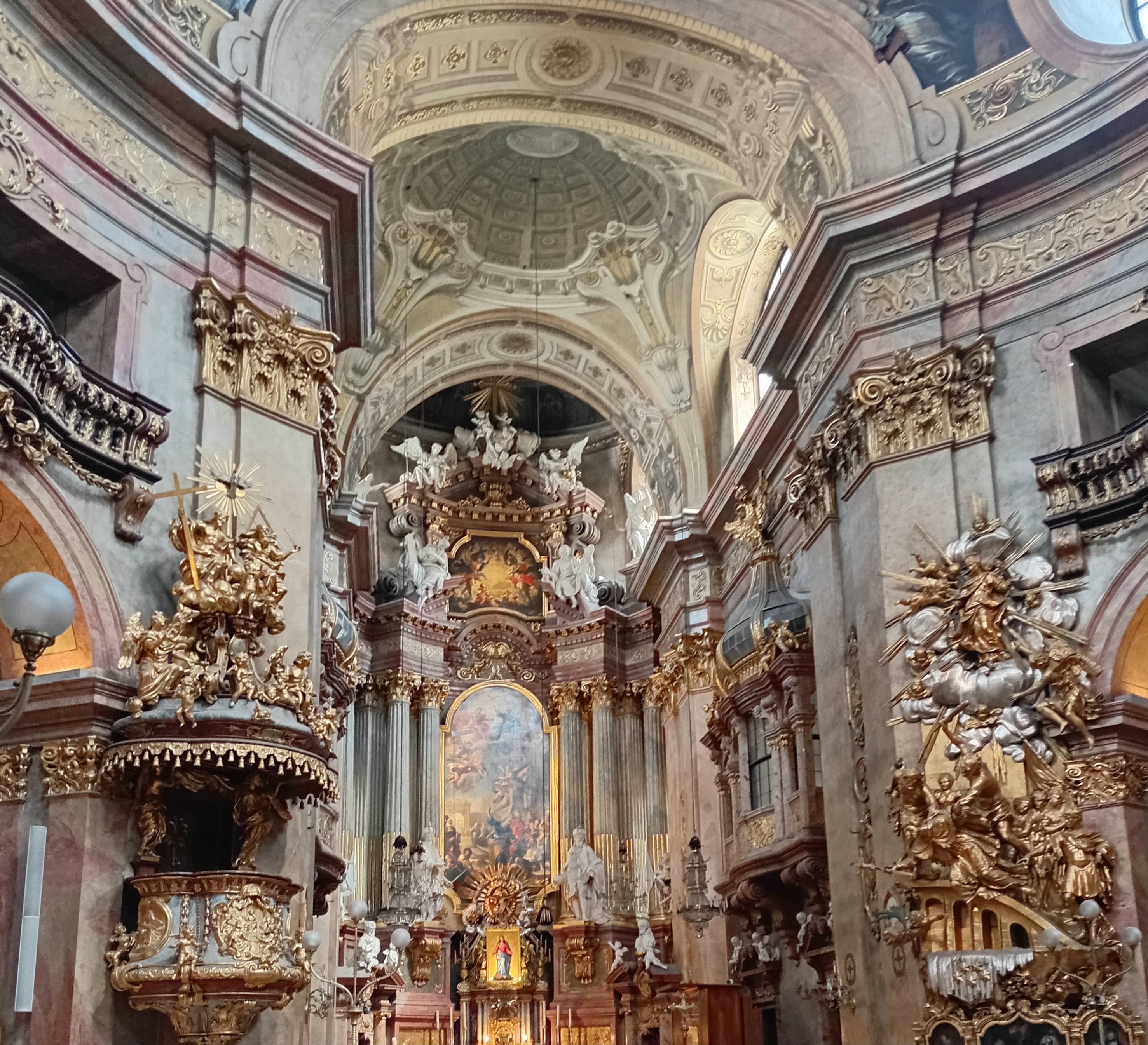
We were lucky to attend an organ recital in the Church of St Peter. Listening to music composed by Vivaldi and Bach, both of whom lived in Vienna, while gazing at the ornate Baroque interior of this 18th century church was a surreal experience. We also went to a concert of chamber music in a monastery where Mozart lived for a short while. The concert was held in a small, beautifully decorated concert hall called the Sala Terrena and was a programme of Viennese music played by a trio of violin, piano and cello. The cellist charmingly introduced the music and waxed lyrical about J S Bach – “not every musician believes in God but every musician believes in Bach”!

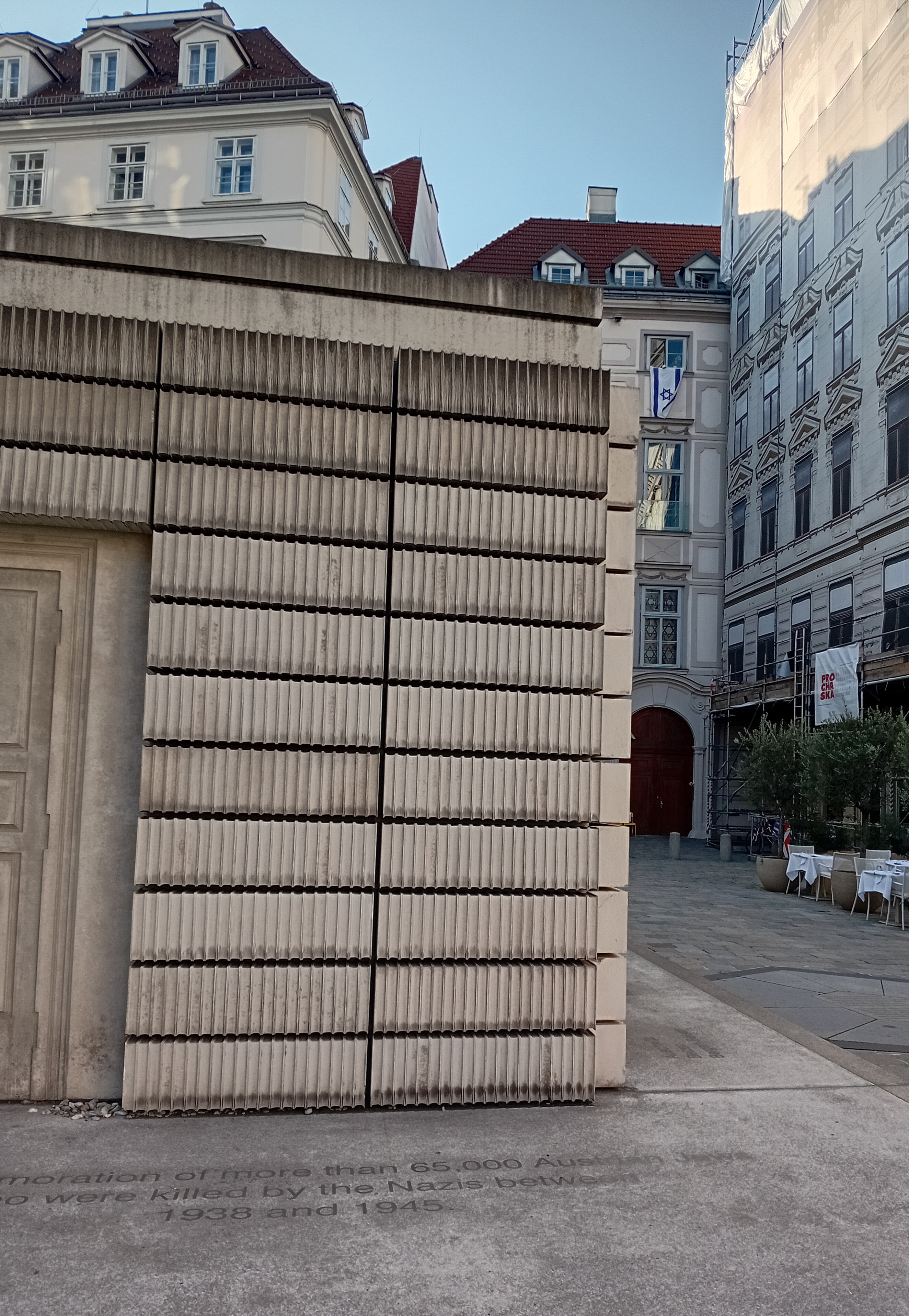
From sublime music to a reminder of Austria’s involvement in the devastation of the 1930s. The beautiful Judenplatz has a sombre memorial to the 65,000 Jewish Austrians who were killed in the 1930s. The square is on the site of a medieval synagogue, which was burned down during a pogram in 1420.

Our time in Vienna was not totally absorbed by palaces, churches and memorials. We were fortunate that our Austrian friends who live four hours away met us in Vienna and they were the most wonderful tour guides. We enjoyed delicious food in their company, including Wiener schnitzel and kaiserschmarrn (a kind of pancake served with fruit compote). We had coffee in a traditional coffee house, where Jim ordered English breakfast tea! and a drink in a roof-top bar with a splendid view of the roof and spires of St Stephen’s Cathedral.

Roman remains

Wherever they found springs, the Romans established towns complete with baths, roads and, in some cases, aqueducts. This was true in Bath and also in cities we’ve visited in Germany. The soaring towers of the Cologne cathedral are awe-inspiring indeed but the Romans were there long before Archbishop von Hochstaden laid the foundation stone in 1248. Called Colonia Claudia Ara Agrippinensium, it was an important city on the Rhine and there are still Roman remnants dotted around the city.

The cathedral was finally completed in 1880. It is a Gothic masterpiece that was planned to house the reliquary of the three wise men and as a fit place for the Holy Roman Emperor to worship. It remains the seat of the archbishop of Cologne. Its spires are over 150m in height and wherever you walk in the city, you can see them soaring above the other buildings.

The city of Aachen is on the site of the Roman settlement of Aquae Granni, so called because the spring there was dedicated to the god Grannus. The smell of sulphur lingers around the city centre, which is picturesque with its cobbled lanes and wide squares. We sat down for an iced coffee in one square and were presented with a dessert – the glass was almost filled with ice cream with a token amount of coffee poured in!

At the heart of the city centre is the cathedral, which is much smaller than the one in Cologne and built in a different style much earlier, around the year 800. It is the burial place of Charlemagne and is constructed around on octagon. The decorations inside are muted and reminiscent of the Byzantine churches in Istanbul. The cobbles of the lanes and squares are dotted with brass plaques that have Charlemagne’s monogram embossed on them. The story goes that he was illiterate so his administrators had a template made to which he could just add a line to complete his signature.

For someone who lives in the antipodes, it is thrill to visit cities that began in ancient times and to marvel at the glories of their medieval pasts. The locals, however, live modern lives among the splendour and one sees them whiling away the summer evenings along the banks of the river or in a town square with their families and friends, taking it all for granted. It seems incomprehensible that they should walk straight past the cathedral and not even break their stride.

An elevated state

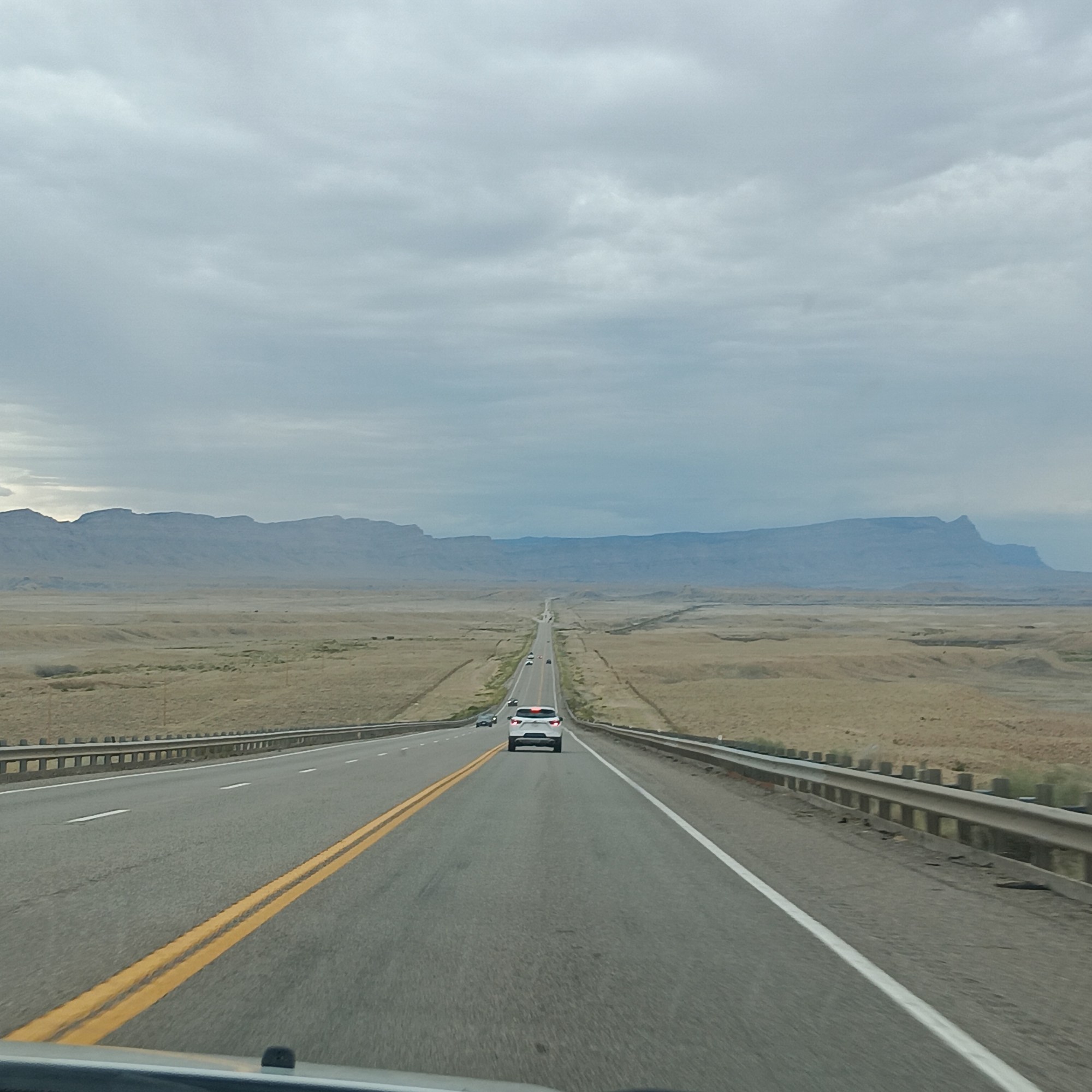
The state of Utah, named for the Native American Ute people, is spectacular. One quickly runs out of superlatives to describe its vast landscapes and geological features. From Salt Lake City, ringed by the Wasatch Mountains, to the extensive national parks reached after hours and hours of driving through desolate countryside, it seems beyond description.

The temple square of the Church of the Latter Day Saints dominates the city centre. The main temple is being extensively renovated and will only open again in 2026. But the tabernacle and the nearby conference centre, with their extensive gardens, are enough to keep one open-mouthed. Wherever one goes in the huge complex, young women appear to show you around, always in pairs, conservatively dressed and very polite. Many of them seemed to know about Hamilton, no doubt because of the Mormon connection. While impressive in scale and certainly pleasant to visit (the immaculate restrooms were very welcome!), one can’t help wondering whether some of the money devoted to these edifices could be funnelled towards the many homeless one sees in the streets of the city.

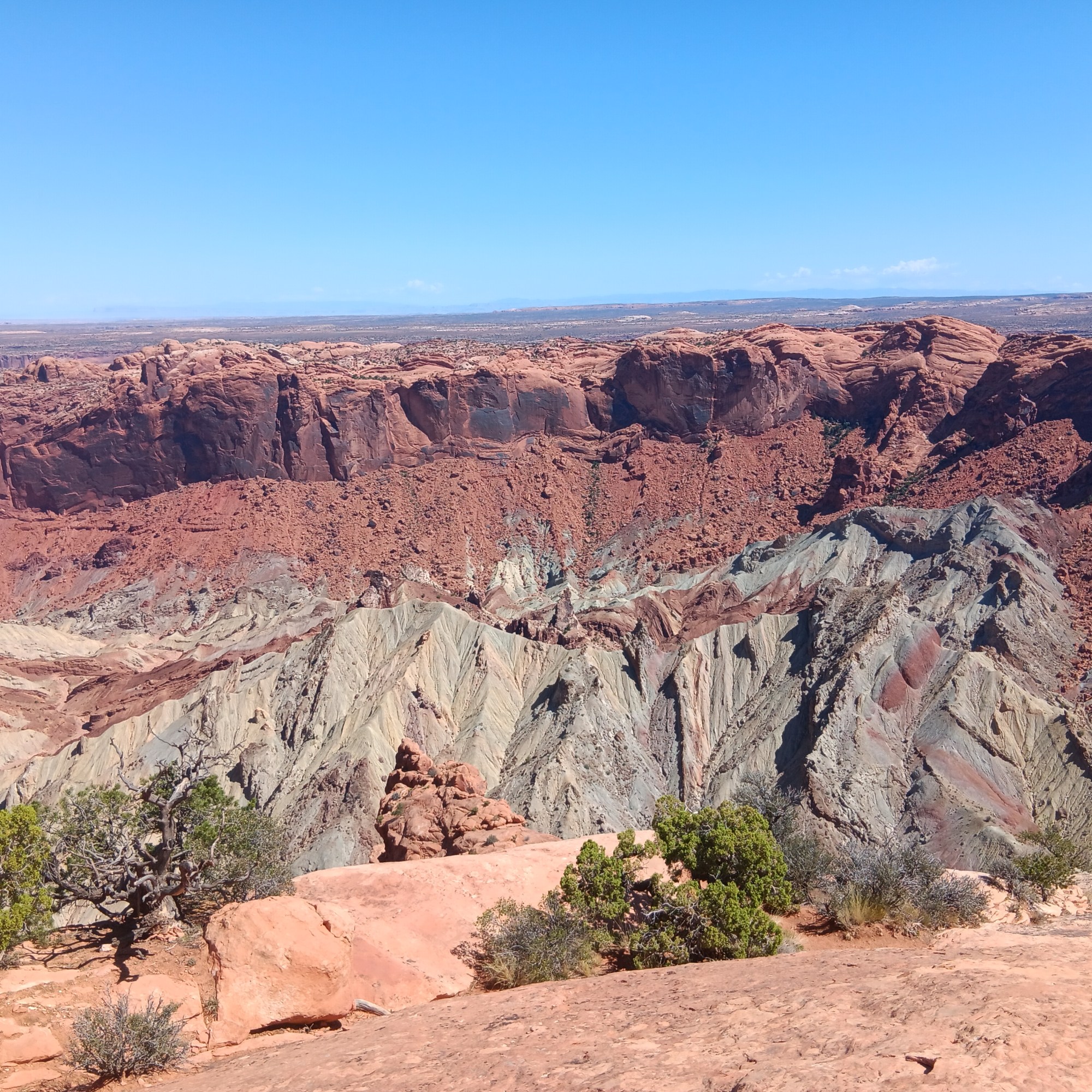
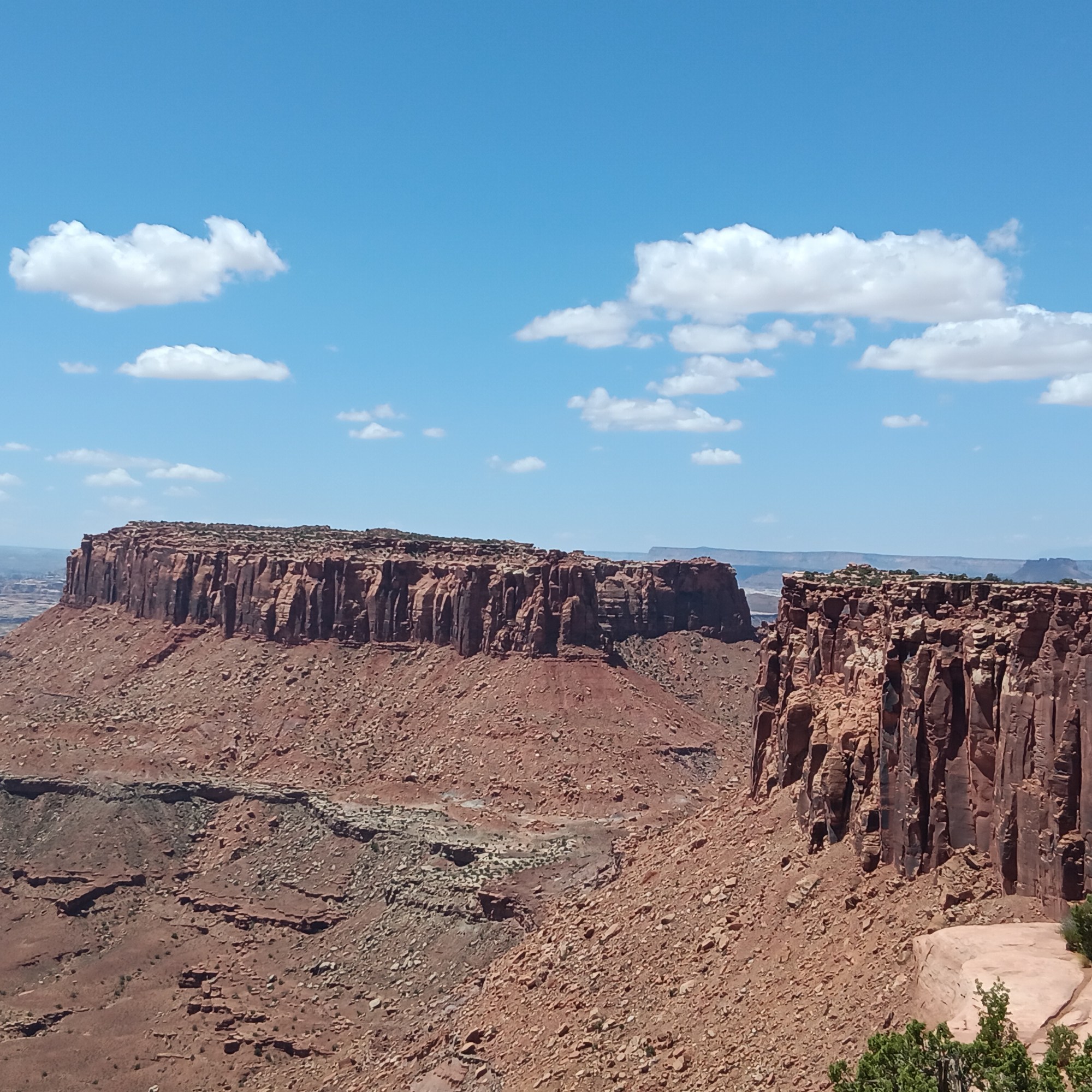
Canyonlands National Park is a vast area covering over 1,360 square kms so one has to choose which part to see in a morning. The roads are wonderful and all the features are signposted. Travelling with a geologist is great – he explained how various formations developed as we drove past them. To see some, you have to walk along trails and, despite the heat (35 degrees), it is worthwhile. Again superlatives fail when you try to describe towering rock formations and almost unbelievably vast vistas.

Arches National Park is, if anything, even more spectacular, as you drive past sheer cliffs rising from the desert floor. As its name suggests, it’s the rock arches that the park is famous for and they are indeed impressive. Late in the afternoon we walked along a trail to reach the wide so-called Landscape Arch. It was well worth the effort in the blistering heat and we returned to our very pleasant accommodation and jumped into the pool.

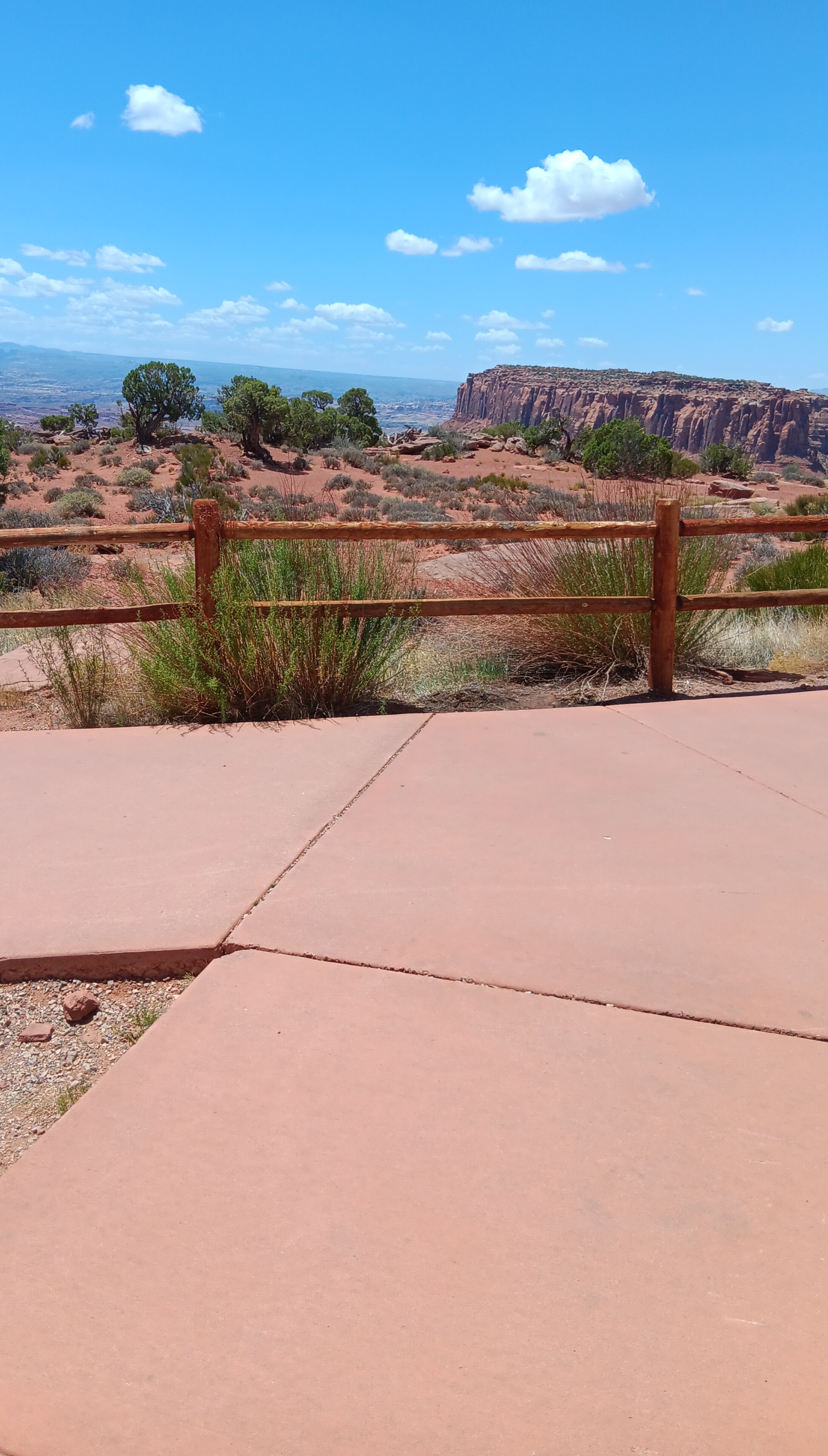
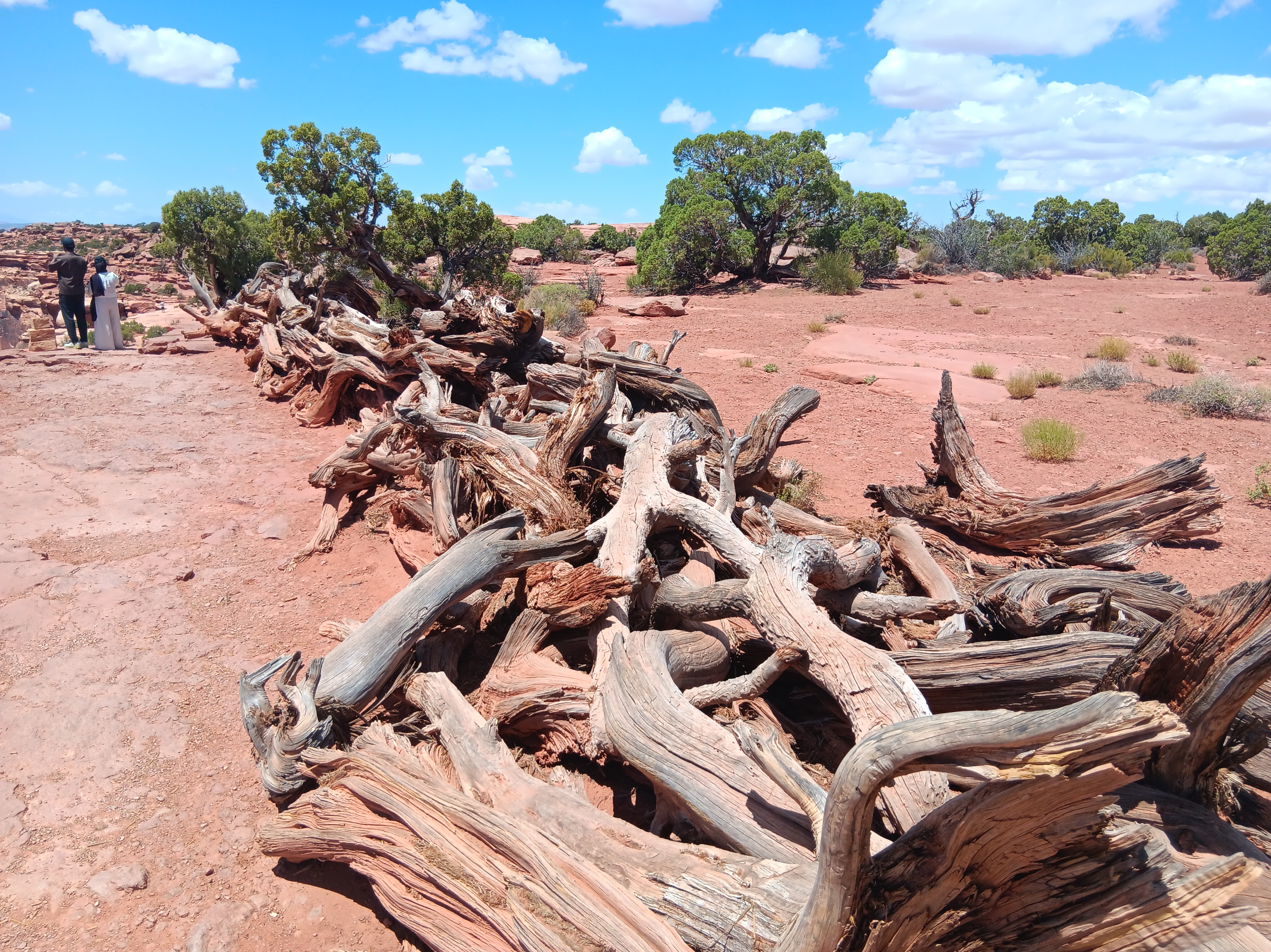
We were impressed by how well organised the national parks were. All the human additions are unobtrusive. The colour of the pathways matches the pallet of the landscape, trails are marked by fallen juniper tree branches, signposts are small and steps are indicated and made from blocks of rock. These national parks are a credit to the USA and it would be a great pity if they were to suffer any degradation from funding cuts.

The town of Moab is like an oasis in the desert. It has a wide Main Street with lovely cafes, restaurants, craft and jewellery stores, selling locally made products of high quality, far from the tat we’ve seen in other tourist towns. There is also an impressive book shop, called Back of Beyond Books, in which I spent a happy half-hour, though I didn’t buy anything, the weight of my luggage hindering me.

Rhythm of the saints

Santa Cruz (the holy cross), San Francisco (St Francis of Assissi), Sacramento (the holy sacrament).

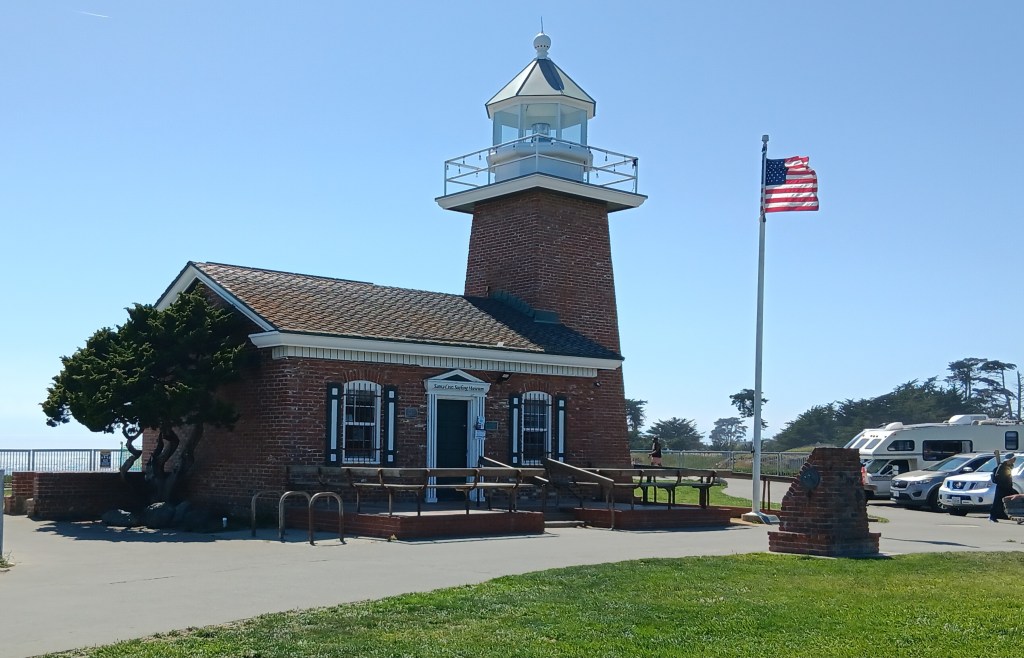
We spent our warmest day so far in Santa Cruz, walking along its famous boardwalk, watching screaming kids on the ferris wheel, popping into the O’Neill surf shop and walking along the longest pier in California. Golden seals populate the wooden platforms below the pier and vie for prime positions. Watching these sleek swimmers try to heave themselves onto a platform while those already basking in the sun try to keep them off was the best entertainment. Later we walked along the pathway that runs along the surf beaches and saw some intrepid surfers catch waves that broke off the point near the lighthouse and ride them till they reached rocks. All the while pelicans and seagulls soared overhead.

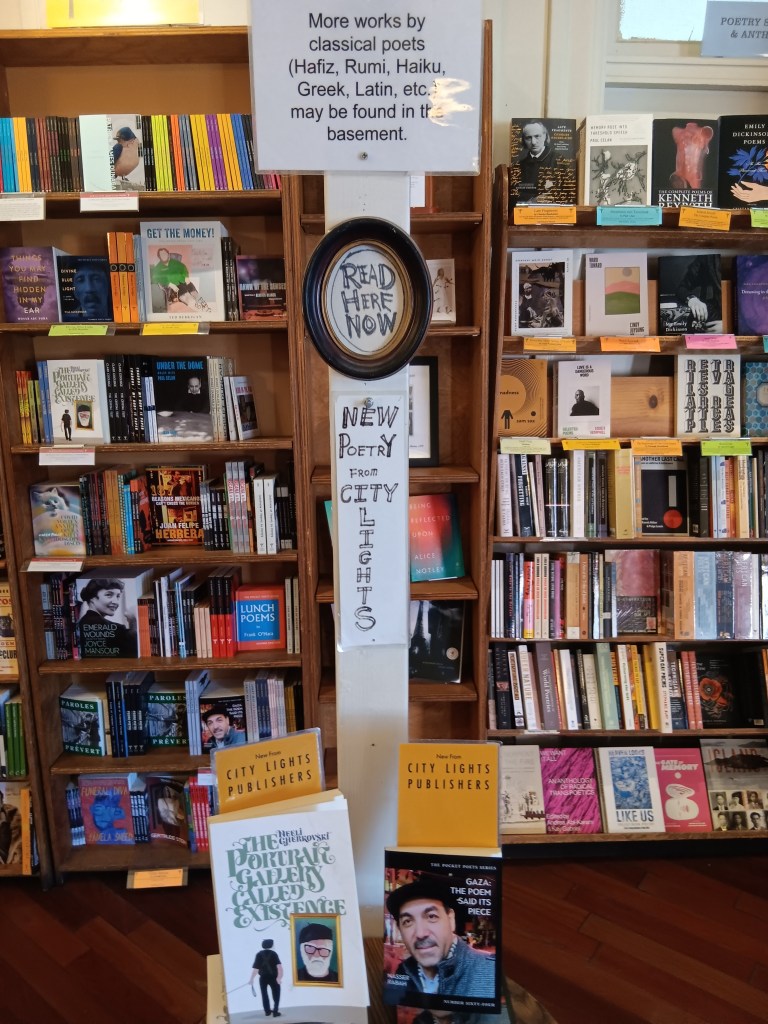
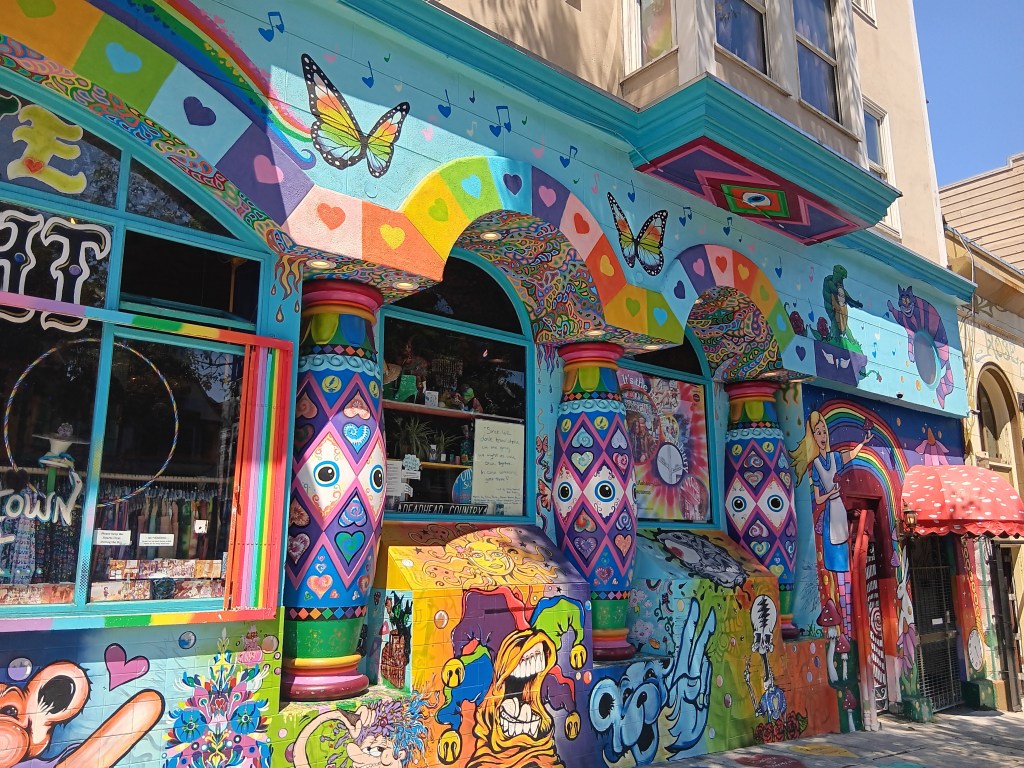
San Francisco is a beautiful city with its famous bridge, vertiginous streets, architectually pleasing buildings and ornately painted houses. Highlights were a browse in City Lights Books and a wander through the Haight Ashbury area. The Love on Haight store, whose slogan is “whatever the question, love is the answer”, keeps the spirit of the 60s alive.

But San Francisco also has masses of noisy traffic, large numbers of homeless people and it seemed almost every resident of the city has a dog, which can make some streets unpleasant to walk along. There is also the pervasive smell of marijuana, now legalised in California, wherever you go.

Sacramento’s origins go back to the gold rush of the 19th century and the building of the Pacific Railroad, vestiges of which can be seen in the Old Town. It is now the state capital of California with large and ornate buildings, like the City Hall and the Courthouse. It is also called the city of trees, which is appropriate as the wide streets in the city centre are flanked by huge trees providing welcome shade in the heat of summer. We had excellent coffees and shared a slice of delicious corn bread in a cafe run by friendly Guatemalan migrants. But the whole city has an air of neglect and there are a large number of homeless people living in the parks and tent cities.

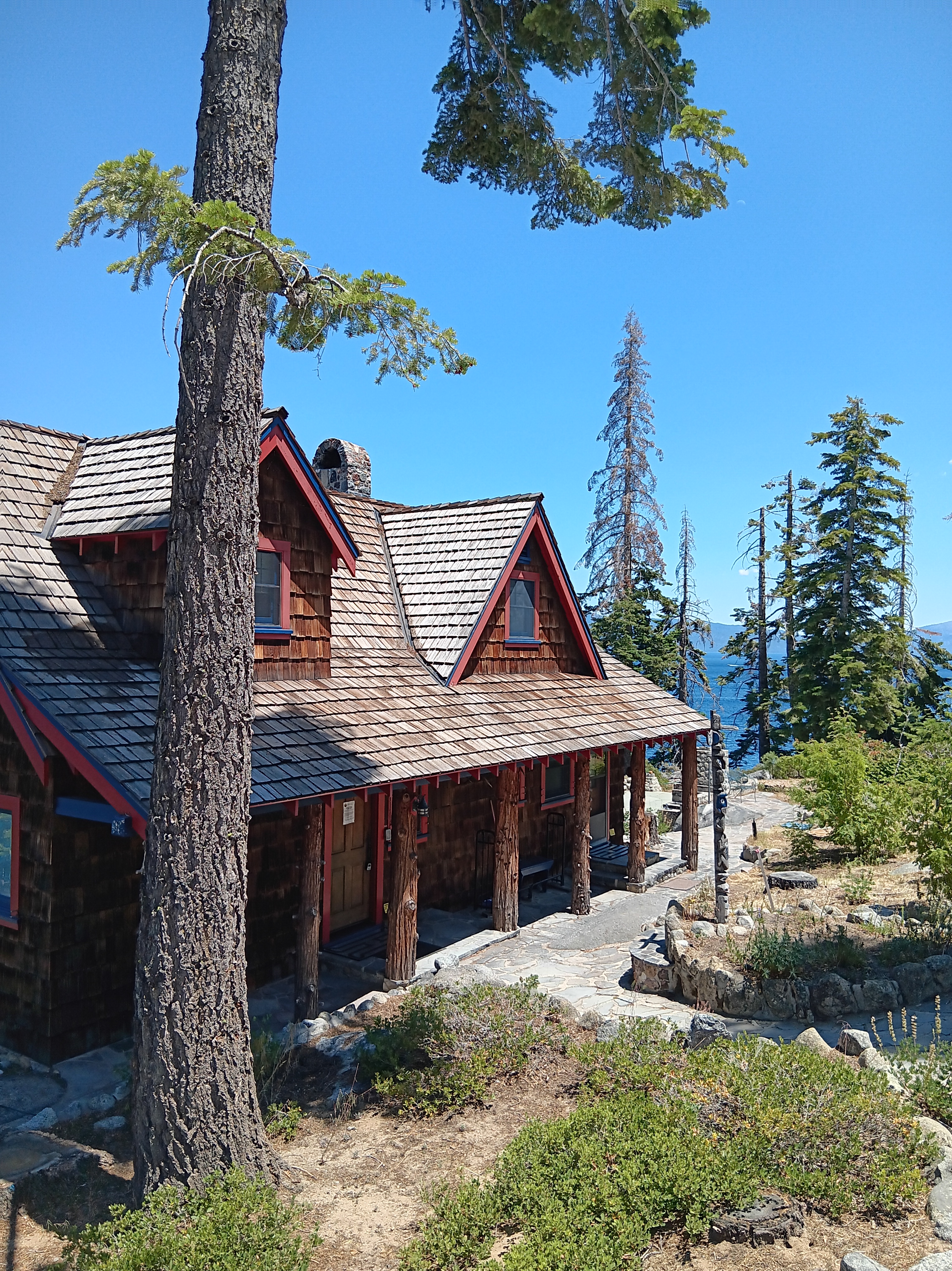
The surrounding areas are vast with tinder-dry fields of grass, which explain why the wild fires are so difficult to contain here. There are forests of tall pine trees and spectacular rivers, like the American River and the Truckee River, which rises in the Sierra Nevada mountains and is the sole outlet of Lake Tahoe. We saw the breathtaking mountains, which still have vestiges of snow, and deep-blue lake on a magnificent day. It was a fitting end to the Californian leg of our trip. Now onto Utah and Colorado!

California dreaming

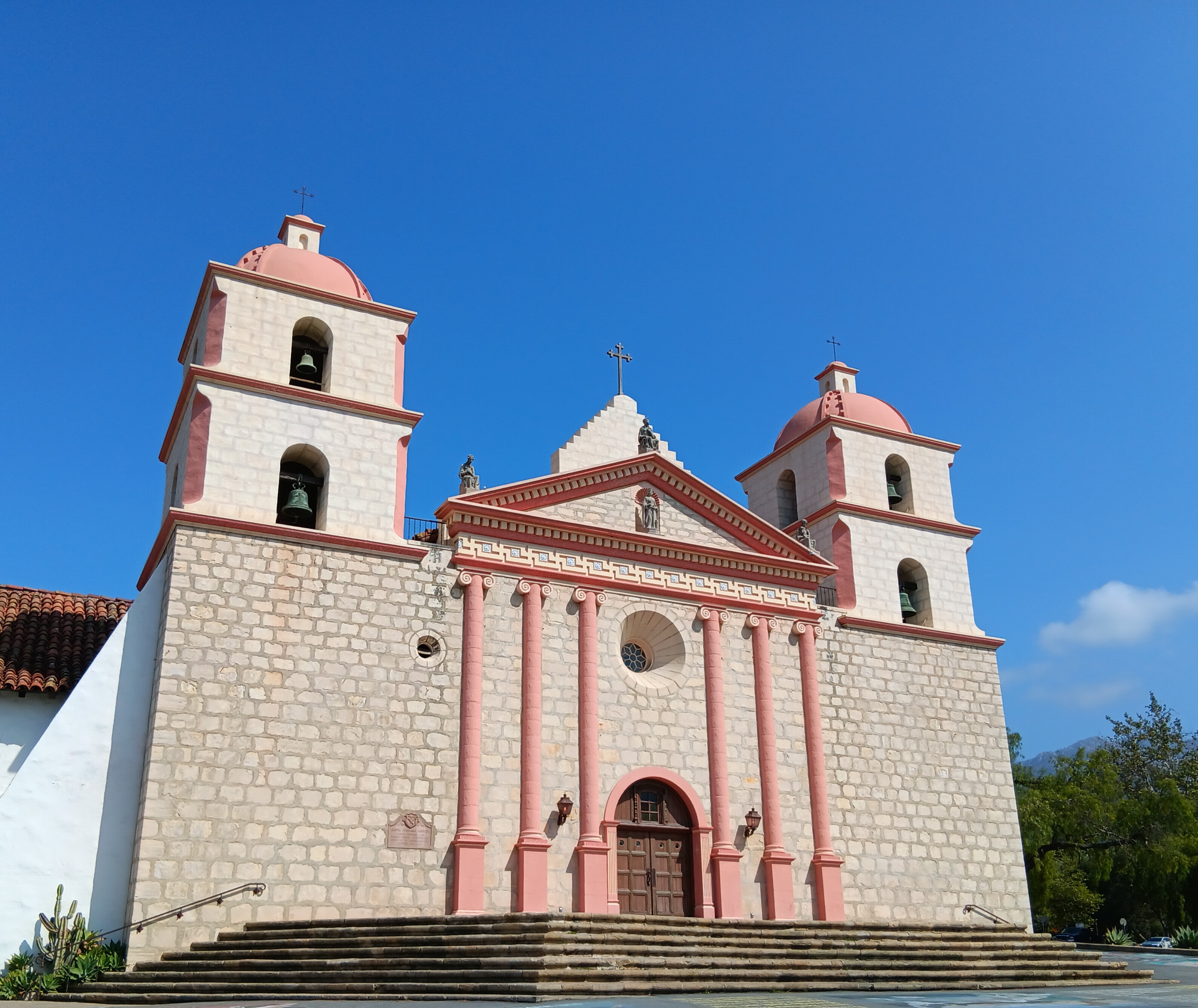
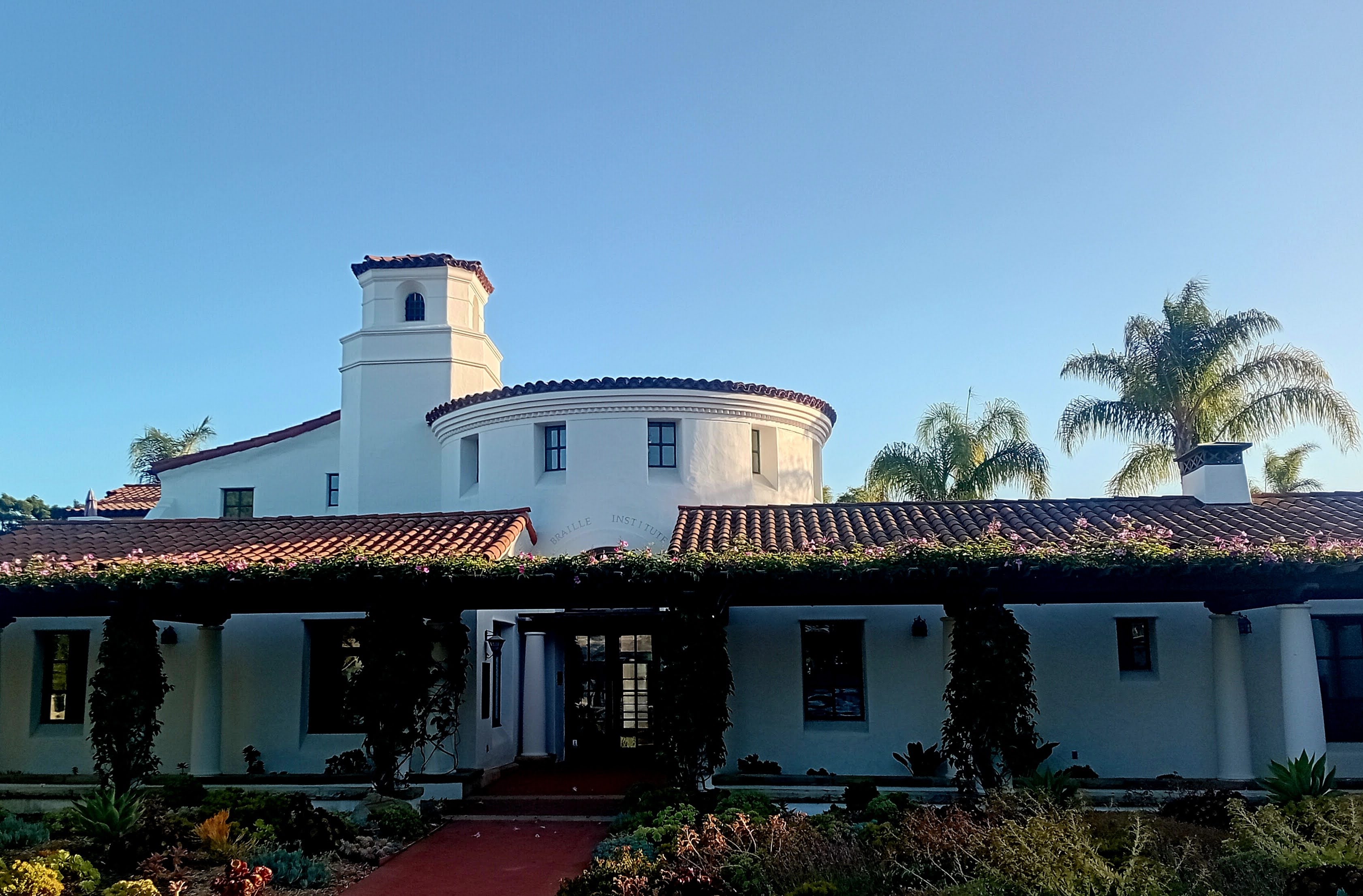
We arrived at LAX, picked up a rental car and manouvred our way out of that frenetic city via various freeways up the coast to Santa Barbara. One is immediately struck by the Spanish influence not only in the names of almost all the towns and cities but also in the architecture. There are impressive mission buildings in Santa Barbara, San Luis Obispo and Carmel-by-the-sea, dating from the 18th century. They are still active religious centres and hold regular masses.

Wherever you go, there are beautiful gardens filled with hardy plants that can withstand the rigours of a dry, windy climate and there are very few lawns. And palm trees are ubiquitous.

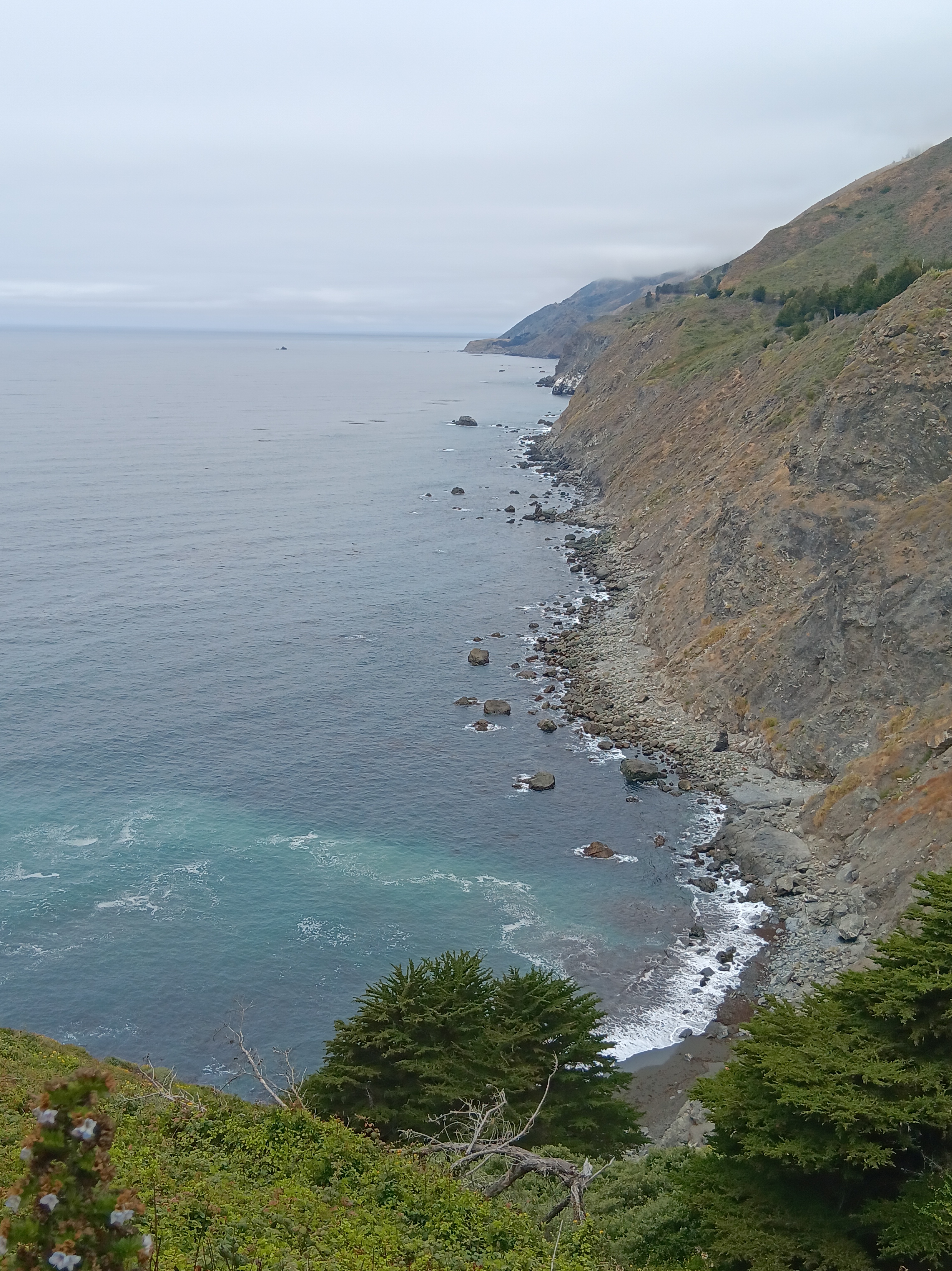
The California coast is spectacular with huge variety, from wide white-sand bays to densely vegetated dunes to dramatic cliffs and crashing surf. Big Sur is almost impossible to describe with sheer granite inclines straight from the water and the road follows the curves of the coast so that you are sitting on the edge of your seat waiting to see what’s around the next bend.

America is also everything that you expect – traffic-filled freeways, friendly helpful people you meet when checking into accommodation or asking for directions (‘you’re very welcome’), grocery stores with a bewildering number of aisles and selection of products, gas stations with immaculate restrooms and massive utes/RVs/trailers everywhere.

We’ve seen an array of wildlife along the coast: sealions, pelicans, elephant seals and adorable sea otters. The mammals come into the bays during spring and summer to give birth to and nuture their young. We watched a nursery of sea otters mums and pups among the kelp in Monterey Bay.

And our California days are continuing with Santa Cruz, San Francisco and Sacramento still to come.

Chinese mosque

053

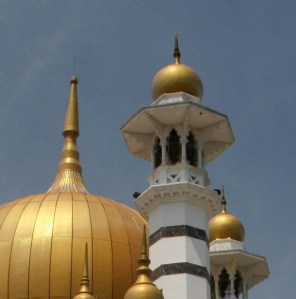
As we prepare to leave Ipoh for good and return home to New Zealand we’ve been trying to see things here that we’ve not yet got around to. One of these was a visit to the Chinese mosque or Masjid Muhammadiah. This beautiful building is unique in Malaysia – a mosque of 100 per cent Chinese design. The roof, which was imported from Longyan, is the most striking feature and is complemented by the pink and red of the walls and pillars. The mosque is surrounded by lovely gardens and plenty of shade. We’ve become accustomed to taking various scarves and sarongs around with us so we could cover up and enter the mosque precinct. There was a group of women and girls having a social function in the women’s part of the mosque and a group of men scrubbing the tiled ablution area to the side. They are clearly used to tourists and as long as you are suitably dressed, this is not a problem. It is definitely worth a visit.

Rude awakening

mosque

For the last two mornings I have woken up with a start at 5 a.m. It takes me a minute to orient myself and realise I am back in Ipoh and what has woken me is the amplified sound of one of the local mosques. And then I remember with a pang that I am no longer in Auckland. Why 5 a.m. today when the official time for the first call to prayer is 5.47 a.m? I have asked some of my neighbours why this particular muezzin begins at 5 a.m, which is at least 45 minutes before the required time, but have received no coherent answer. By the time the other two mosques within hearing range start their calls, I am wide awake and thinking about my first cup of coffee.  I guess I’ll become accustomed to it and sleep through as I did before my recent trip home.

Chiang Mai

056

I’m not sure how many temples there are in Chiang Mai but it seems like there’s one on every street corner! And each one seems more splendid than the last. The temple in this photo is Wat Phra Singh, which we visited first because it was closest to our hotel. Our guidebook says it houses the most revered Buddha image in Chiang Mai and that it is an excellent example of Lanna architecture. It is certainly very impressive with its bright gold stupa and immaculate, peaceful gardens. We visited many temples on our walk around the old city and it was awe inspiring. The displays in the Lanna Folklife Museum expertly explain the religious beliefs and customs of the northern Thai people. After our visit there, we were better informed about what we were looking at in the temples. The people watching was good too: robed monks mingled with locals bringing their offerings and saying their prayers as well as tourists from all over the world. It is all very relaxed and inclusive.

Churches in Old Goa

092

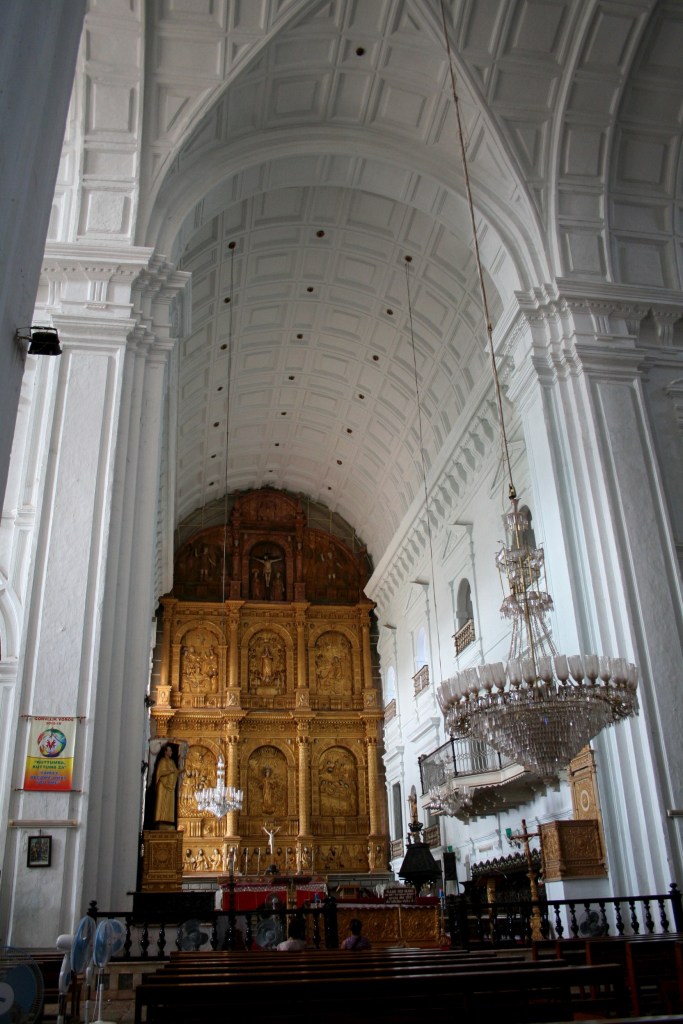
Sé Cathedral is the largest church in Asia and is only one of numerous churches in Old Goa. It is a magnificent structure and must have been truly spectacular when the interior was still richly decorated and not white-washed as it is now. The remaining bell tower (the other one having been struck by lightning) houses the huge bell, which once tolled during the unspeakable autos-da-fe held during the Inquisition in this outpost of the Portuguese empire. Those are distant memories for the hundreds of Indian Catholics who were attending mass at the nearby (and wonderfully named) Basilica of Bom Jesus the day we visited. This was in preparation for the feast of St Francis Xavier, whose “incorrupt” body is kept in this church. We had a fascinating morning visiting some of the churches and museums as well as the Viceroy’s Arch with its commemoration of Vasco da Gama.