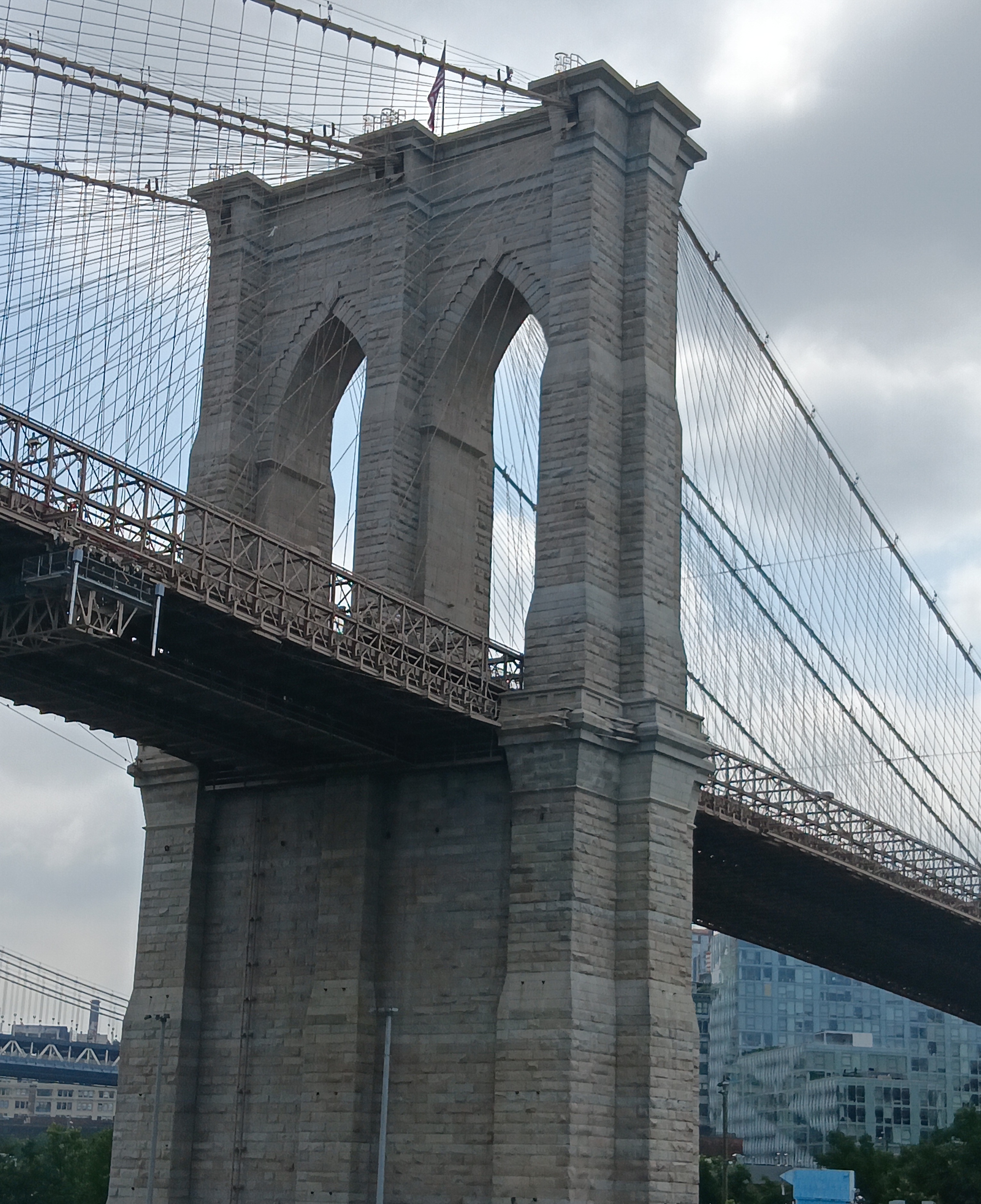
What is there to say about New York City that hasn’t already been said? Probably nothing. So I’ll just say that I’ve always wanted to visit. Now I have and I was not disappointed.
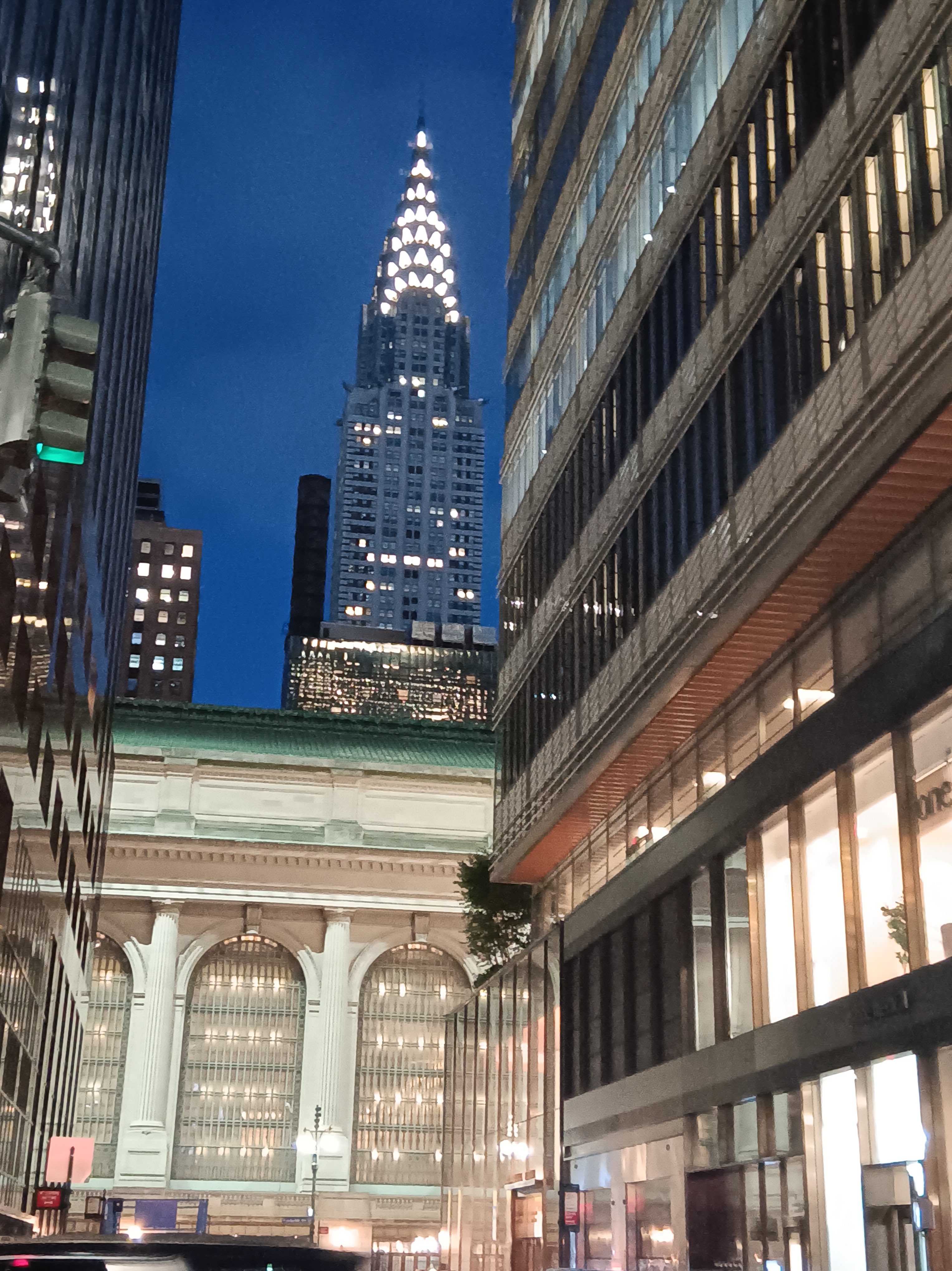
The landmarks
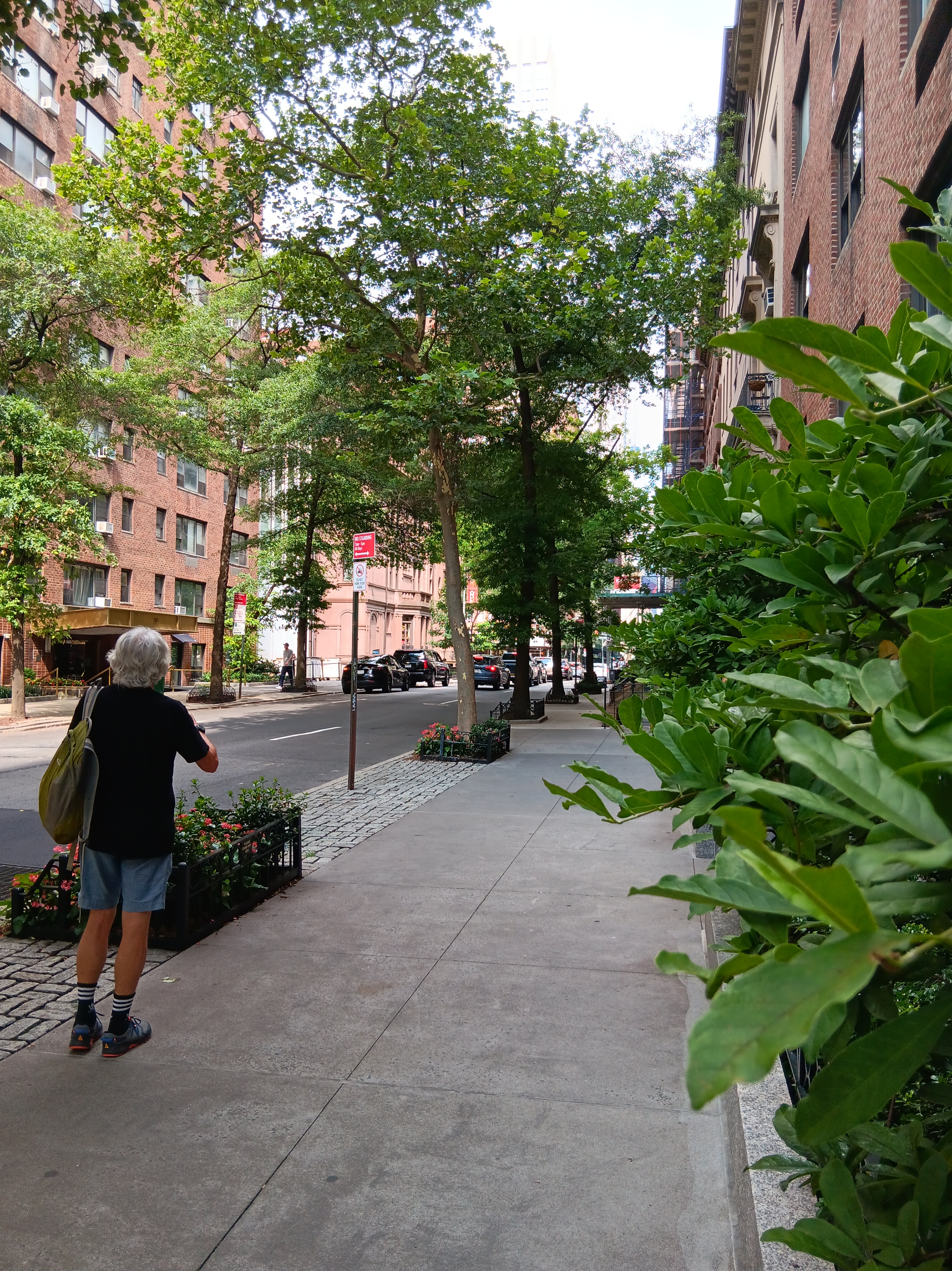
The green spaces – Central Park, Bryant Park, the High Line, the trees and planters that line the streets
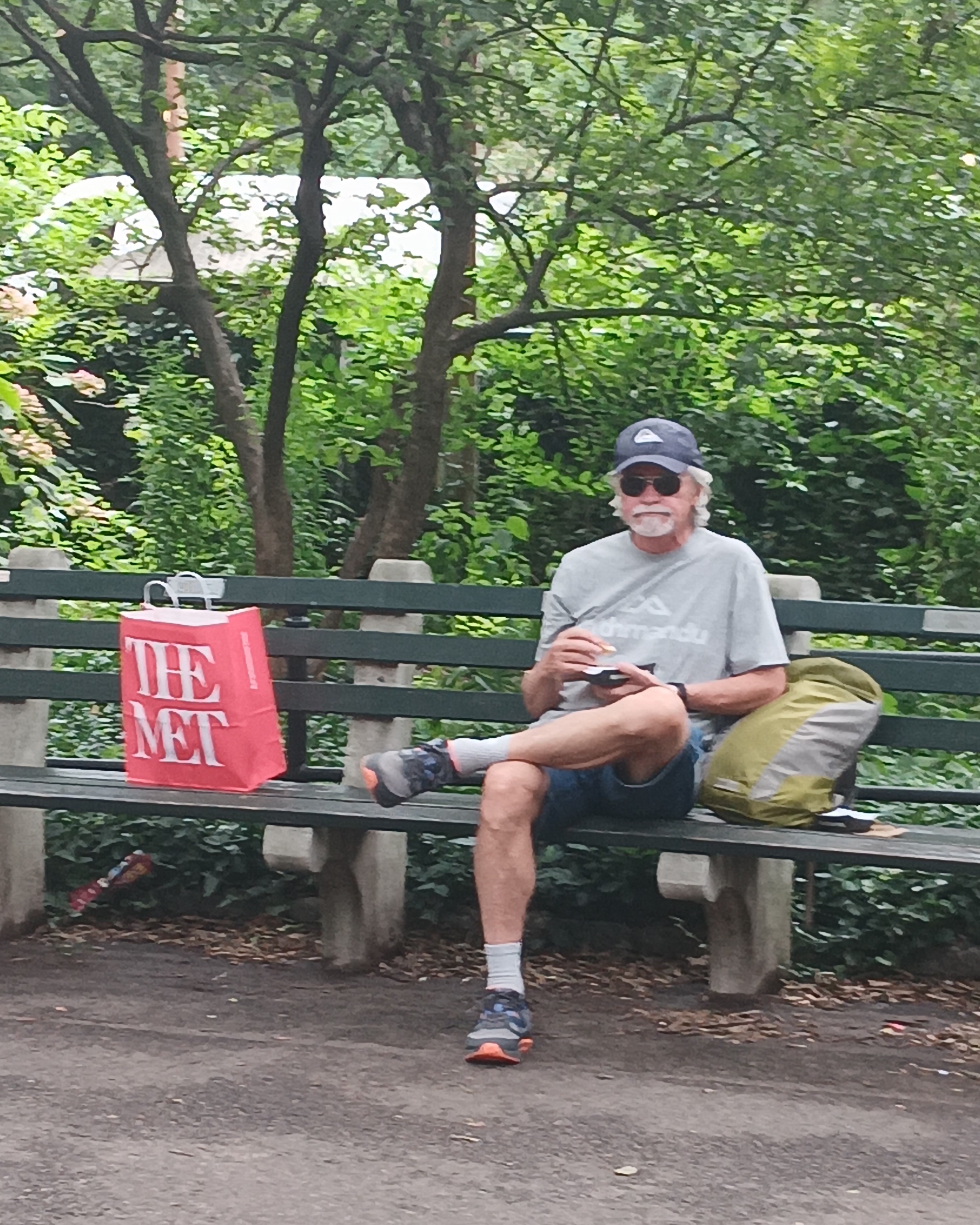
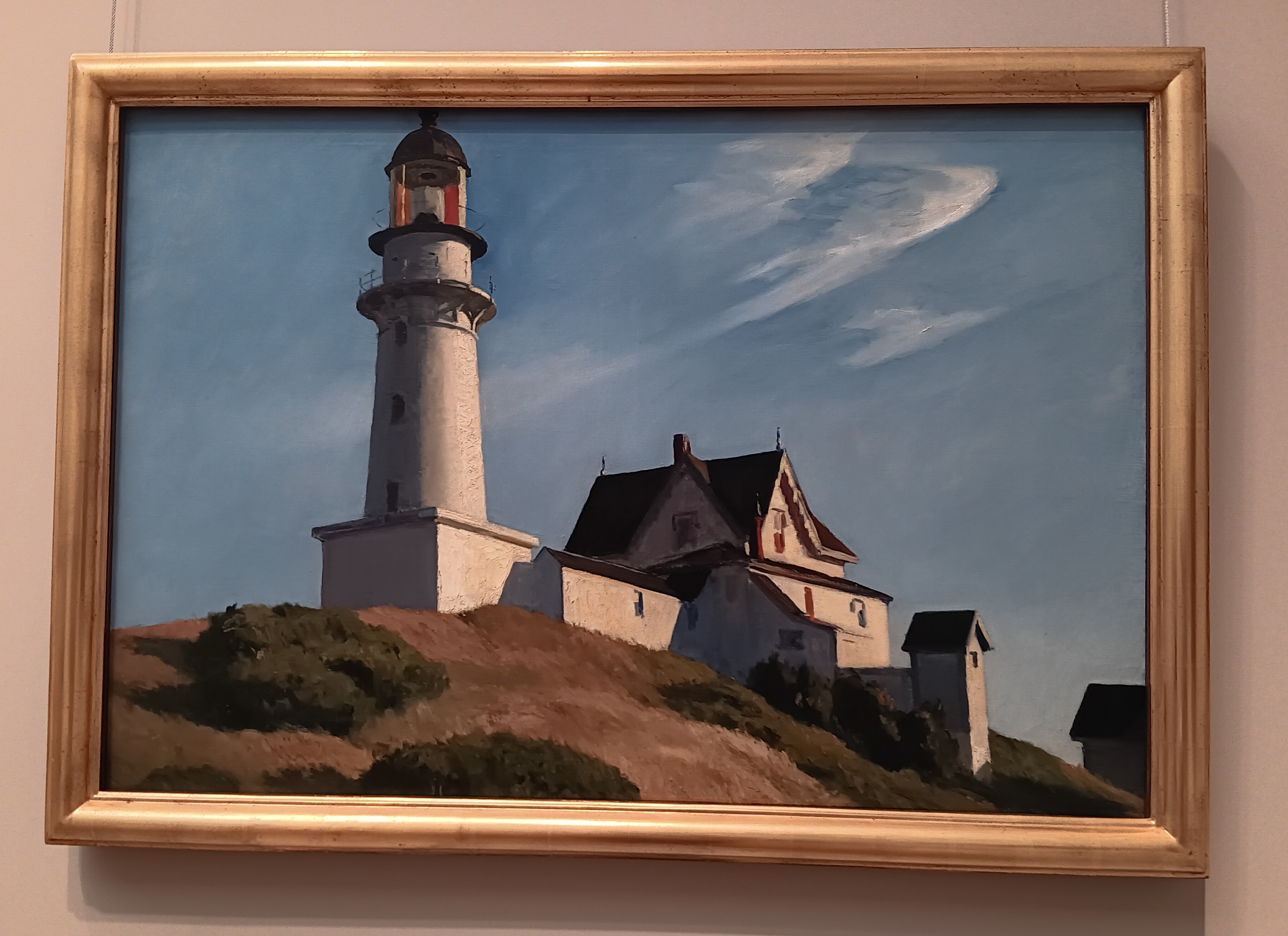
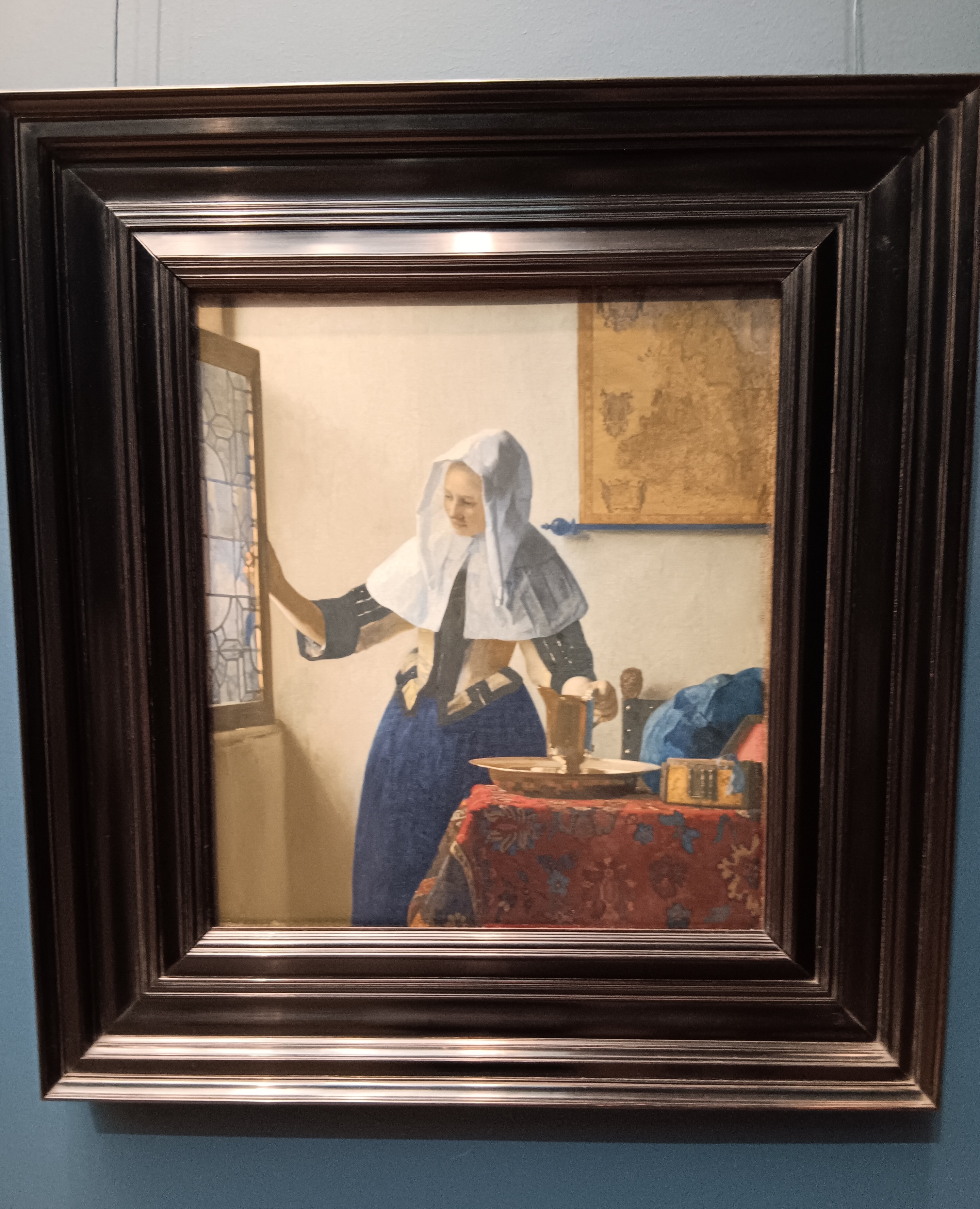
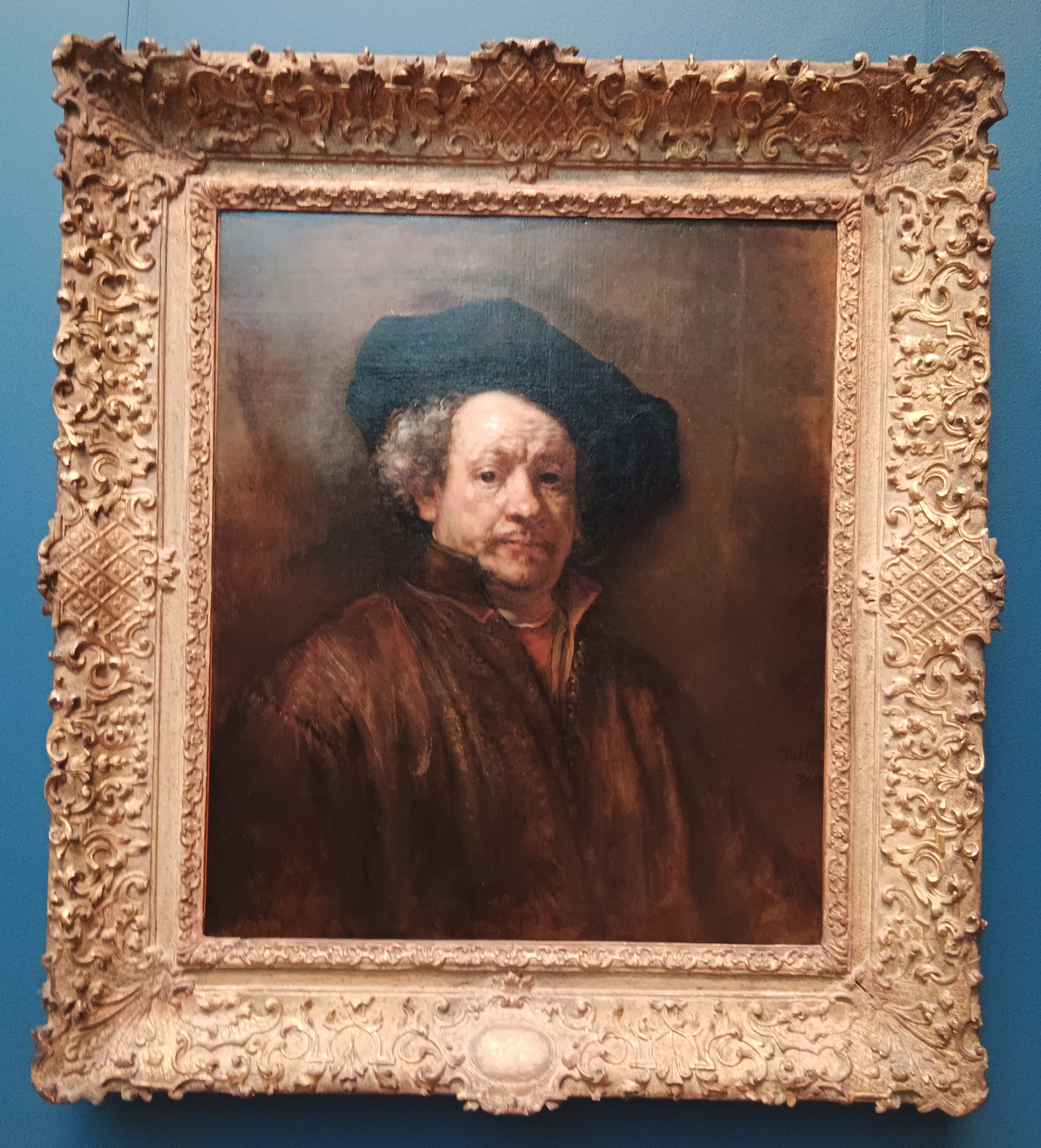
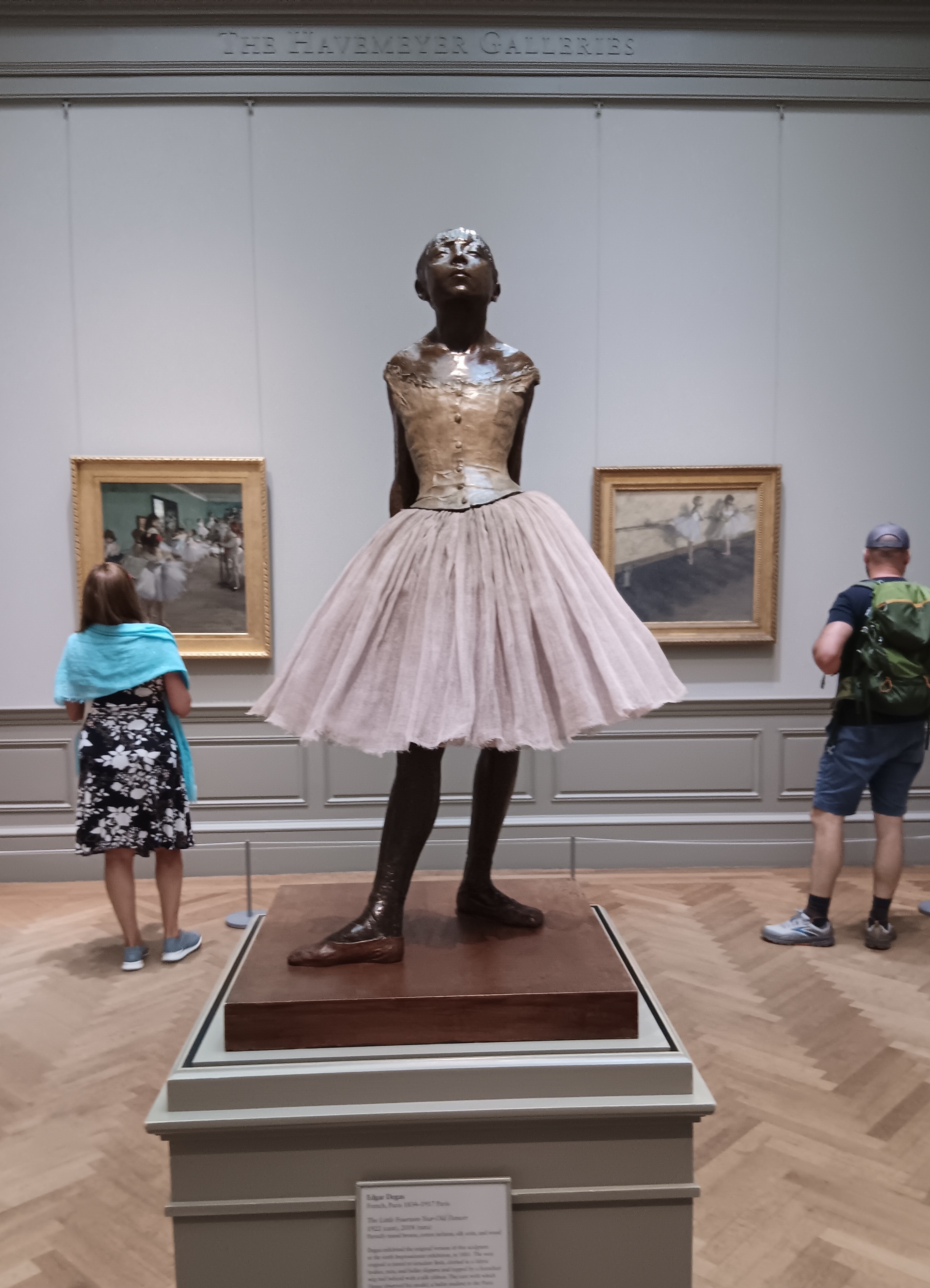
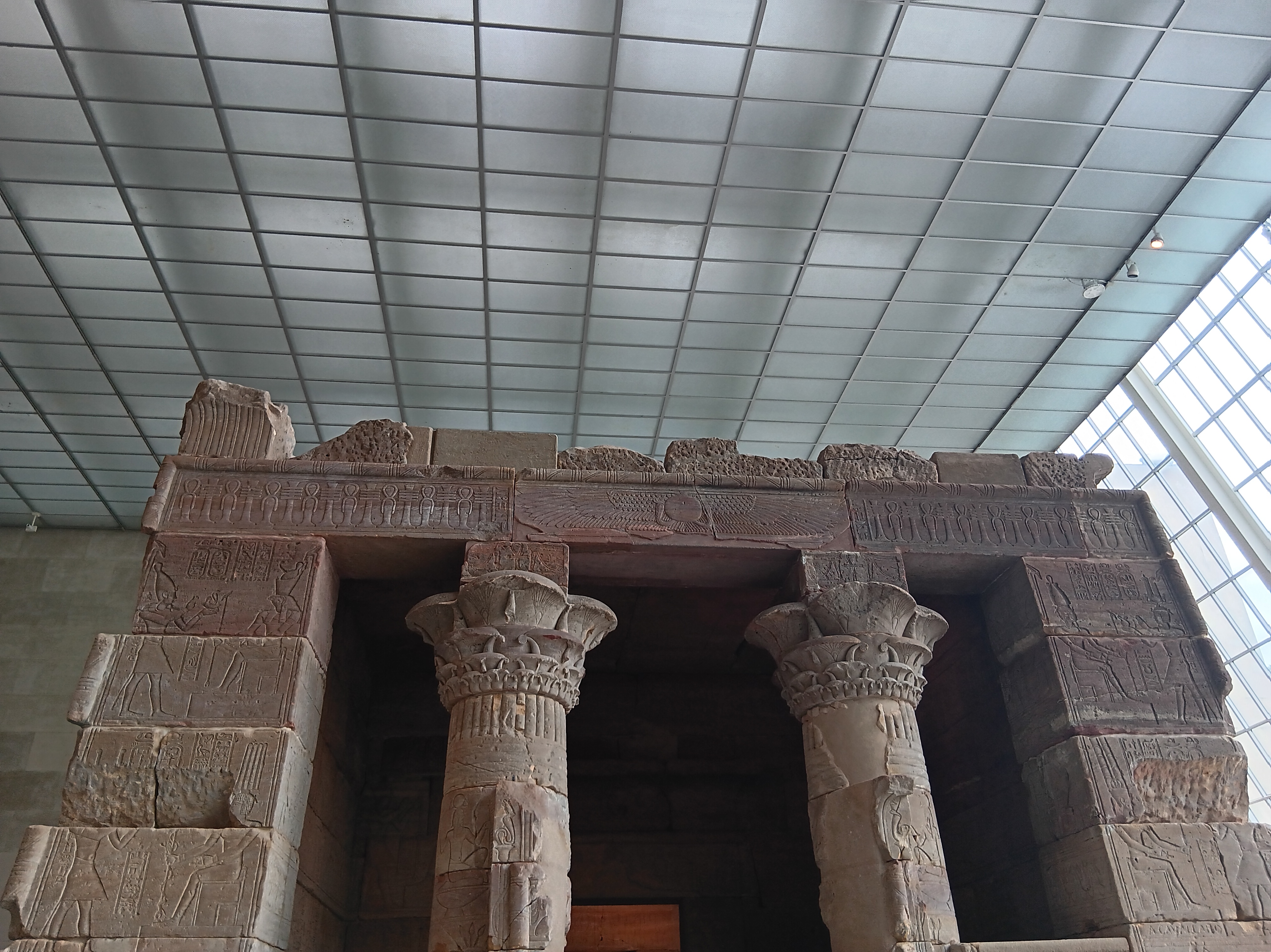
The Met – in all its wondrous abundance and beauty
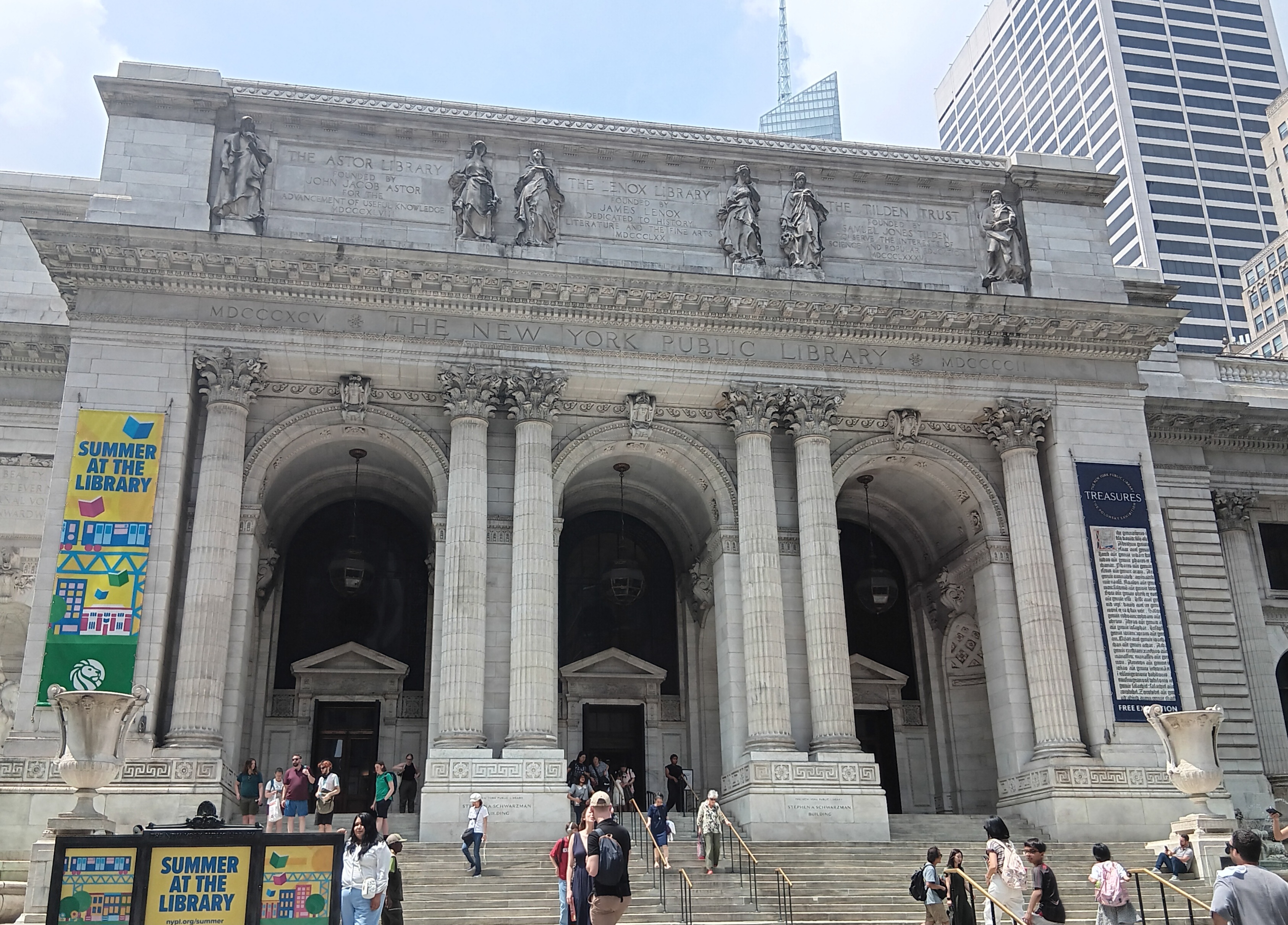
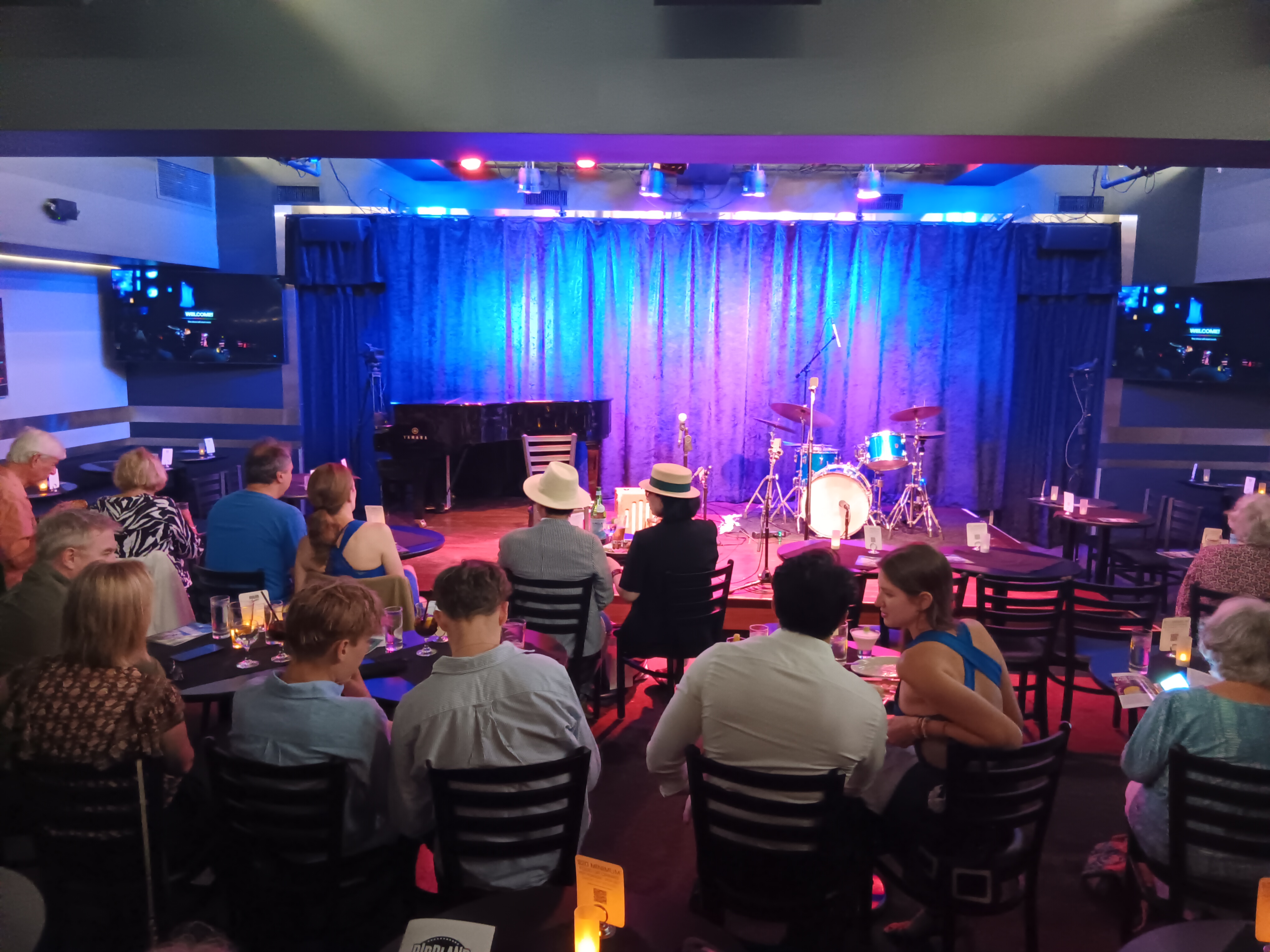
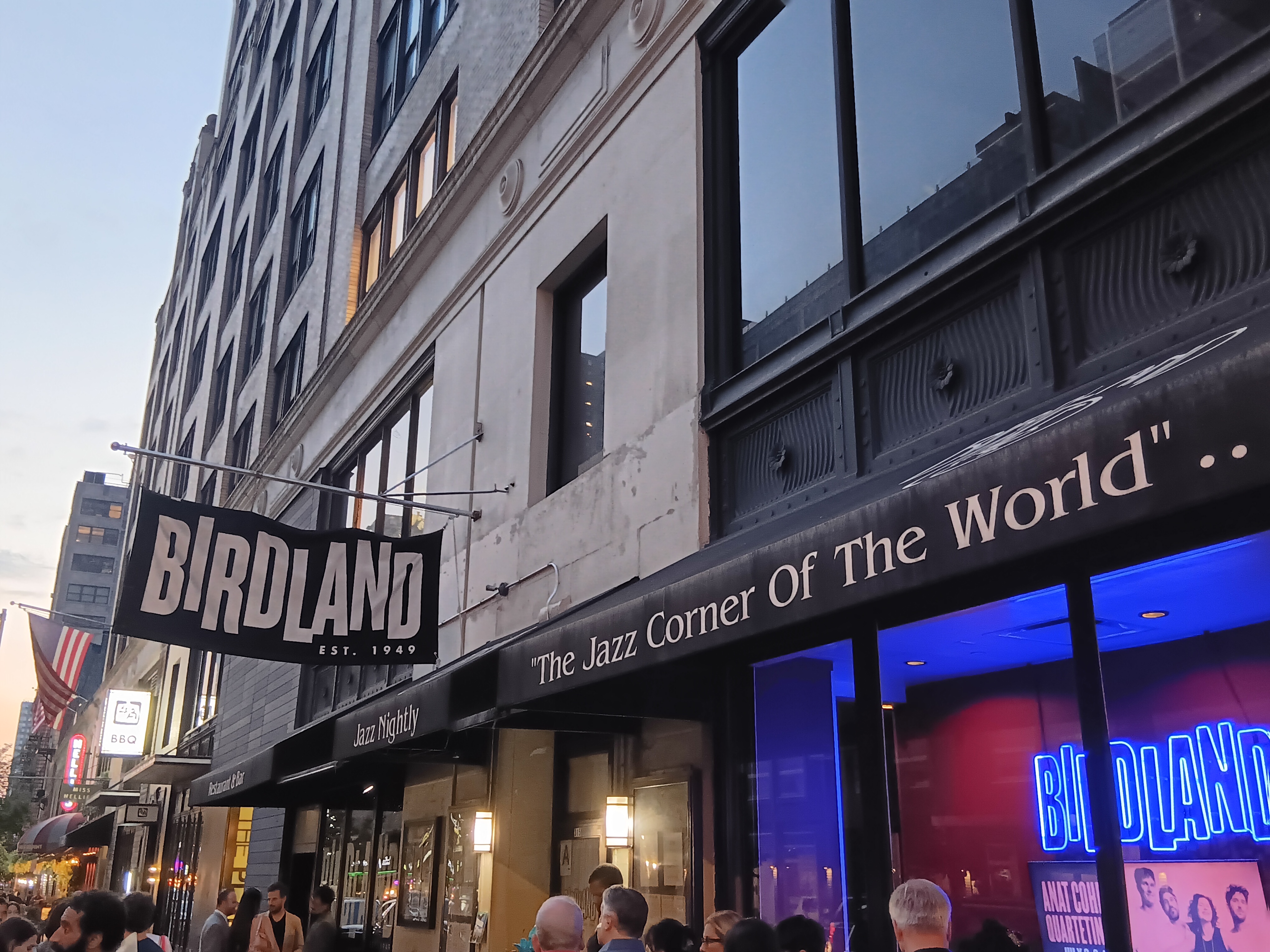
The arts – Broadway, Birdland, NY Public Library, Strand Books
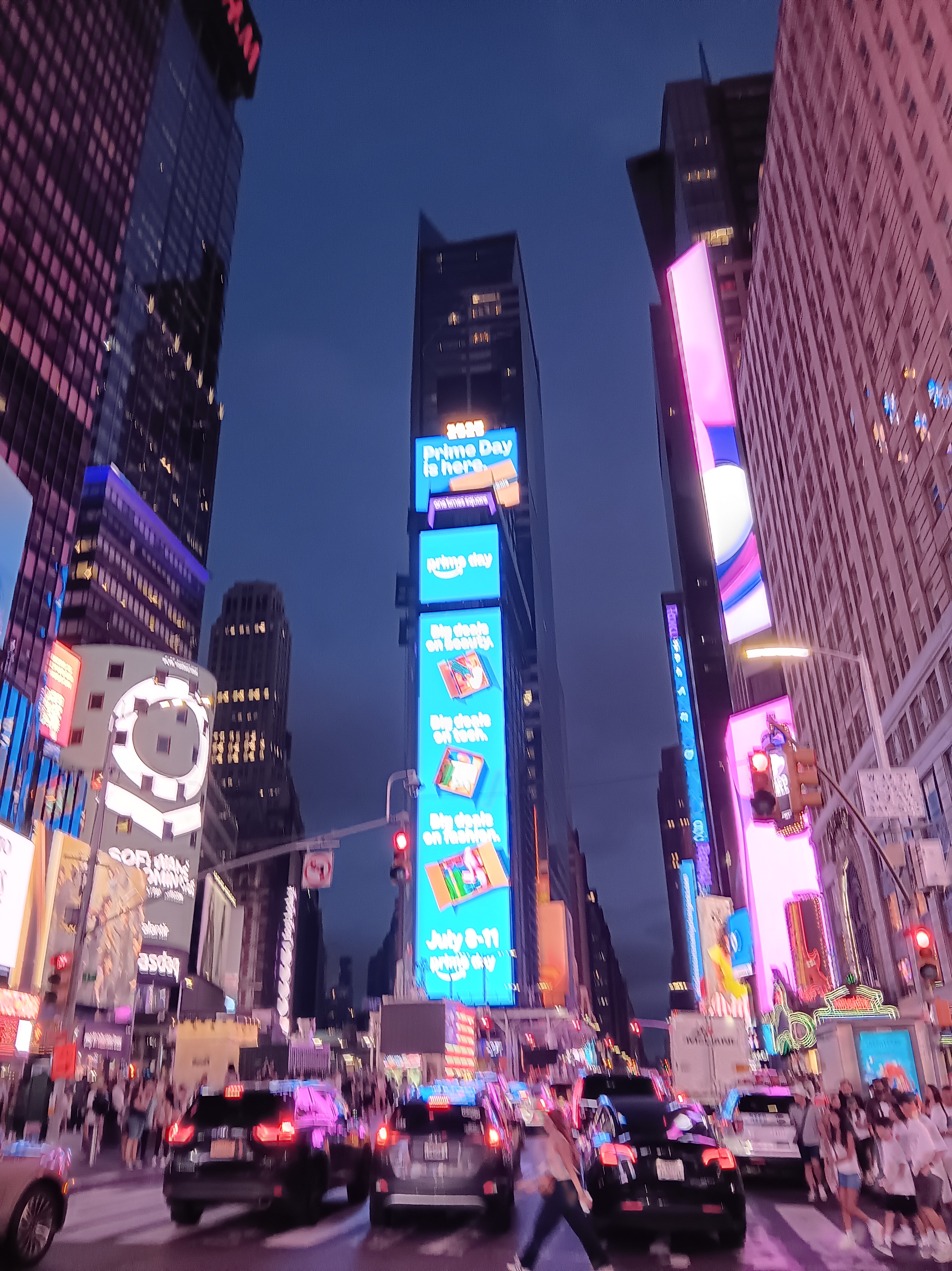
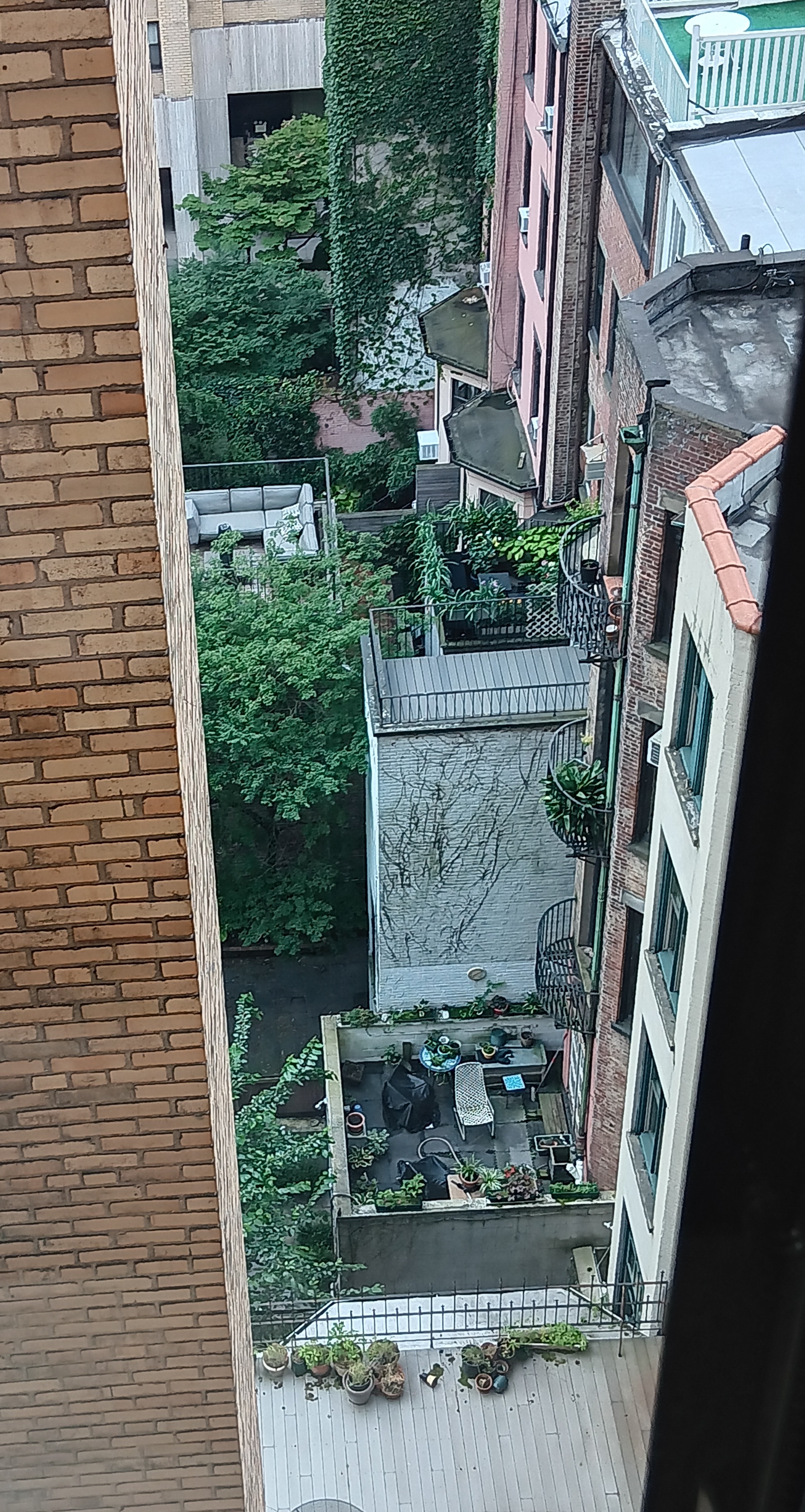
There is also the atmosphere of the city as one walks the streets and avenues, which make Manhattan so easy to navigate. The teeming crowds on the sidewalks who follow no discernable rules, try as you might to keep to the right. The snippets of conversation one hears while walking – New York accents and people speaking in languages from all around the world. The myriad street vendors and panhandlers, who will sell you a hotdog, an NYC cap or a bus tour. The outfits, which run the whole gamut from tourists in ‘I heart NYC’ T-shirts to the sartorially exquisite in designer dresses and high heels or suits, ties and hats. It is endlessly fascinating, though one is relieved to get back into one’s air-conditioned hotel room at the end of the afternoon, before going out again in the balmy evening to go to a show, walk along the East River or watch an Amazon zero-hours contractor make a night-time delivery from an e-cycle vehicle. Another striking feature of this magical city is its clear air and clean streets. I loved it!
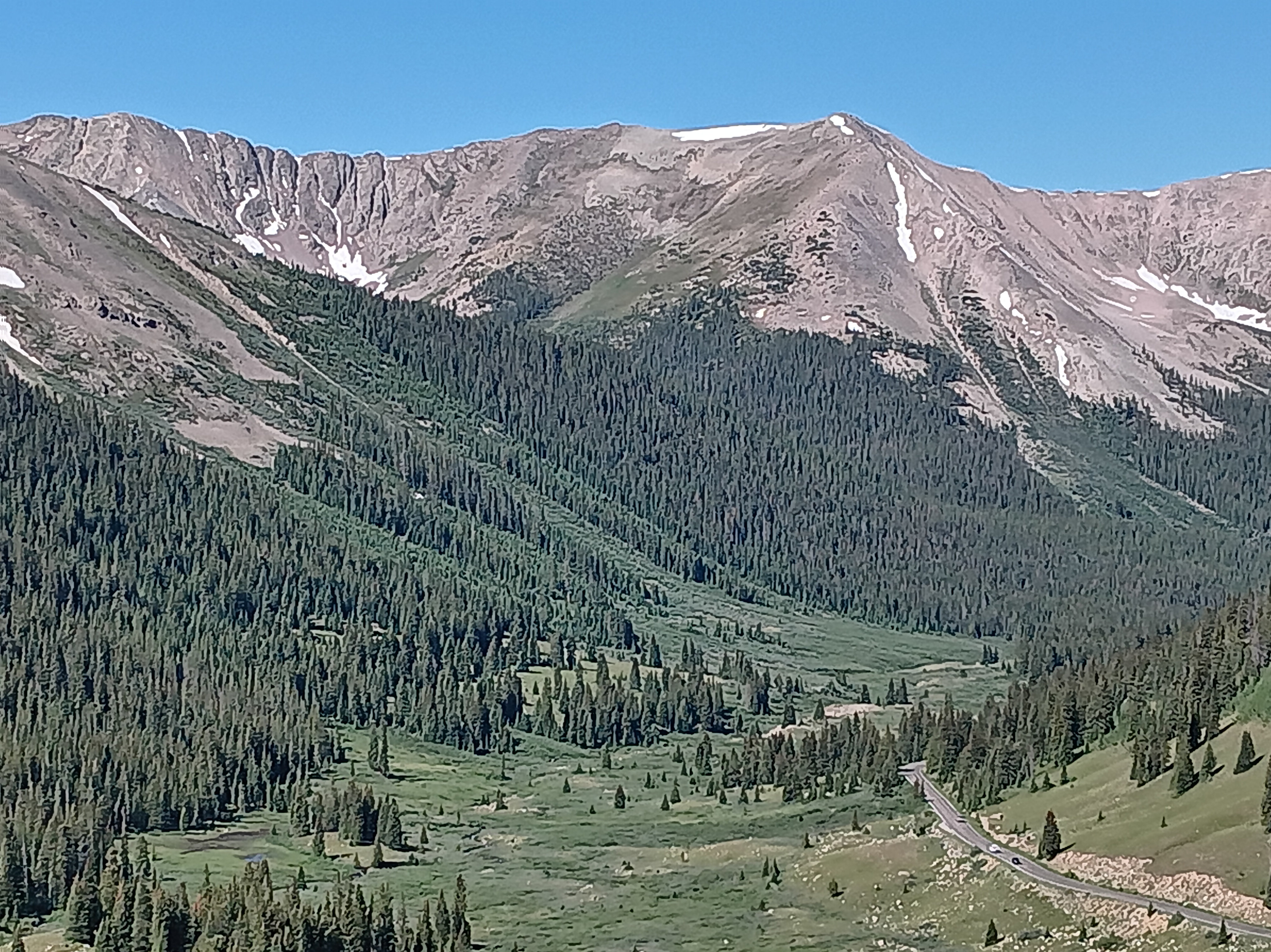
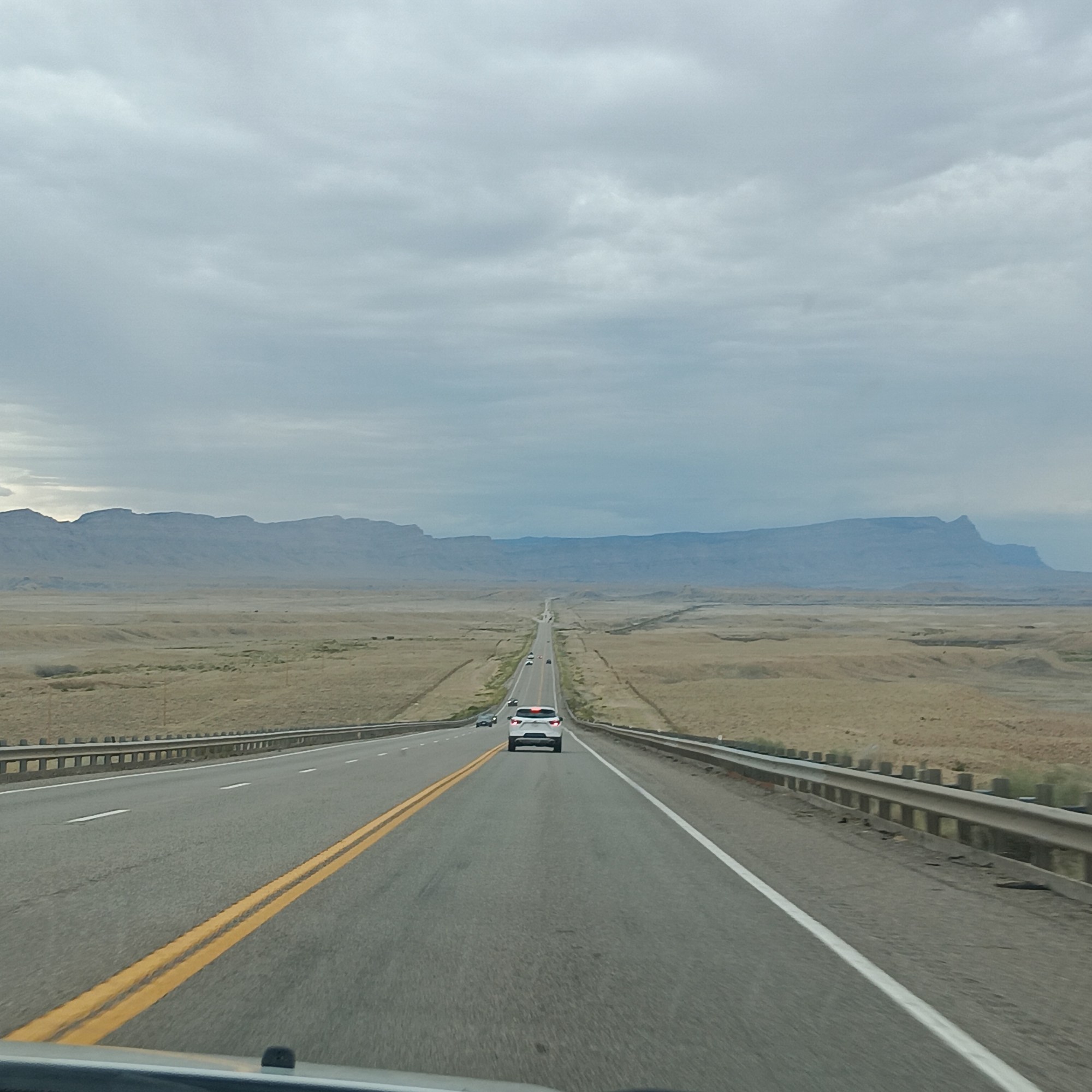
When you first cross from Utah into Colorado, you don’t notice much difference but after criss-crossing the Colorado River several times, the countryside becomes greener. As you get futher into the state, it becomes positively lush and the mountains are covered in greenery. The properous town of Aspen, its airport lined with private jets, is about as lush as it gets. From there we drove up a narrow, somewhat hair-raising, pass right through the spectacular Rocky Mountains.
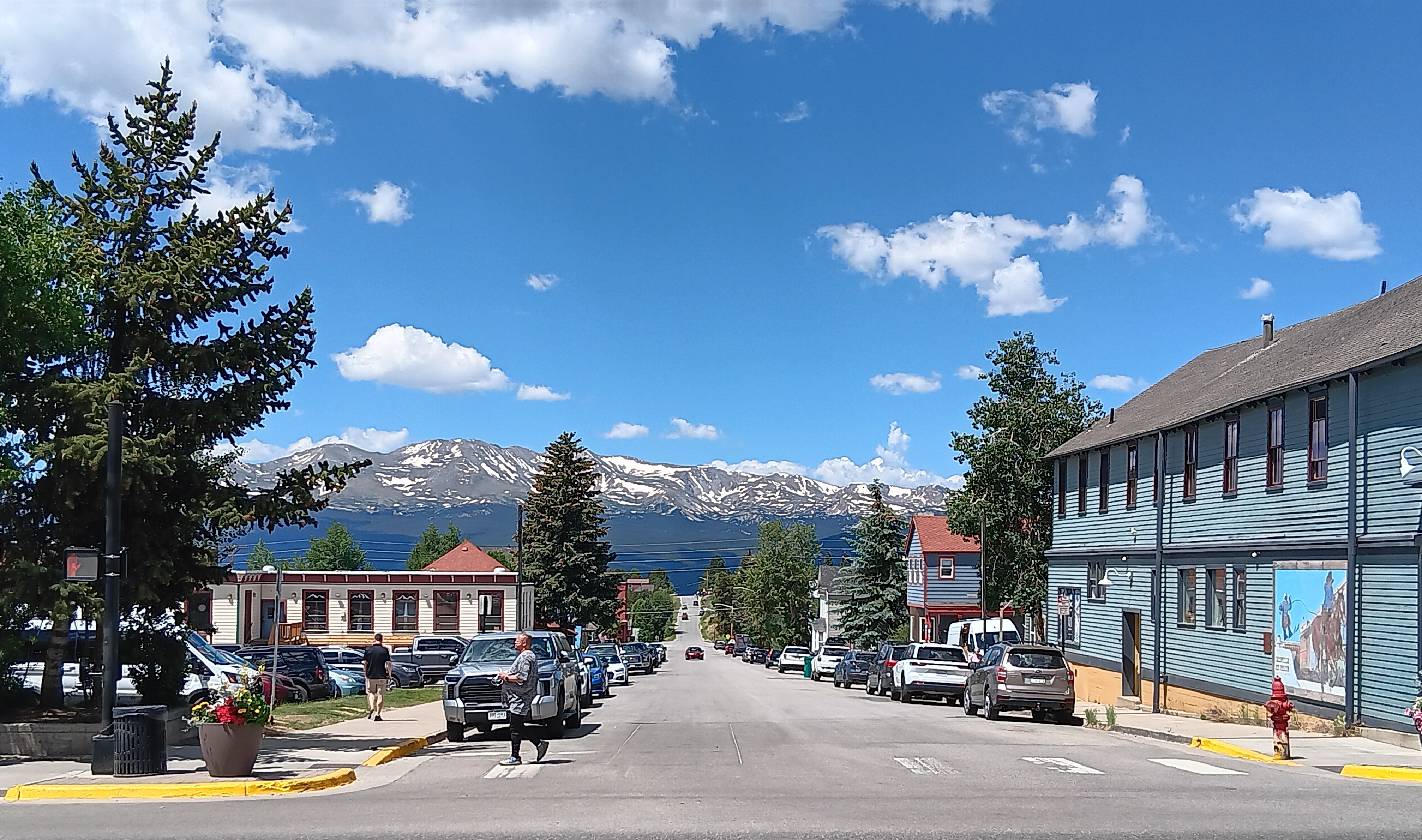
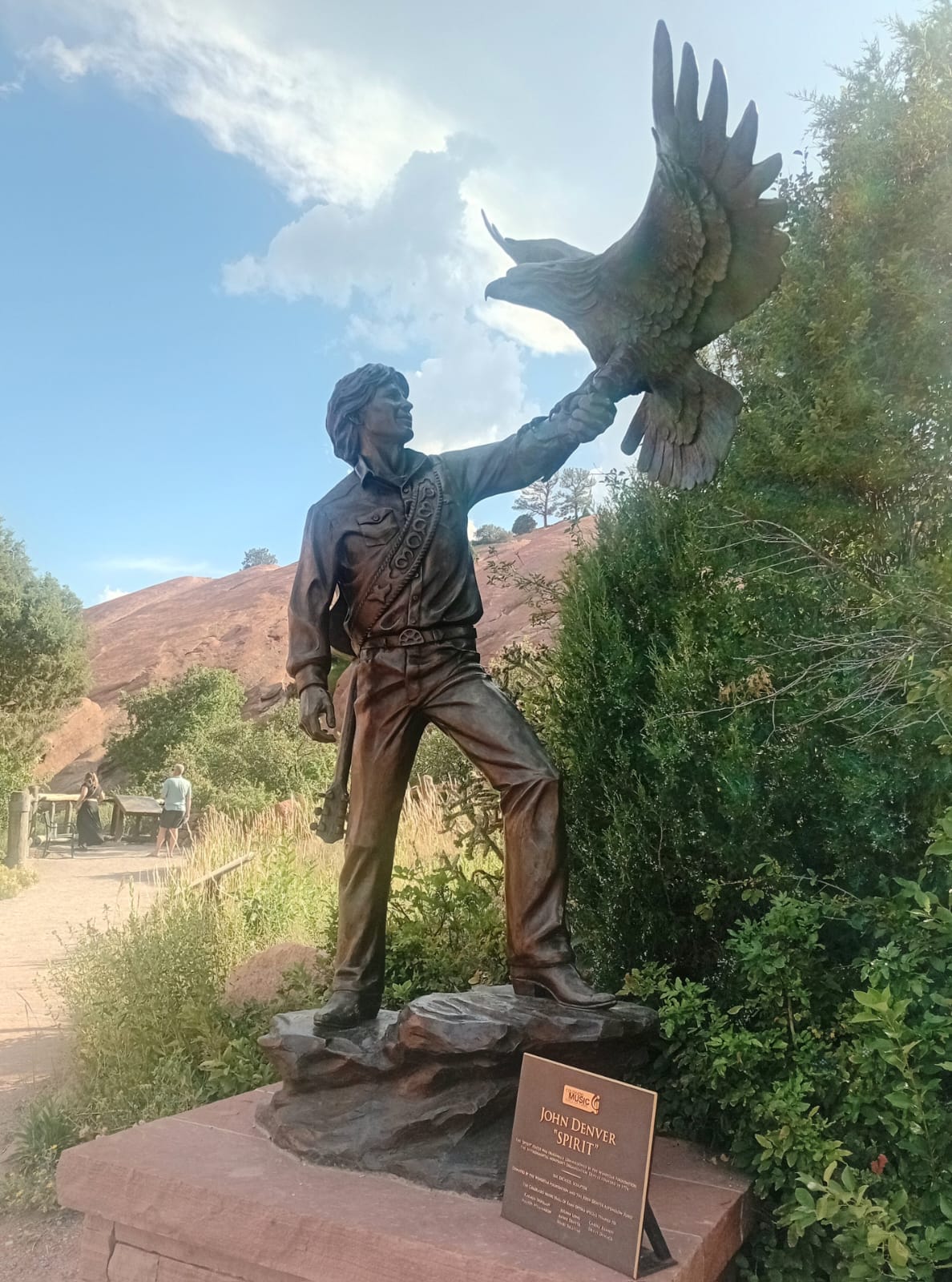
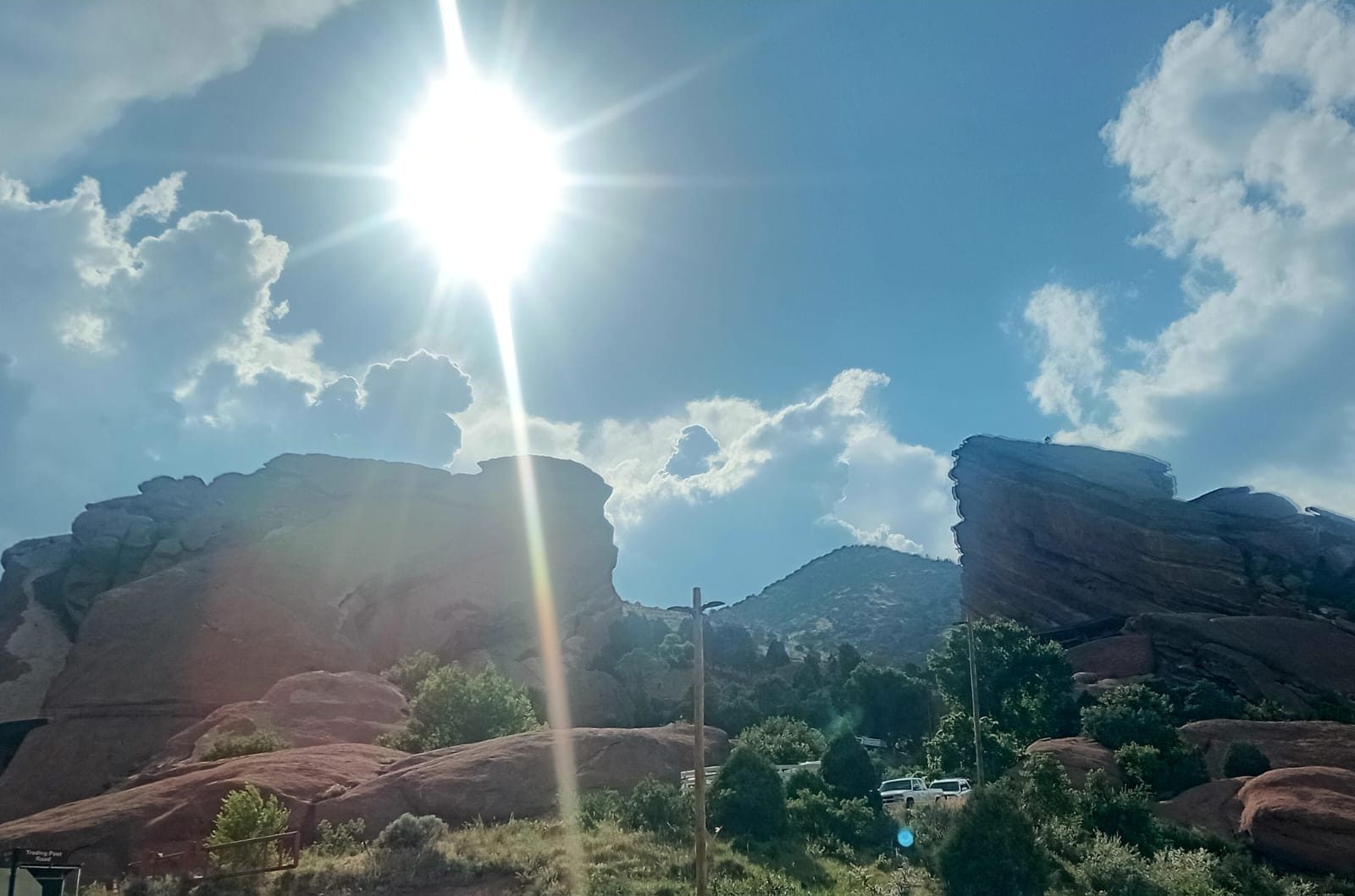
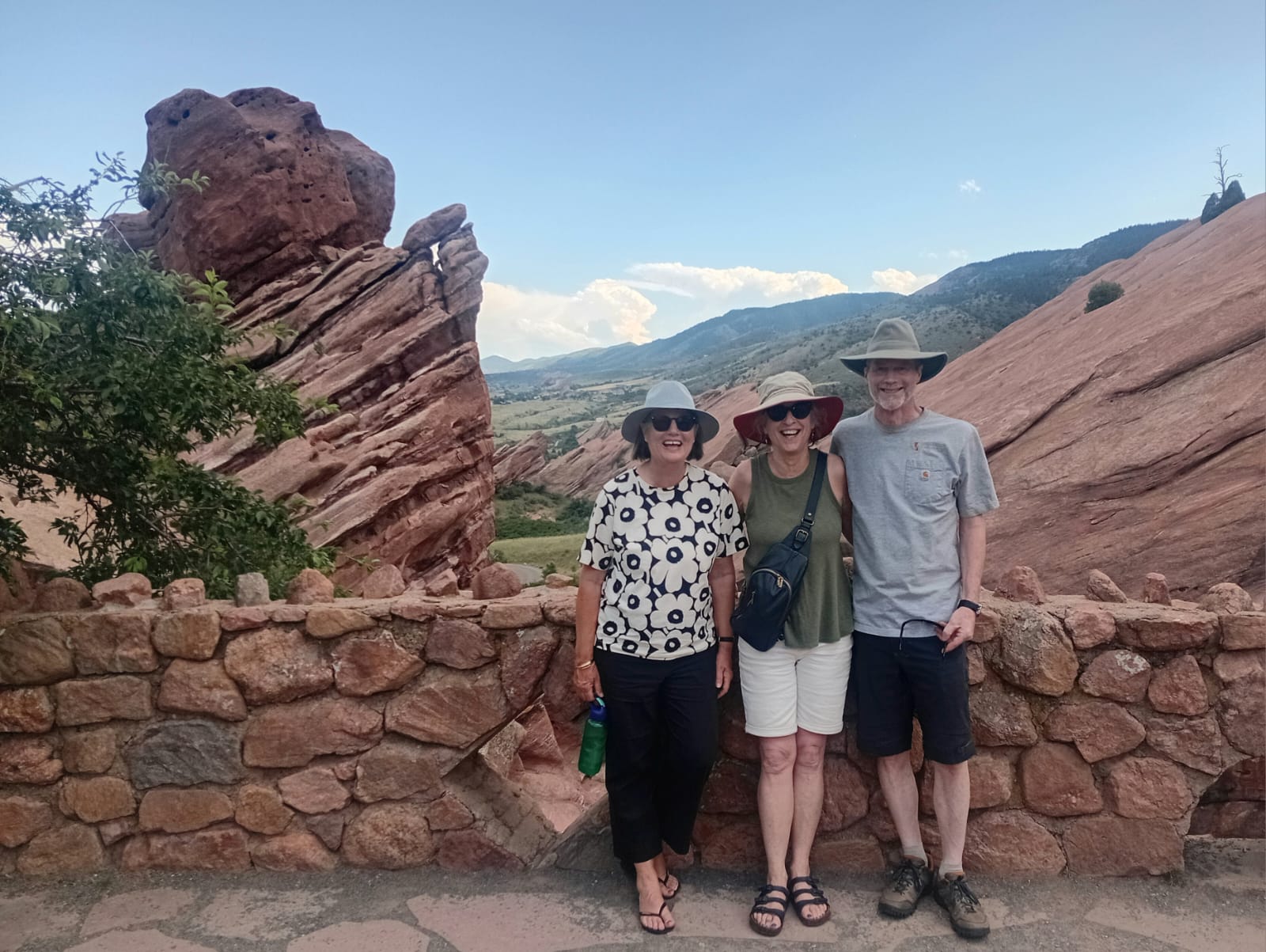
We stopped in the town of Leadville, where we had flat whites approximating what we’re used to in New Zealand, and then made our slow way into Denver in heavy traffic which was wending its way into the city after the Independence Day weekend. We stayed with good friends and it was a delight to catch up with them in their lovely Littleton house and garden. We didn’t venture downtown because of the heat. Instead we walked some of the tracks in a state park in the foothills of the Rockies, where the temperature was pleasant and the views majestic. We loved seeing the deer, squirrels and marmots feeding, seemingly unperturbed by our presence.
The driving part of our US leg was over and we returned the Jeep at the Denver airport. Jim managed driving on the right very well but we are headed for New York City where driving, at least for these Kiwis, is out of the question!
The state of Utah, named for the Native American Ute people, is spectacular. One quickly runs out of superlatives to describe its vast landscapes and geological features. From Salt Lake City, ringed by the Wasatch Mountains, to the extensive national parks reached after hours and hours of driving through desolate countryside, it seems beyond description.
The temple square of the Church of the Latter Day Saints dominates the city centre. The main temple is being extensively renovated and will only open again in 2026. But the tabernacle and the nearby conference centre, with their extensive gardens, are enough to keep one open-mouthed. Wherever one goes in the huge complex, young women appear to show you around, always in pairs, conservatively dressed and very polite. Many of them seemed to know about Hamilton, no doubt because of the Mormon connection. While impressive in scale and certainly pleasant to visit (the immaculate restrooms were very welcome!), one can’t help wondering whether some of the money devoted to these edifices could be funnelled towards the many homeless one sees in the streets of the city.
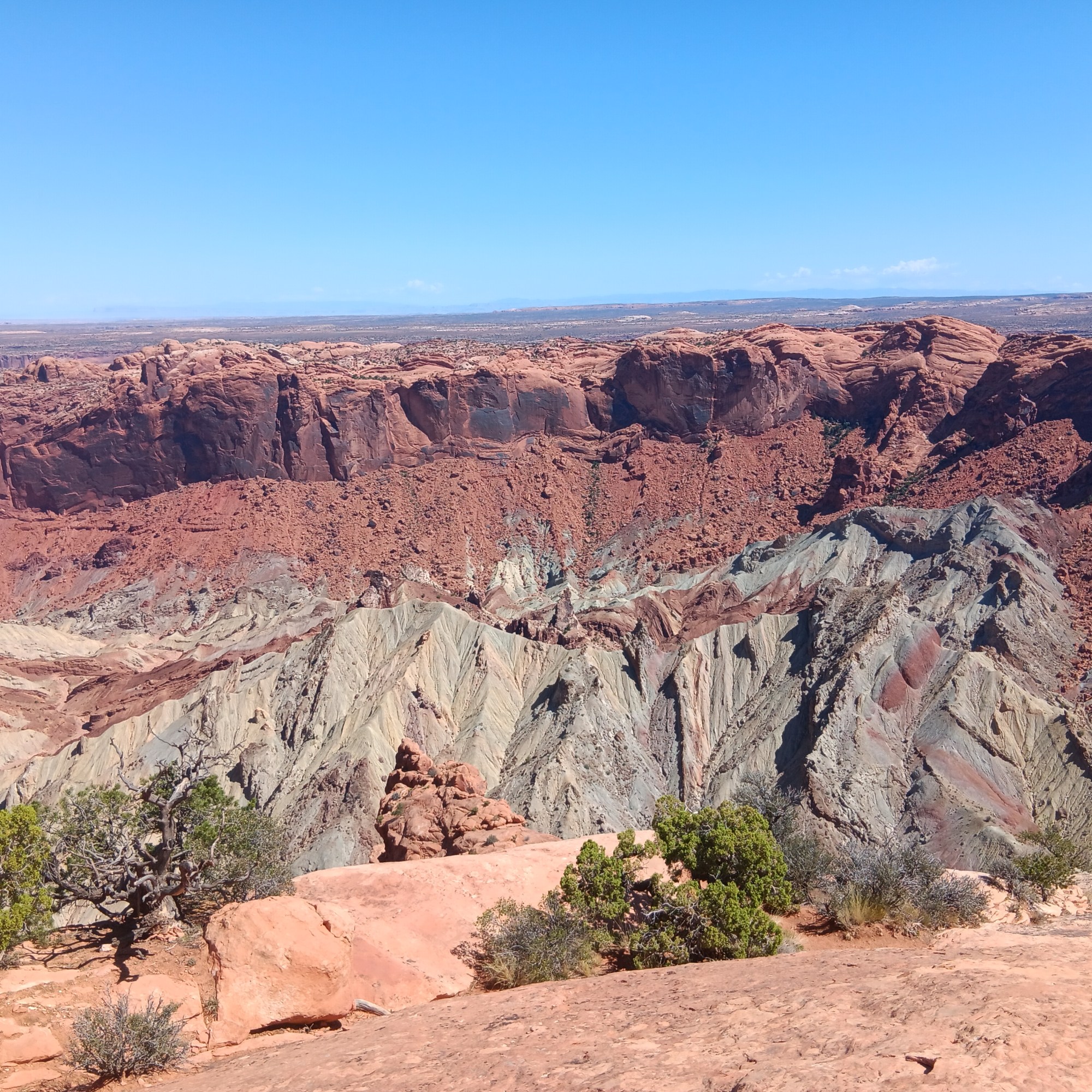
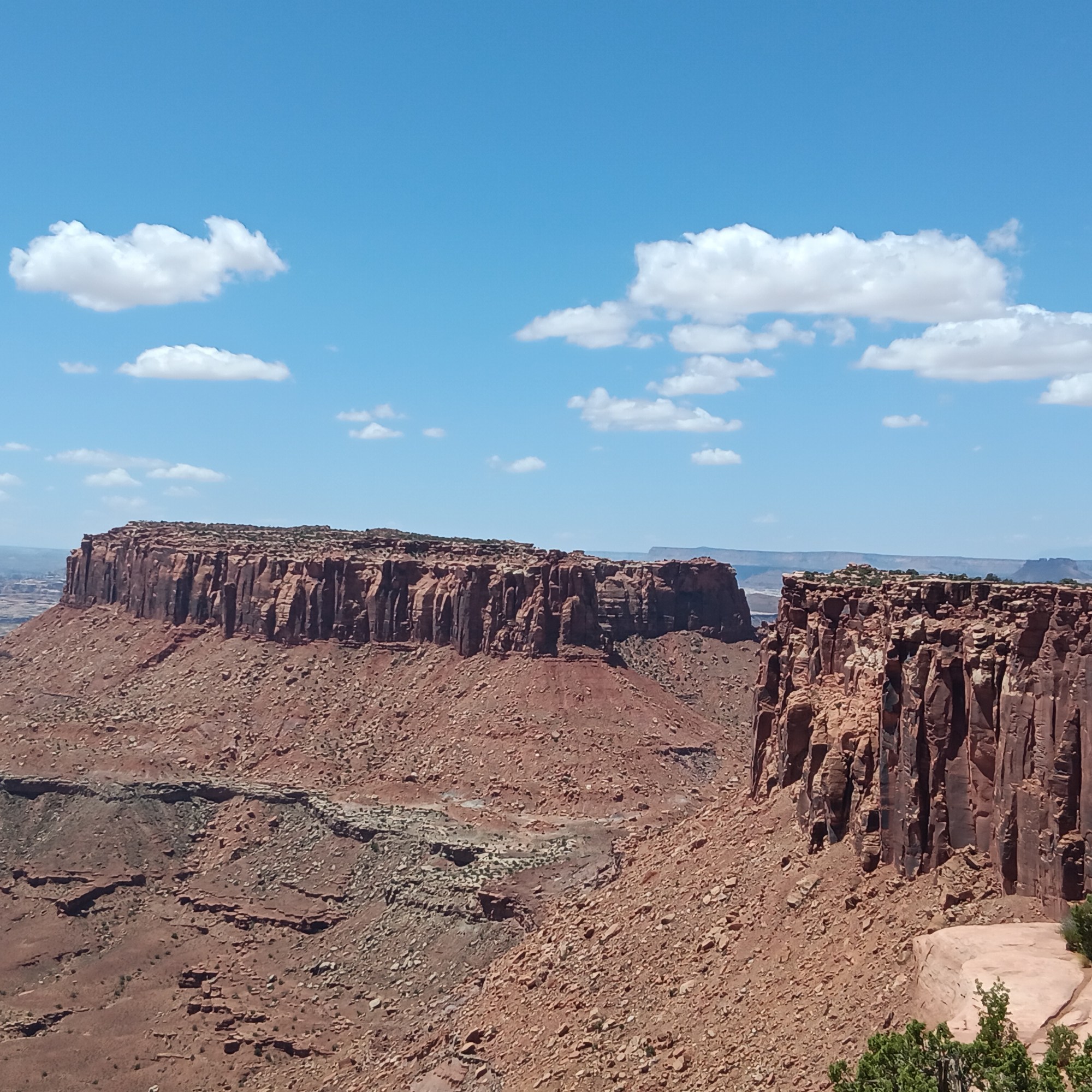
Canyonlands National Park is a vast area covering over 1,360 square kms so one has to choose which part to see in a morning. The roads are wonderful and all the features are signposted. Travelling with a geologist is great – he explained how various formations developed as we drove past them. To see some, you have to walk along trails and, despite the heat (35 degrees), it is worthwhile. Again superlatives fail when you try to describe towering rock formations and almost unbelievably vast vistas.
Arches National Park is, if anything, even more spectacular, as you drive past sheer cliffs rising from the desert floor. As its name suggests, it’s the rock arches that the park is famous for and they are indeed impressive. Late in the afternoon we walked along a trail to reach the wide so-called Landscape Arch. It was well worth the effort in the blistering heat and we returned to our very pleasant accommodation and jumped into the pool.
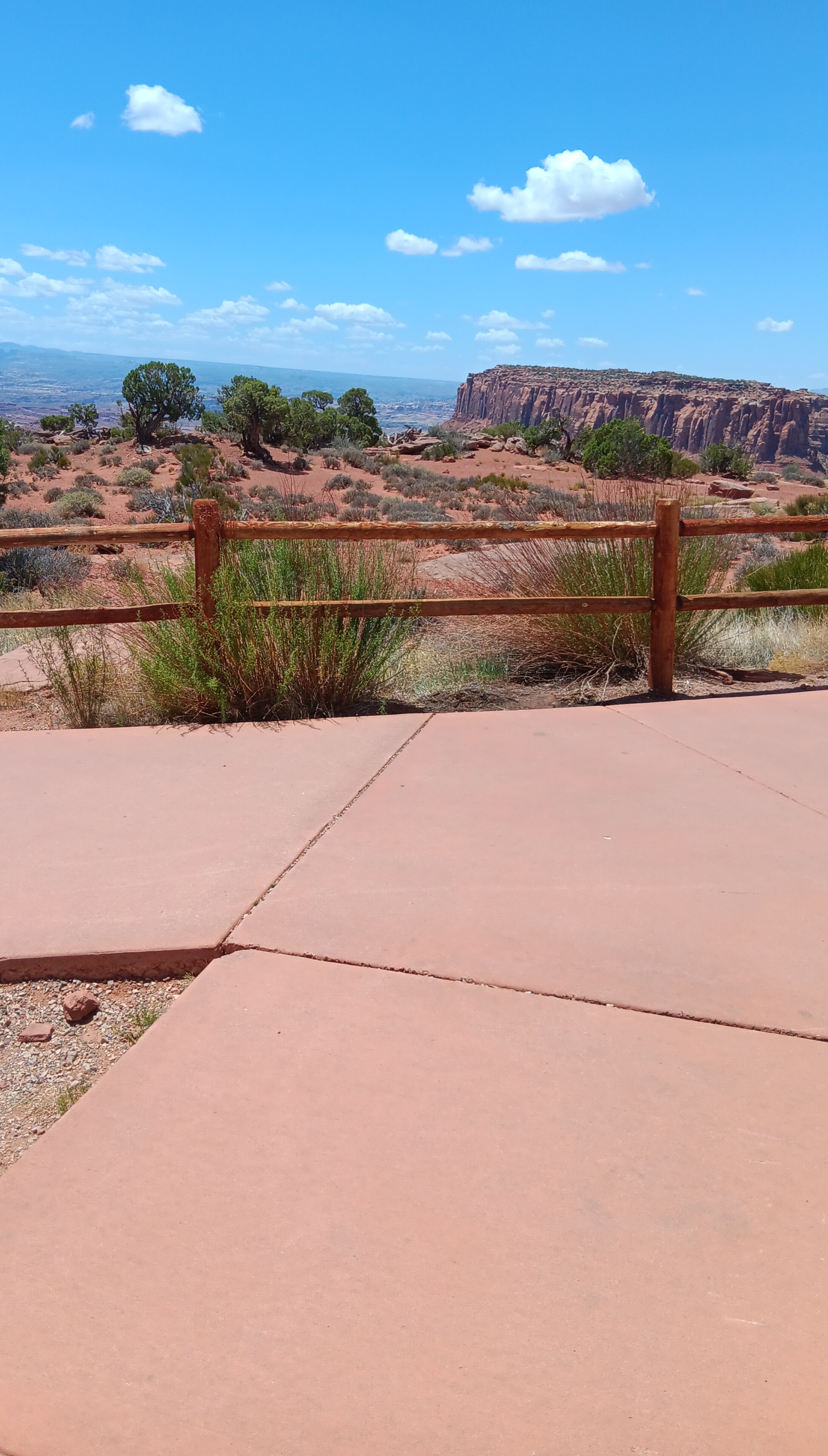
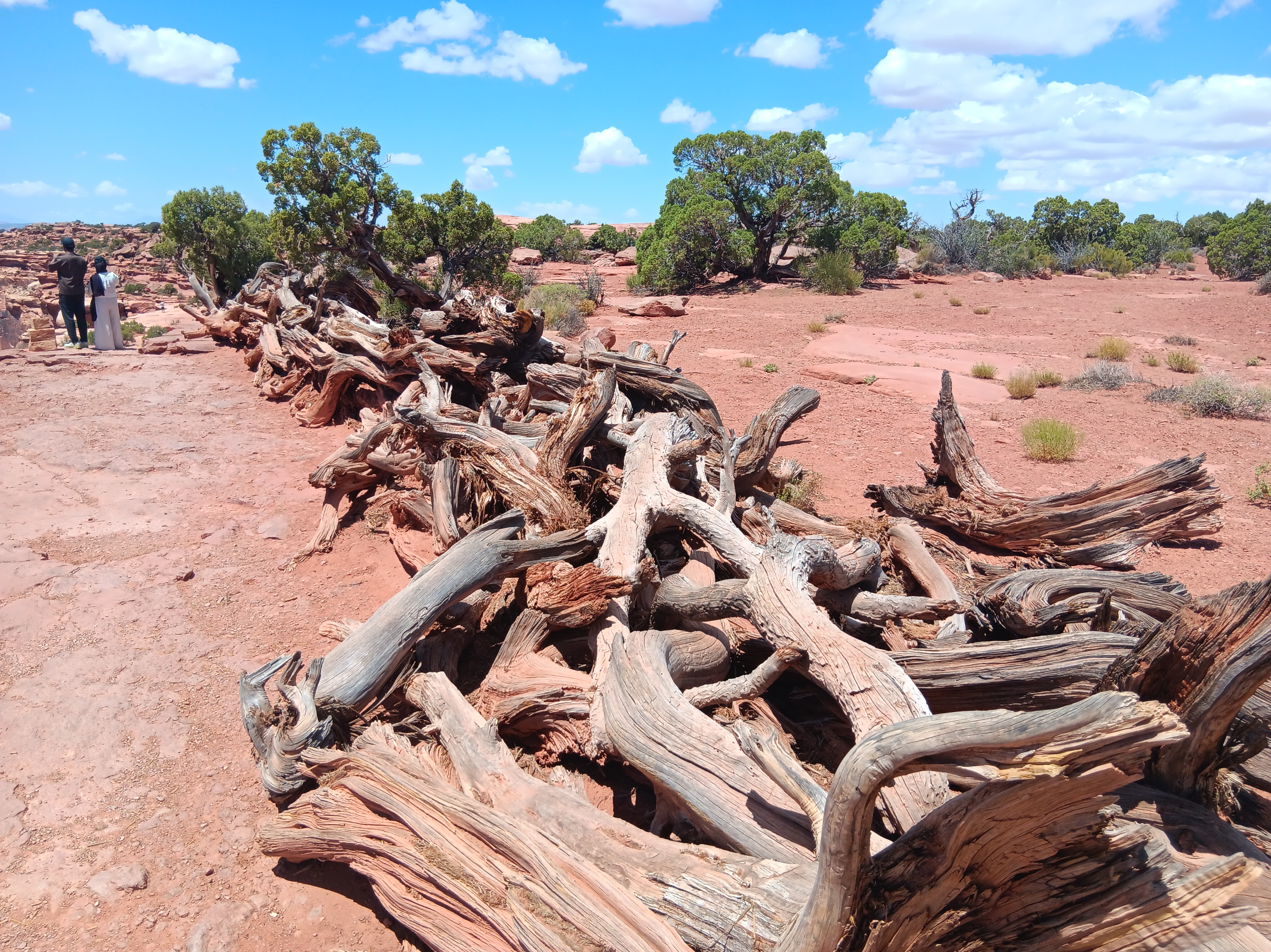
We were impressed by how well organised the national parks were. All the human additions are unobtrusive. The colour of the pathways matches the pallet of the landscape, trails are marked by fallen juniper tree branches, signposts are small and steps are indicated and made from blocks of rock. These national parks are a credit to the USA and it would be a great pity if they were to suffer any degradation from funding cuts.
The town of Moab is like an oasis in the desert. It has a wide Main Street with lovely cafes, restaurants, craft and jewellery stores, selling locally made products of high quality, far from the tat we’ve seen in other tourist towns. There is also an impressive book shop, called Back of Beyond Books, in which I spent a happy half-hour, though I didn’t buy anything, the weight of my luggage hindering me.
Santa Cruz (the holy cross), San Francisco (St Francis of Assissi), Sacramento (the holy sacrament).
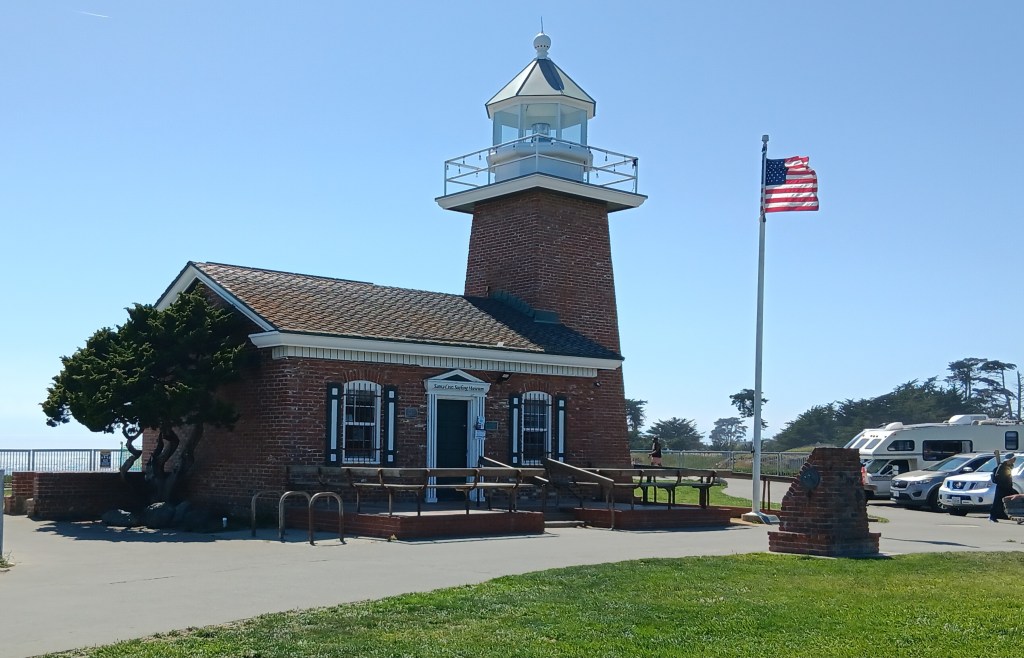
We spent our warmest day so far in Santa Cruz, walking along its famous boardwalk, watching screaming kids on the ferris wheel, popping into the O’Neill surf shop and walking along the longest pier in California. Golden seals populate the wooden platforms below the pier and vie for prime positions. Watching these sleek swimmers try to heave themselves onto a platform while those already basking in the sun try to keep them off was the best entertainment. Later we walked along the pathway that runs along the surf beaches and saw some intrepid surfers catch waves that broke off the point near the lighthouse and ride them till they reached rocks. All the while pelicans and seagulls soared overhead.
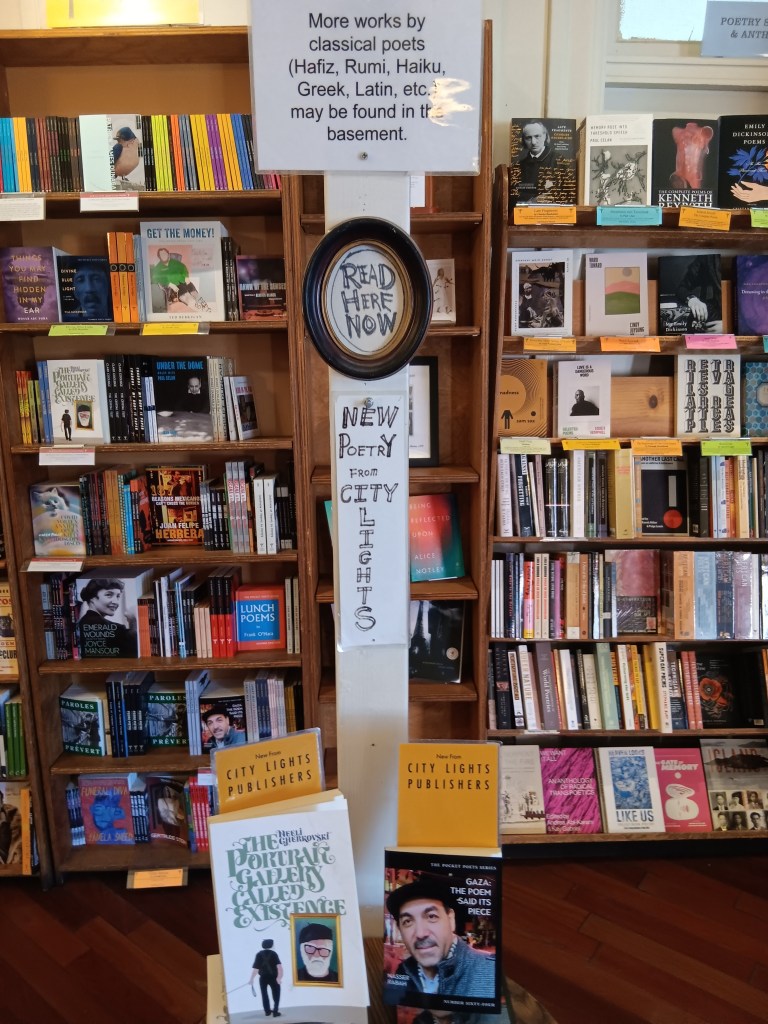
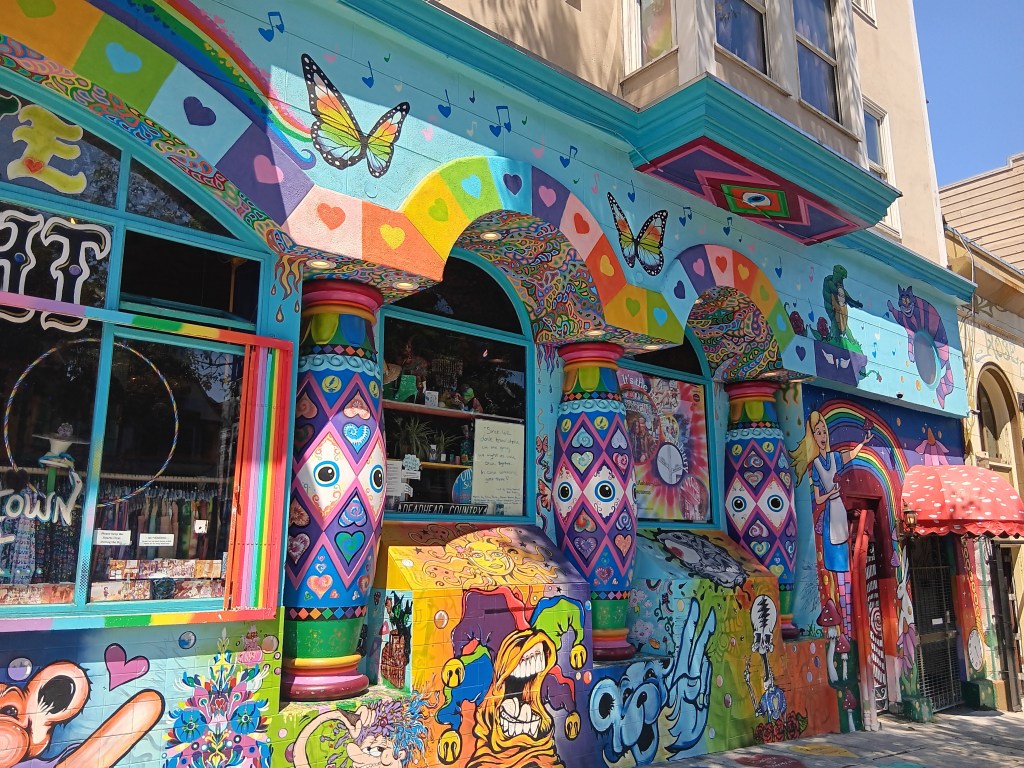
San Francisco is a beautiful city with its famous bridge, vertiginous streets, architectually pleasing buildings and ornately painted houses. Highlights were a browse in City Lights Books and a wander through the Haight Ashbury area. The Love on Haight store, whose slogan is “whatever the question, love is the answer”, keeps the spirit of the 60s alive.
But San Francisco also has masses of noisy traffic, large numbers of homeless people and it seemed almost every resident of the city has a dog, which can make some streets unpleasant to walk along. There is also the pervasive smell of marijuana, now legalised in California, wherever you go.
Sacramento’s origins go back to the gold rush of the 19th century and the building of the Pacific Railroad, vestiges of which can be seen in the Old Town. It is now the state capital of California with large and ornate buildings, like the City Hall and the Courthouse. It is also called the city of trees, which is appropriate as the wide streets in the city centre are flanked by huge trees providing welcome shade in the heat of summer. We had excellent coffees and shared a slice of delicious corn bread in a cafe run by friendly Guatemalan migrants. But the whole city has an air of neglect and there are a large number of homeless people living in the parks and tent cities.
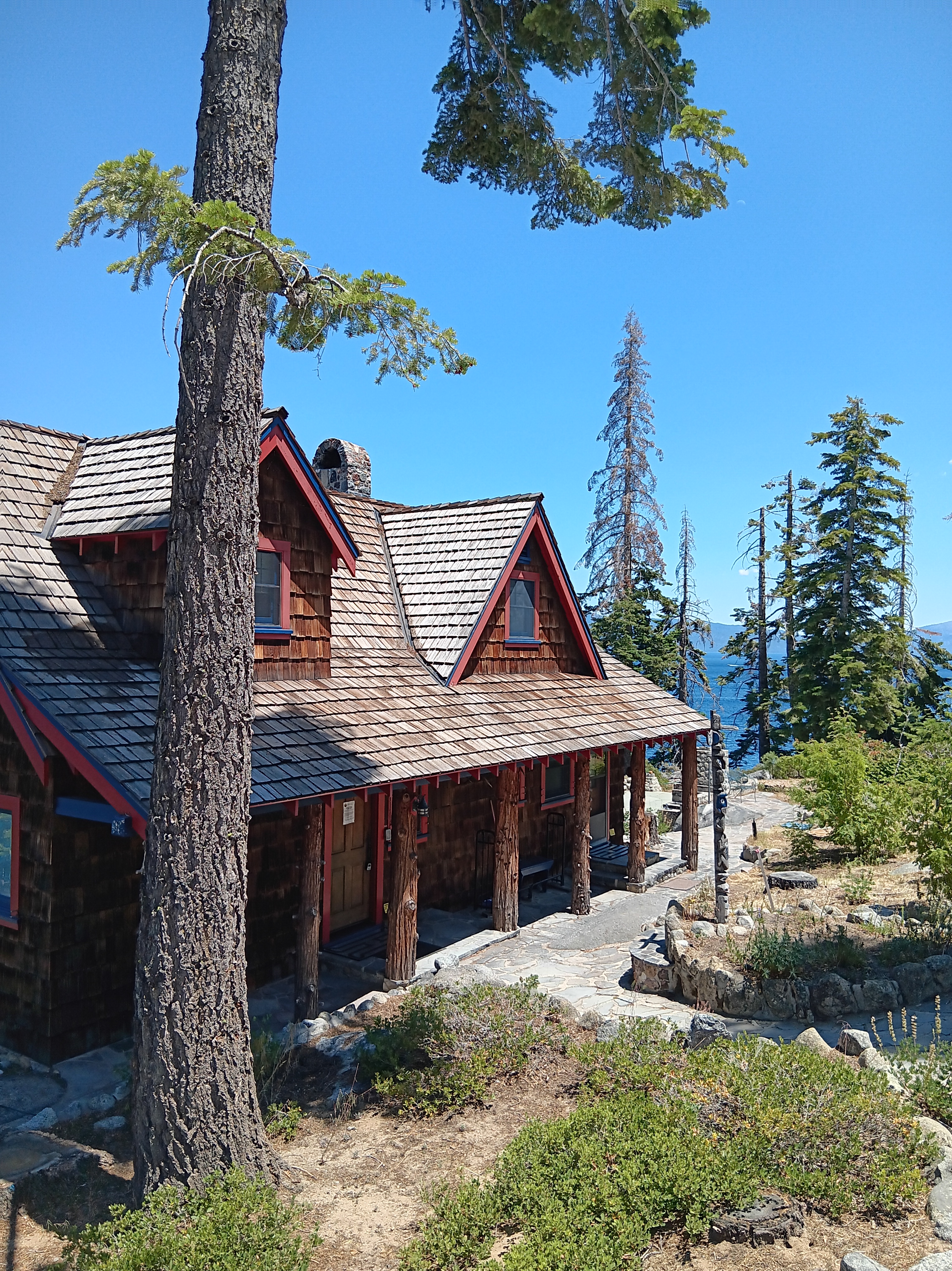
The surrounding areas are vast with tinder-dry fields of grass, which explain why the wild fires are so difficult to contain here. There are forests of tall pine trees and spectacular rivers, like the American River and the Truckee River, which rises in the Sierra Nevada mountains and is the sole outlet of Lake Tahoe. We saw the breathtaking mountains, which still have vestiges of snow, and deep-blue lake on a magnificent day. It was a fitting end to the Californian leg of our trip. Now onto Utah and Colorado!
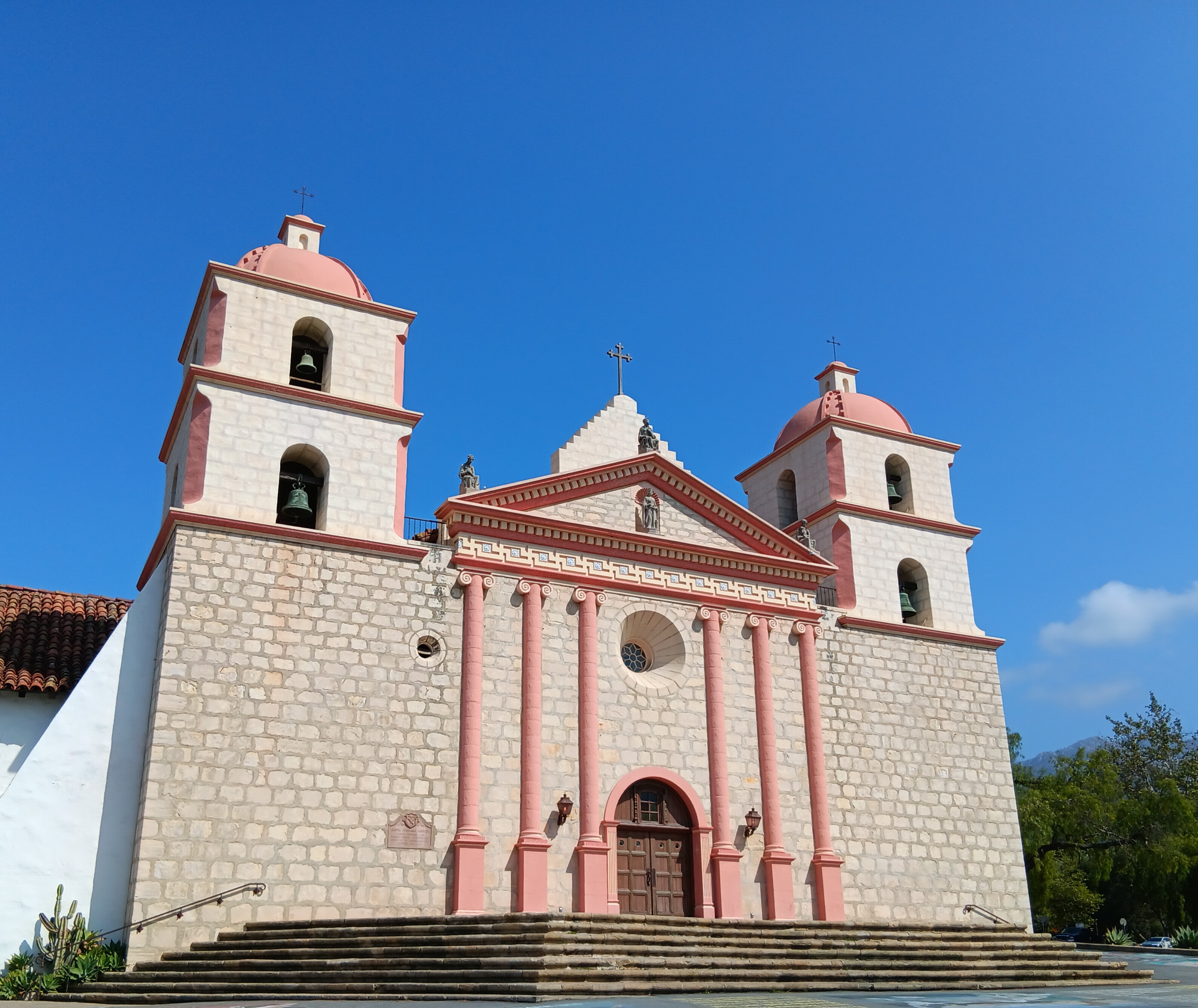
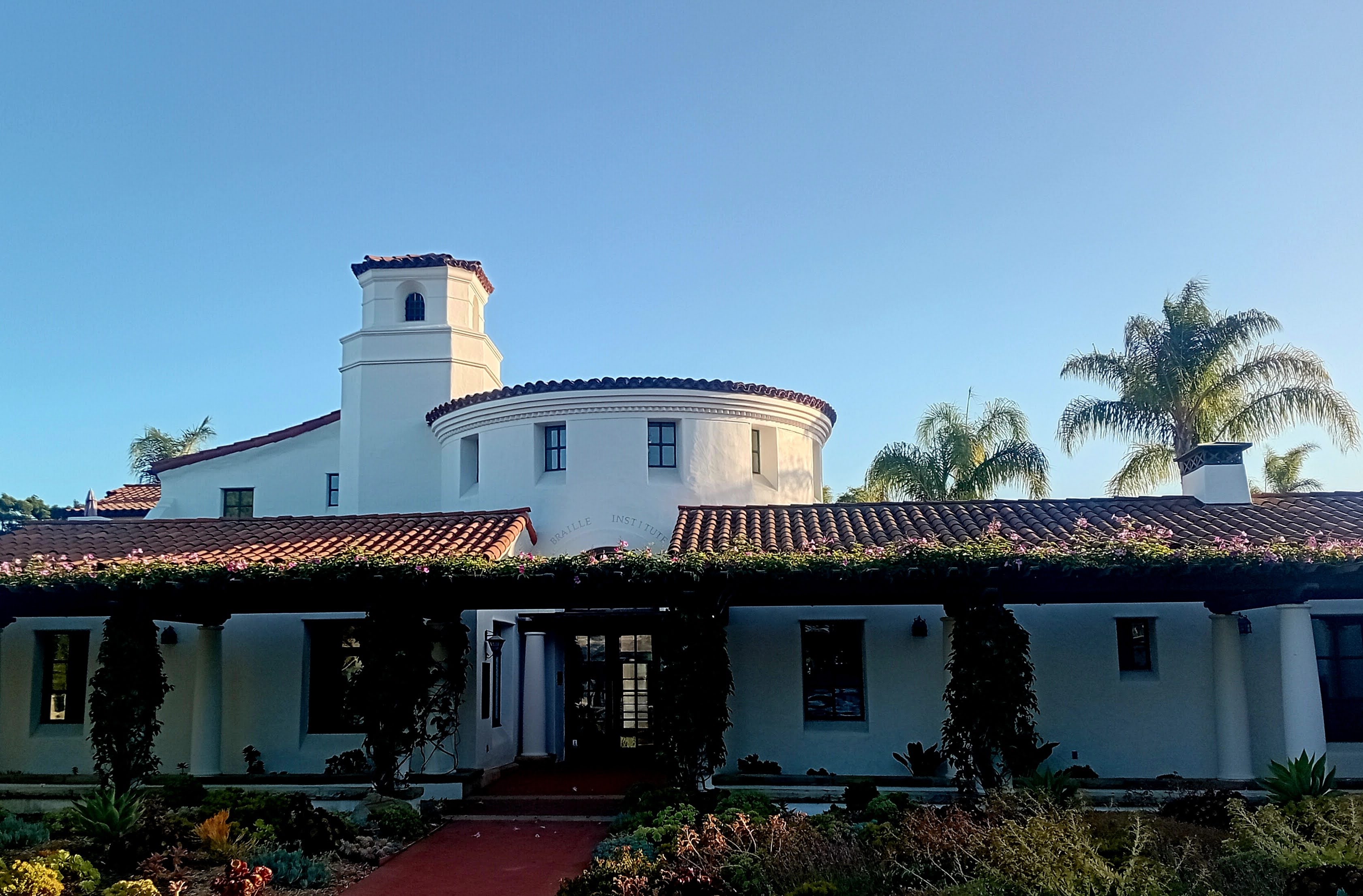
We arrived at LAX, picked up a rental car and manouvred our way out of that frenetic city via various freeways up the coast to Santa Barbara. One is immediately struck by the Spanish influence not only in the names of almost all the towns and cities but also in the architecture. There are impressive mission buildings in Santa Barbara, San Luis Obispo and Carmel-by-the-sea, dating from the 18th century. They are still active religious centres and hold regular masses.
Wherever you go, there are beautiful gardens filled with hardy plants that can withstand the rigours of a dry, windy climate and there are very few lawns. And palm trees are ubiquitous.
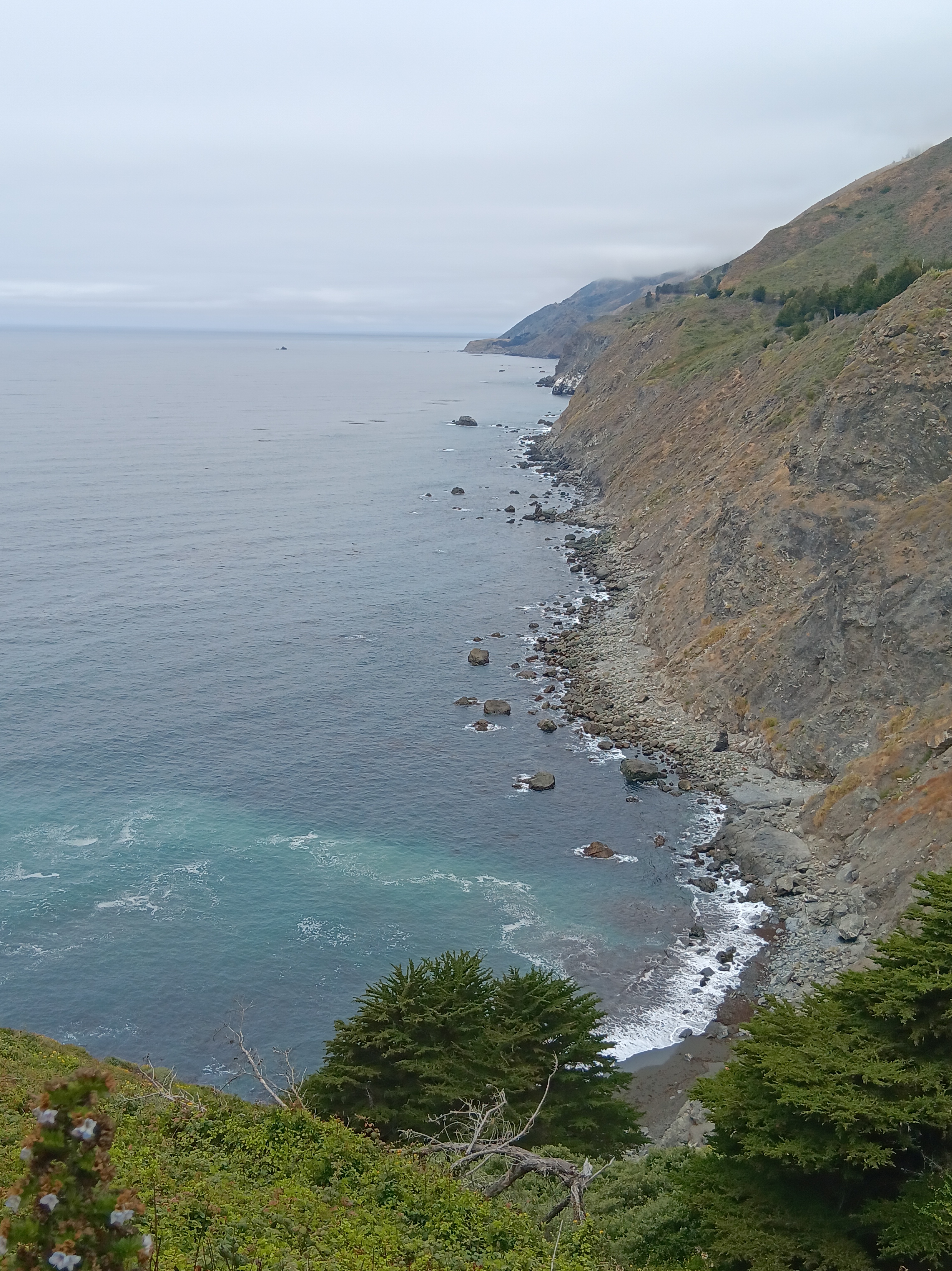
The California coast is spectacular with huge variety, from wide white-sand bays to densely vegetated dunes to dramatic cliffs and crashing surf. Big Sur is almost impossible to describe with sheer granite inclines straight from the water and the road follows the curves of the coast so that you are sitting on the edge of your seat waiting to see what’s around the next bend.
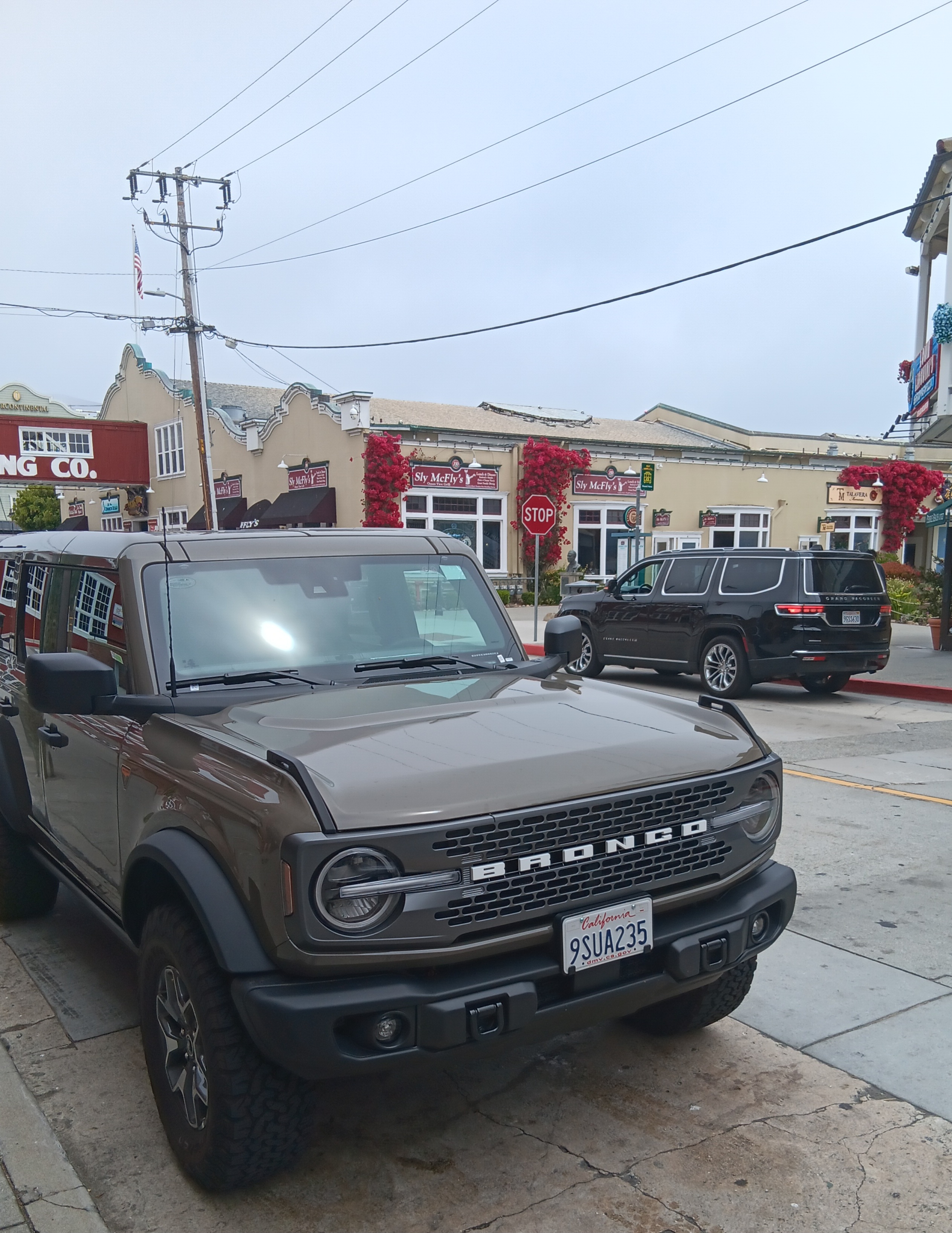
America is also everything that you expect – traffic-filled freeways, friendly helpful people you meet when checking into accommodation or asking for directions (‘you’re very welcome’), grocery stores with a bewildering number of aisles and selection of products, gas stations with immaculate restrooms and massive utes/RVs/trailers everywhere.
We’ve seen an array of wildlife along the coast: sealions, pelicans, elephant seals and adorable sea otters. The mammals come into the bays during spring and summer to give birth to and nuture their young. We watched a nursery of sea otters mums and pups among the kelp in Monterey Bay.
And our California days are continuing with Santa Cruz, San Francisco and Sacramento still to come.
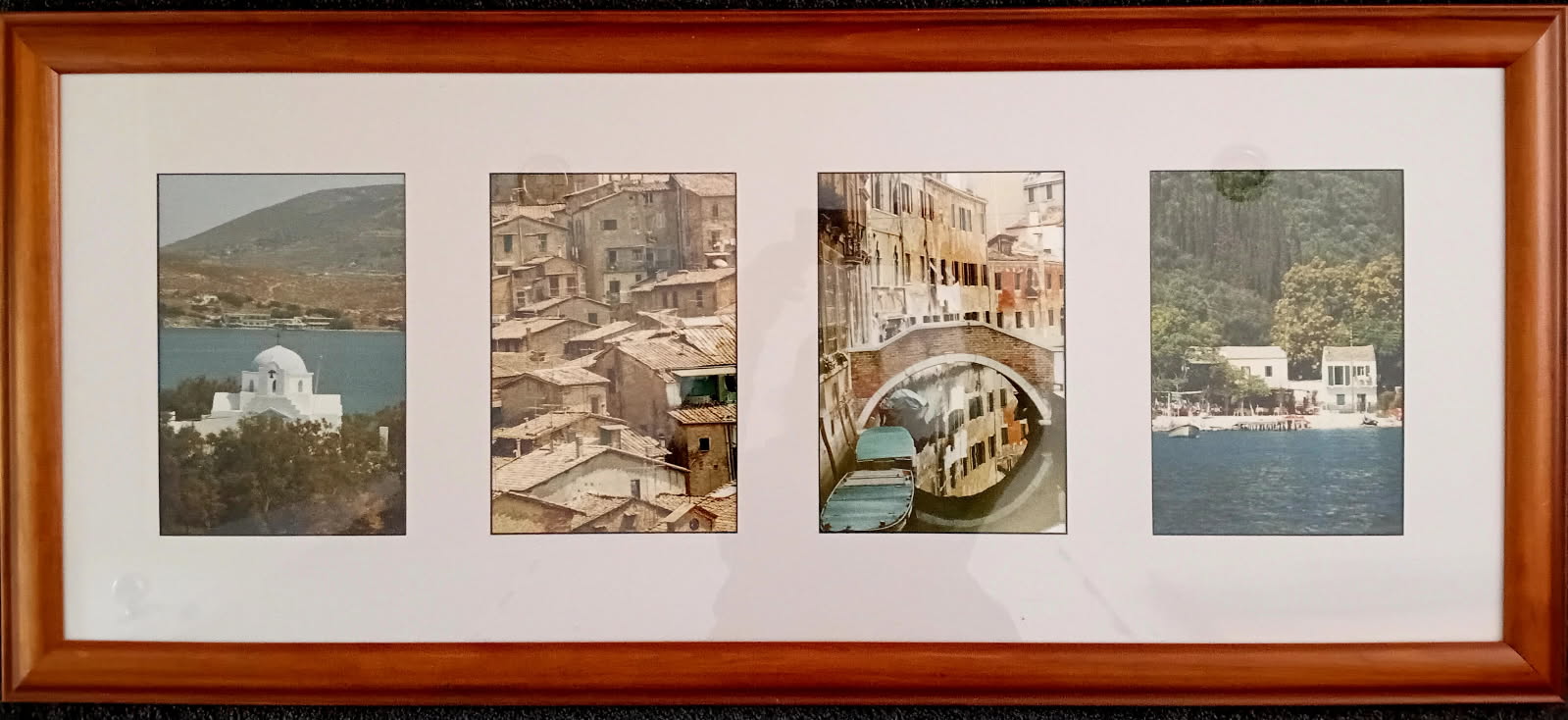
The last time we went to Europe our favourite places were those represented in this collection of photos, which has been displayed in our house ever since. These four photos depict (left to right) the Greek island of Paros, the Italian city of Siena, a Venetian canal, another Greek island – this time, Corfu.
Easy then to see we loved Italy and Greece. Now we are heading to Europe again (after we’ve travelled through North America) but we’re not going to Italy at all this time and have chosen an entirely different Greek island. Why? Mostly because this trip has been planned around catching up with our friends who live scattered around the world. But also because we didn’t want to risk spoiling our memories. The world has changed so much in the interim and many European destinations are now thronged with tourists, whereas we remember idyllic days wandering around ancient cities and islands, mostly free from crowds.
We hope to come home with a new set of favourite experiences with photos to match. Perhaps we’ll invest in another rimu frame in which to display them in our house in Kirikiriroa.
… is a small city on the west coast of New Zealand’s North Island, named after a Māori chief who signed the Treaty of Waitangi and renamed by the first English settlers who came from Plymouth.
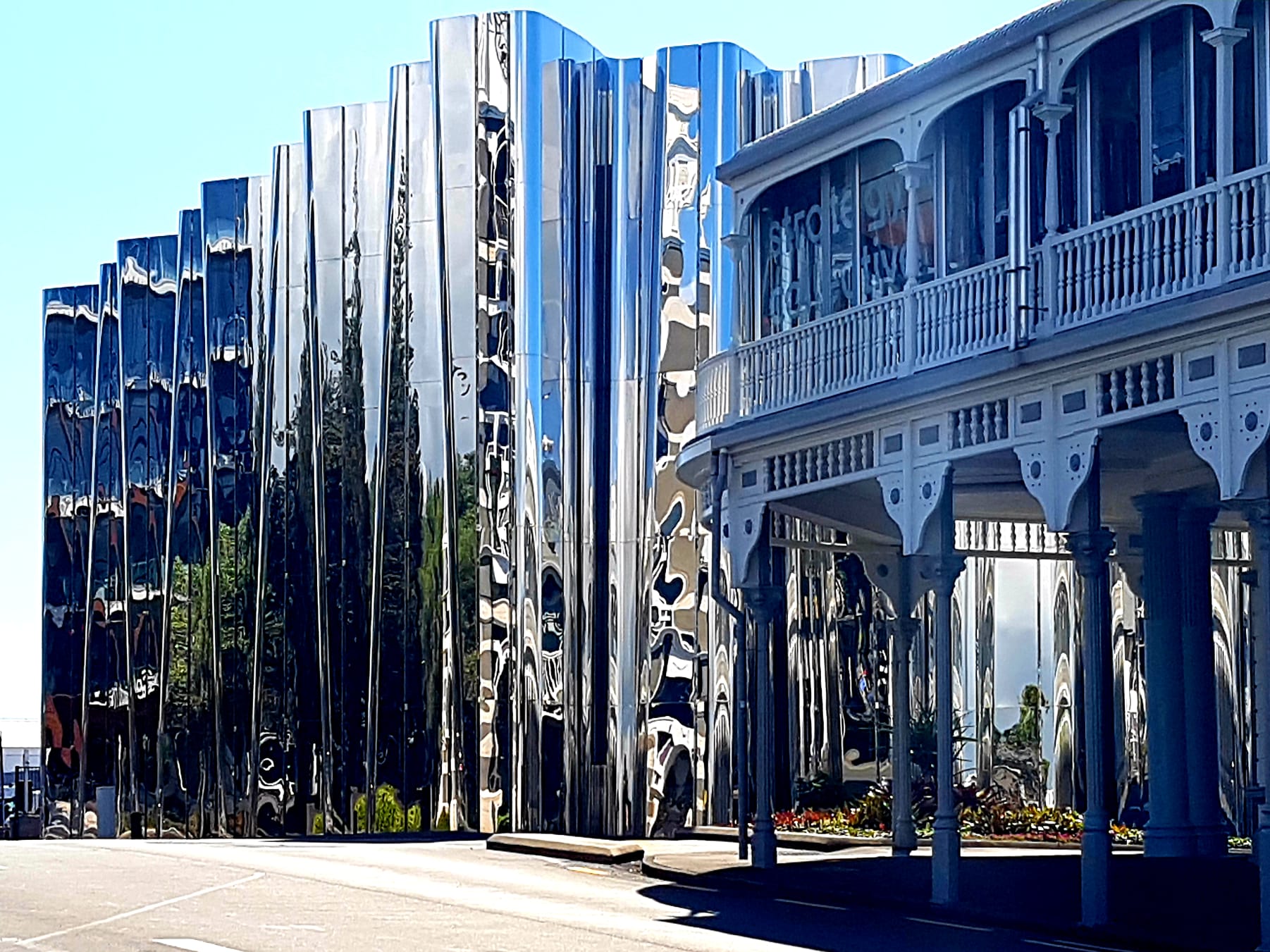
On a recent visit, we stayed at the aptly named Kings & Queens Hotel Suites across the road from the spectacular Govett-Brewster art gallery.
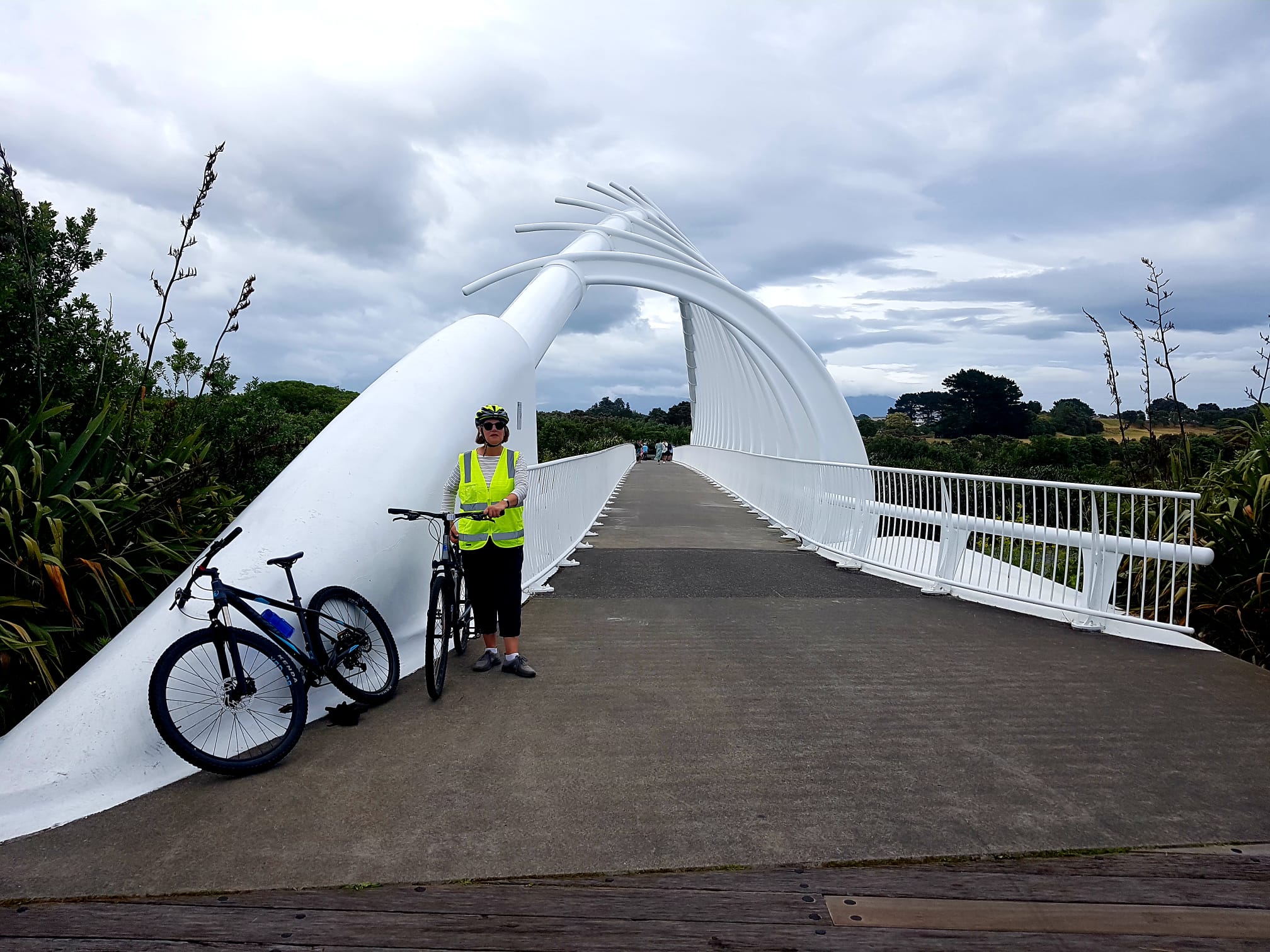
One of my requirements when choosing accommodation is a bathtub because we only have a shower at home. After a day of exploring, relaxing in a bath is the ultimate luxury, which is exactly what I did after our bicycle ride along the coastal cycle/walkway. The hotel has four mountain bikes for use by guests (and there are e-bikes for hire too). The cycleway is mostly flat with small inclines easily negotiated by an inexperienced cyclist like me.
We cycled from the city near the famed Len Lye wind wand to the Te Henui Bridge and beyond. On our return we stopped for a cold drink and a bite of lunch at the container cafe at Fitzroy beach.The Festival of Lights runs from just before Christmas until the last weekend in January in Pukekura Park. The park is illuminated by various spectacular light installations and is well worth viewing.
In the Kings & Queens precinct there are eight places to eat and drink. We enjoyed a pizza from Ms White’s Pizza with drinks from the adjacent Itch Wine Bar.
I can highly recommend the Petit Paris cafe for a cafe au lait and croissant or Billow Bakery, down a funky laneway, for a breakfast bun and a latte.
There was not much time for shopping this visit but there is a splendid Poppies bookshop, which has couches for relaxed browsing, and the Kina Design & Arts Space for unusual, locally made art works ranging from paintings to glassware to jewellery.
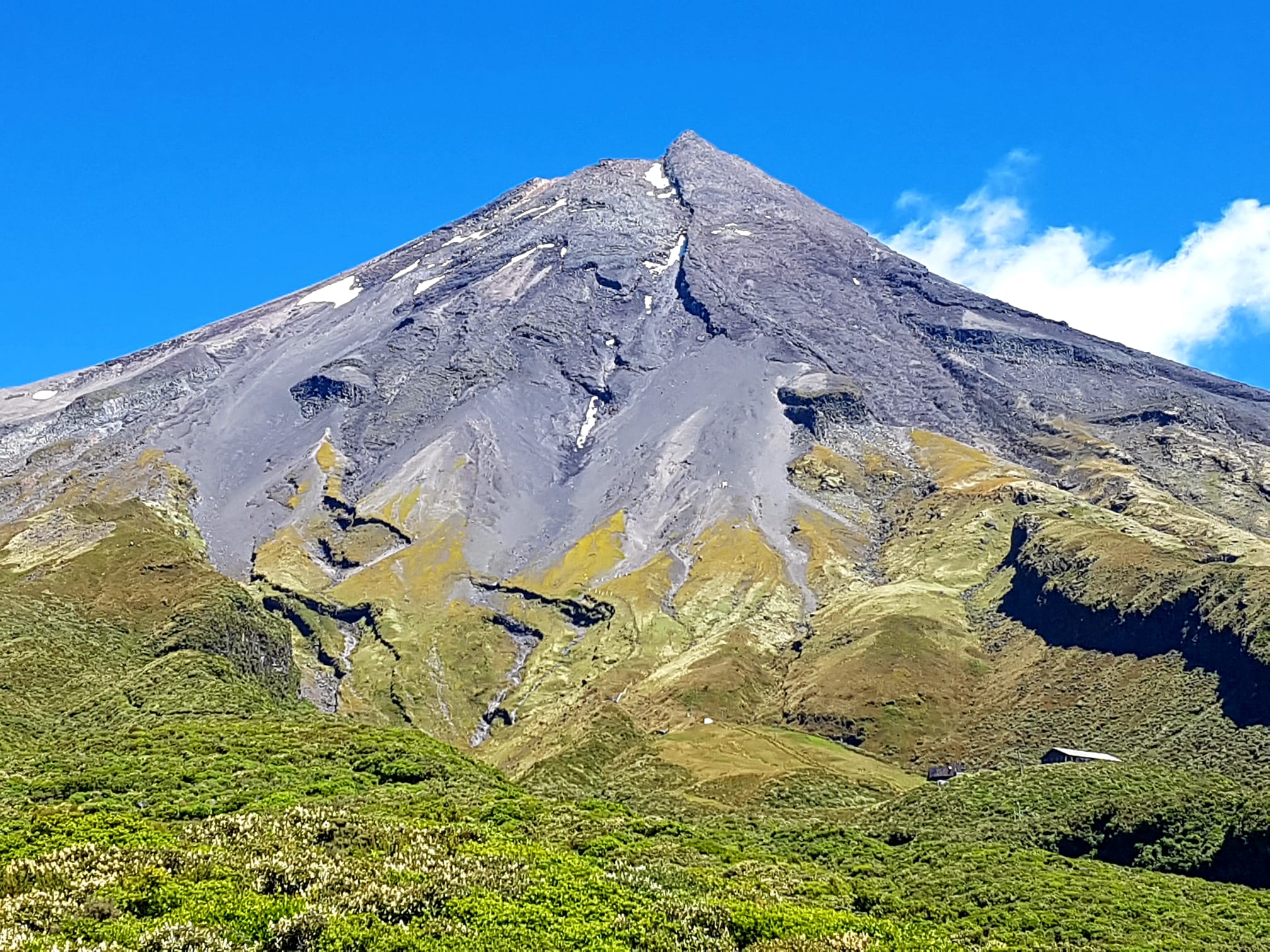
On our way back we detoured to Egmont National Park and drove all the way up to Manganui carpark. From up there, the view of Mount Taranaki is awe-inspiring and there are several tracks, including one that takes you right around the mountain.
We chose to walk the Kamahi Loop Track as our time was limited. Nicknamed the ‘goblin forest’ because the kamahi trees are covered in ferns and mosses, it was a delight on a sunny day with dappled shadows and sparkling creeks.
We had a delicious lunch at the Stratford Mountain House restaurant and then made our way home, stopping at the Pio Pio Berry Farm to load up on raspberries, blueberries and strawberries.
… the hills are conceived in the late evening’s afterglow and grow slowly through the night
and they are there wet and shining in the wondrous mornings.
Part of a poem written by renowned New Zealand poet Brian Turner (Elemental, Central Otago Poems. Random House New Zealand. 2012).
We have just visited his beloved Central Otago. His words and the images of his artist friend Grahame Sydney came wonderfully alive. And best of all, we came across him in the small town of Oturehua, population 30 – 40, where he lives. We were in the general store, itself a wonder, when in he came to buy his Otago Daily Times. Later the same day when I wandered along the road, Brian was in his garden, into which he invited me for a chat. He told me he was tackling the weeds by way of taking a break from other things, by which I assumed he meant writing poetry. In our brief conversation, I managed to mention how much I admired his work and that I had enjoyed hearing him speak at writers’ festivals. This wasn’t idle flattery – he is a spare, evocative wordsmith and I have long wanted to experience Central Otago as a result of reading his work.
The landscape, rolling hills and higher peaks, some bearing a little snow even in the height of summer, plains patterned by sun-bleached tussock grass and turquoise viper’s bugloss, and valleys enlivened by the ripple of the burns, was a dream come true. Brian says “It’s not picturesque, it’s essential, almost grand and it aches like the rhythms of truth”. The stories of the 1860s gold rush, teeming towns and overflowing taverns seem far-fetched in this sparsely populated expanse. But the Blue Lake at St Bathans, the result of vigorous sluicing for gold, and the Vulcan Hotel, where tourists follow in gold miners’ footsteps, drinking a pint and downing a feed, are there as proof.
Once in a while you may come across a place where everything is as close to perfection as you will ever need.
Near the town of Takaka in Golden Bay (South Island of New Zealand) are the Te Waikoropupū Springs. Though we’ve visited Golden Bay before, we hadn’t seen these spectacular pools. They are very close to optically clear water, with visibility to 63 metres, and are surrounded by native bush with prolific bird life. Alerted by his distinctive call, we saw a grey warbler flitting around in foliage right beside the walkway – this is the closest we’ve been to this tiny elusive bird and it was thrilling. It is easy to see why this place has been a taonga (treasure) for Māori since they arrived in the area over 700 years ago. It is also wāhi tapu (held in high cultural and spiritual regard) so there is no contact with the water at all – you just look, listen and marvel.
On a recent visit to the top of the South Island, we went to Cable Bay for the first time. Though it was the middle of a New Zealand winter, which is often grey and rainy, we were there on a gloriously clear day, as you can see in the photograph. As we edged our way along the narrow road to the bay, we came across a couple persuading a pair of cows into a paddock – apparently the cows were in disgrace because ‘they’d already munched their way through Grandma’s garden’. When we got to the bay and parked on the shingle, we noticed two more people bundled up against the cold wind, sitting on canvas chairs holding fishing rods. Then we put on our jackets, scarves and beanies and braved the elements ourselves, walking up the steep incline to read the information board. The bay was the site of New Zealand’s first overseas cable link – via Australia – and was opened in February 1876. It revolutionised the lives of settlers who could now get a message to their families in Europe in four days, instead of the six weeks it took a letter. The cable station operated till 1917, after which it was moved to the North Island, at Titahi Bay near Wellington. I’ve just checked the track details on the DOC website and noticed an alert – the track is closed for lambing. How much more Kiwi could it be? Cows, fishing, lambs and splendid isolation!































 Travels from New Zealand