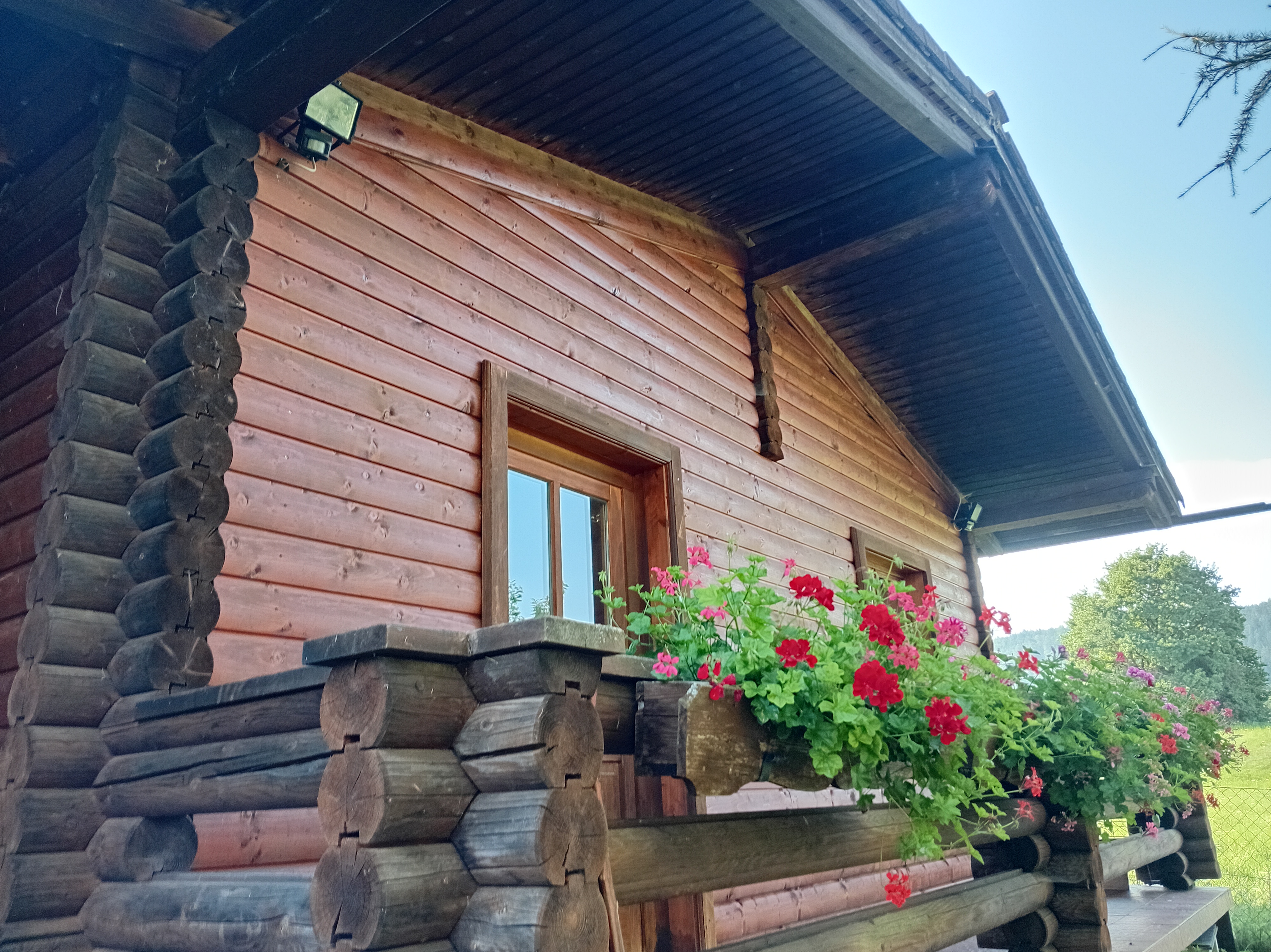
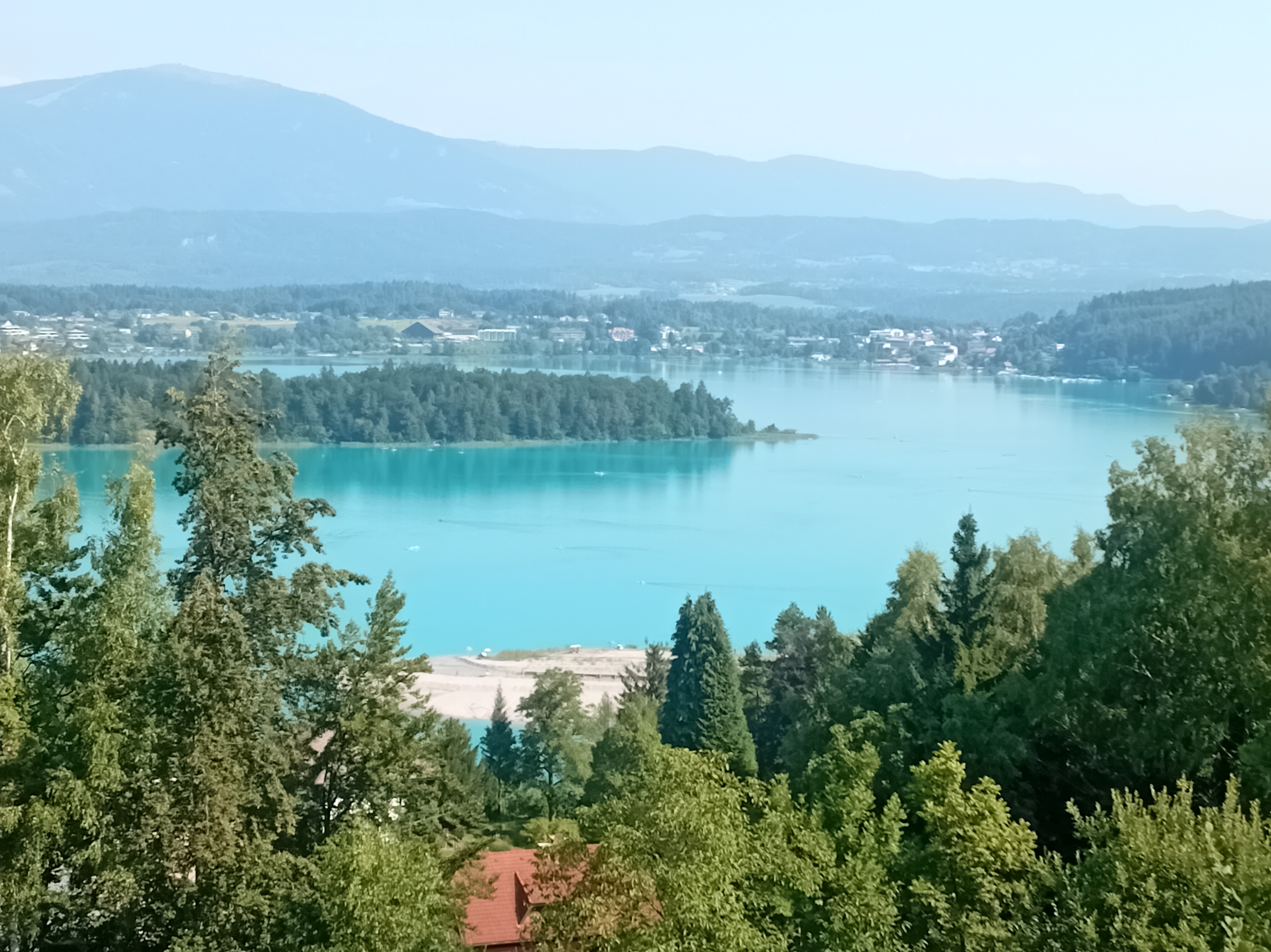
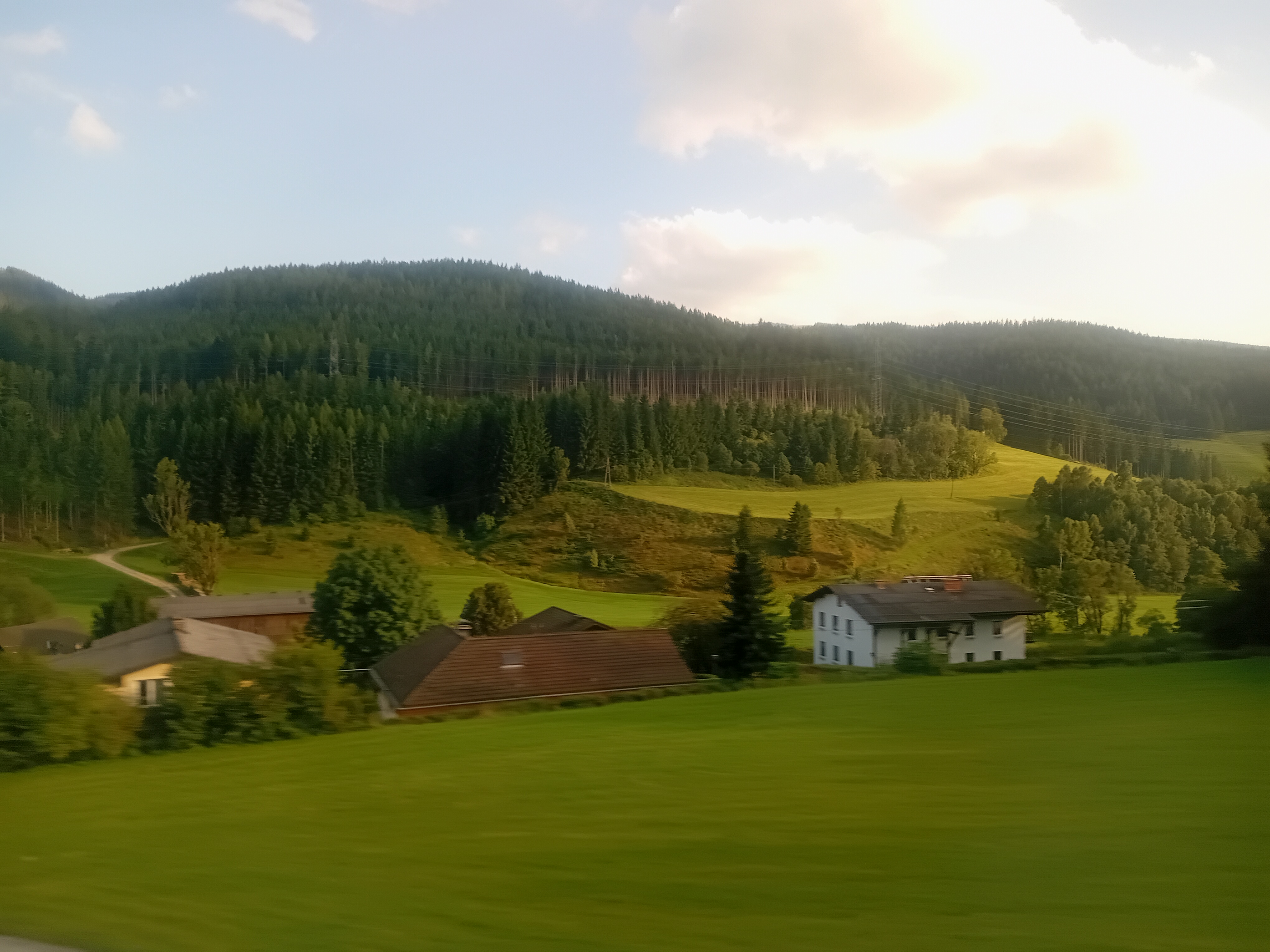
After a four-hour train ride from Vienna, we arrived in Villach, the second largest town in the southernmost Austrian region of Carinthia. Our friends have a rural property outside the town and we stayed in a self-contained chalet behind their house, complete with sleeping loft and skylight. It was fantastic! The scenery is spectacular – dense green forests, fields of tall grasses and meadow flowers, deep-blue lakes and vertiginous mountains. One morning we drove up into the foothills and then walked to a look-out point from which we could view the alps that separate Austria and Italy.
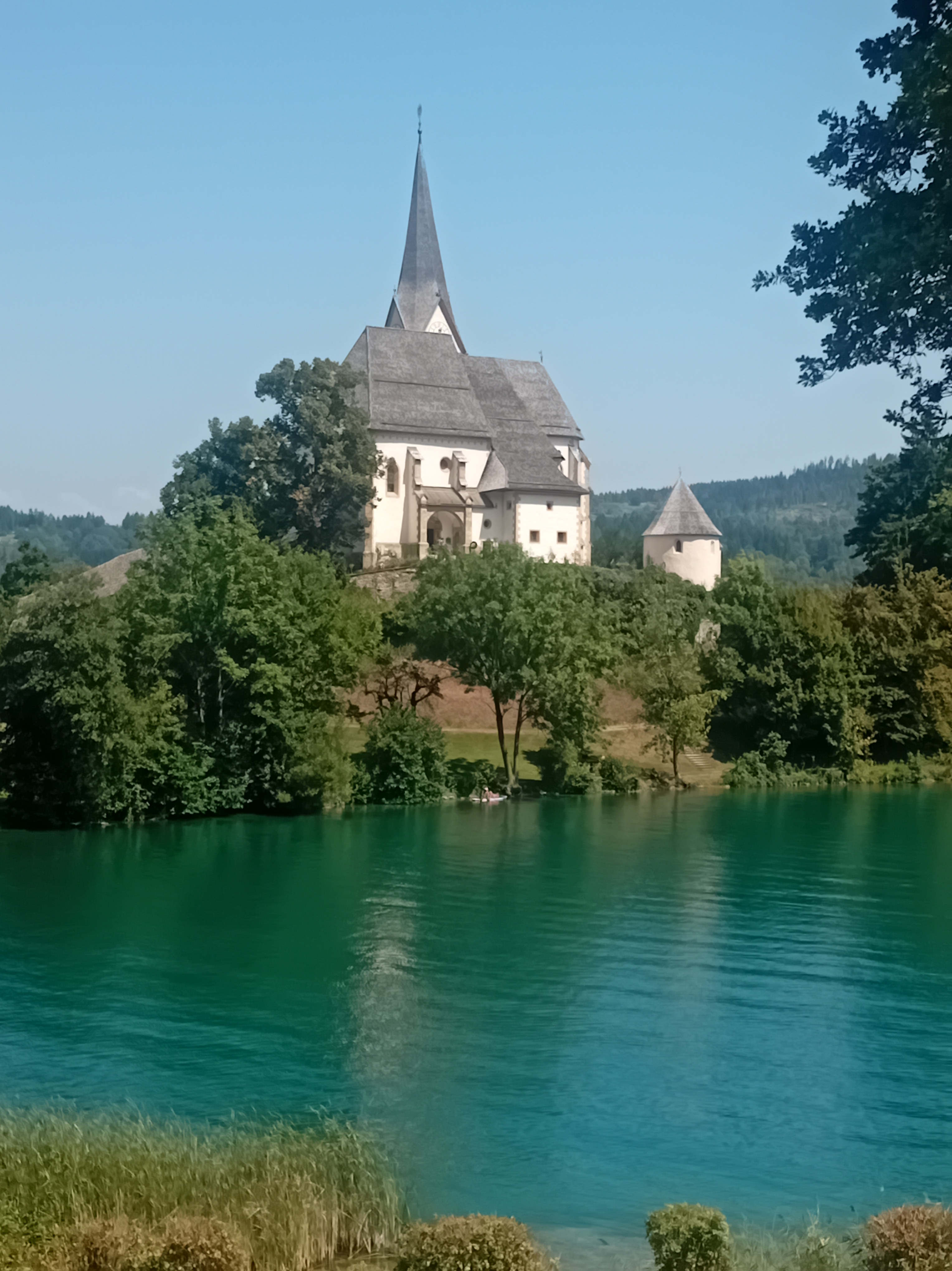
The area has been inhabited since the Bronze Age and burial mounds and lake dwellings have been excavated in the region. There are also Roman remains and churches going back to medieval times. It is well-known as a Marian pilgrimage route and there are a number of churches dedicated to Mary that pilgrims visit along the 266 km trail.
The largest lake in the area is the Worthersee. Its startling colour is due to the limestone in the surrounding hills. There is an ingeneously constructed viewpoint called the Pyramidenkogel built high up on a hill and we took the elevator up to the 10th floor to view the lake below. There were myriad boats, sailors and swimmers out on the lake on a brilliant summer’s day. Hard to believe that in the winter, there is enough ice to turn it into a skating rink, though with climate change, the skating season is becoming shorter.
Vienna is a beautiful city, perhaps the most beautiful city I’ve visited. You walk along a cobbled street, you look up and see lines of Baroque buildings surrounding a wide courtyard, often with a sparkling fountain in its centre. Or you head for the shade of an avenue of trees and at the end, you see a pair of perfectly matched museums – the Naturhistorisches (Natural History) and the Kunshistorisches (Art History) museums. They were commissioned by Franz Joseph 1 and built between 1871 and 1889.
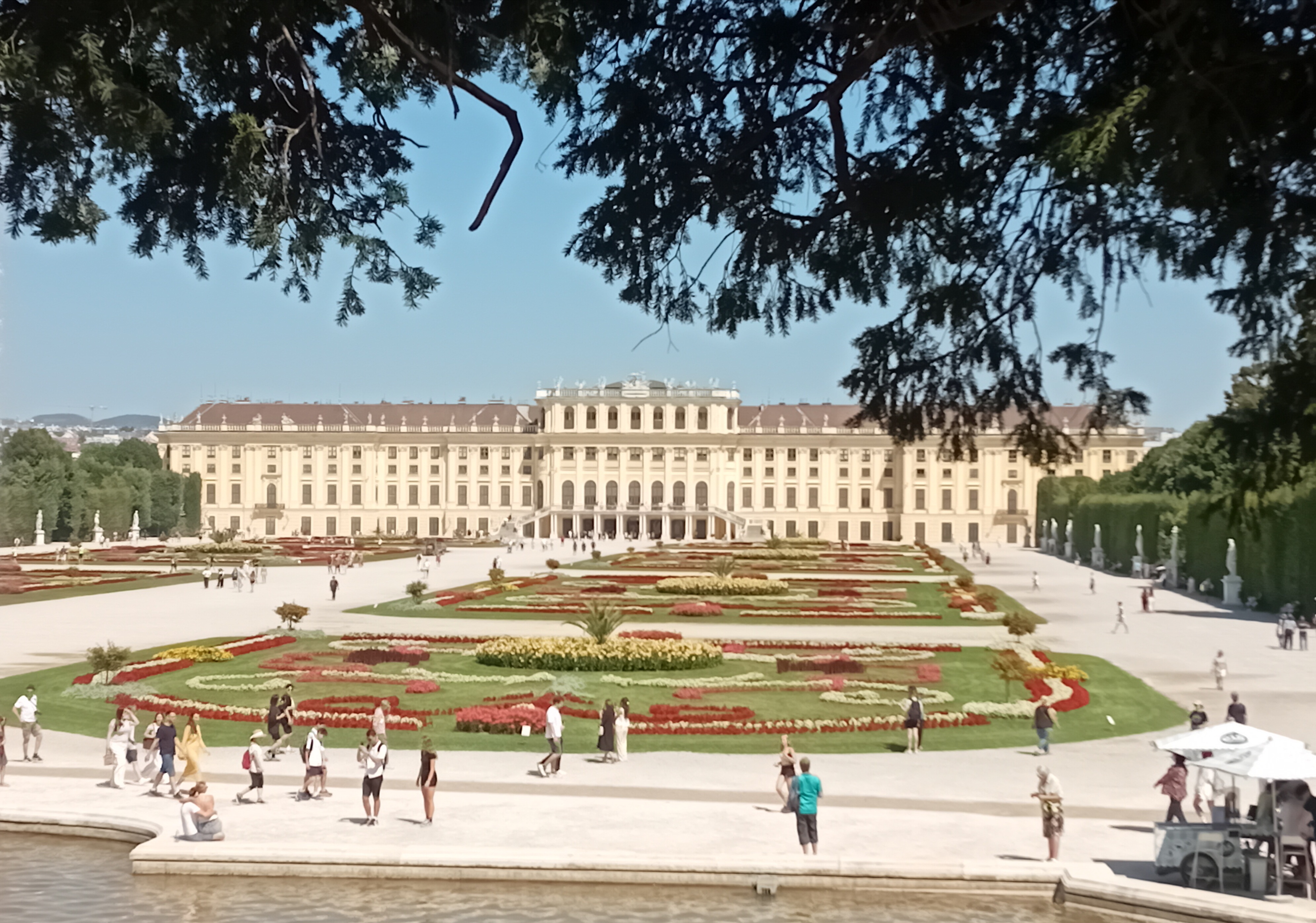
Vienna’s majestic vistas owe much to its past as the capital of the Austro-Hungarian Empire, which was ruled by the Habsburgs for over 600 years. They had access to immense wealth and this shows in the palaces and churches they commissioned. Most impressive of all is their vast summer residence, the Schonbrunn Palace, which has over 1,400 rooms and expansive gardens. We ambled through the estate along with hundreds of other tourists and there was room for us all. We enjoyed coffee and apple strudel in the Gloriette cafe, which has a wonderful view of the gardens and the palace.
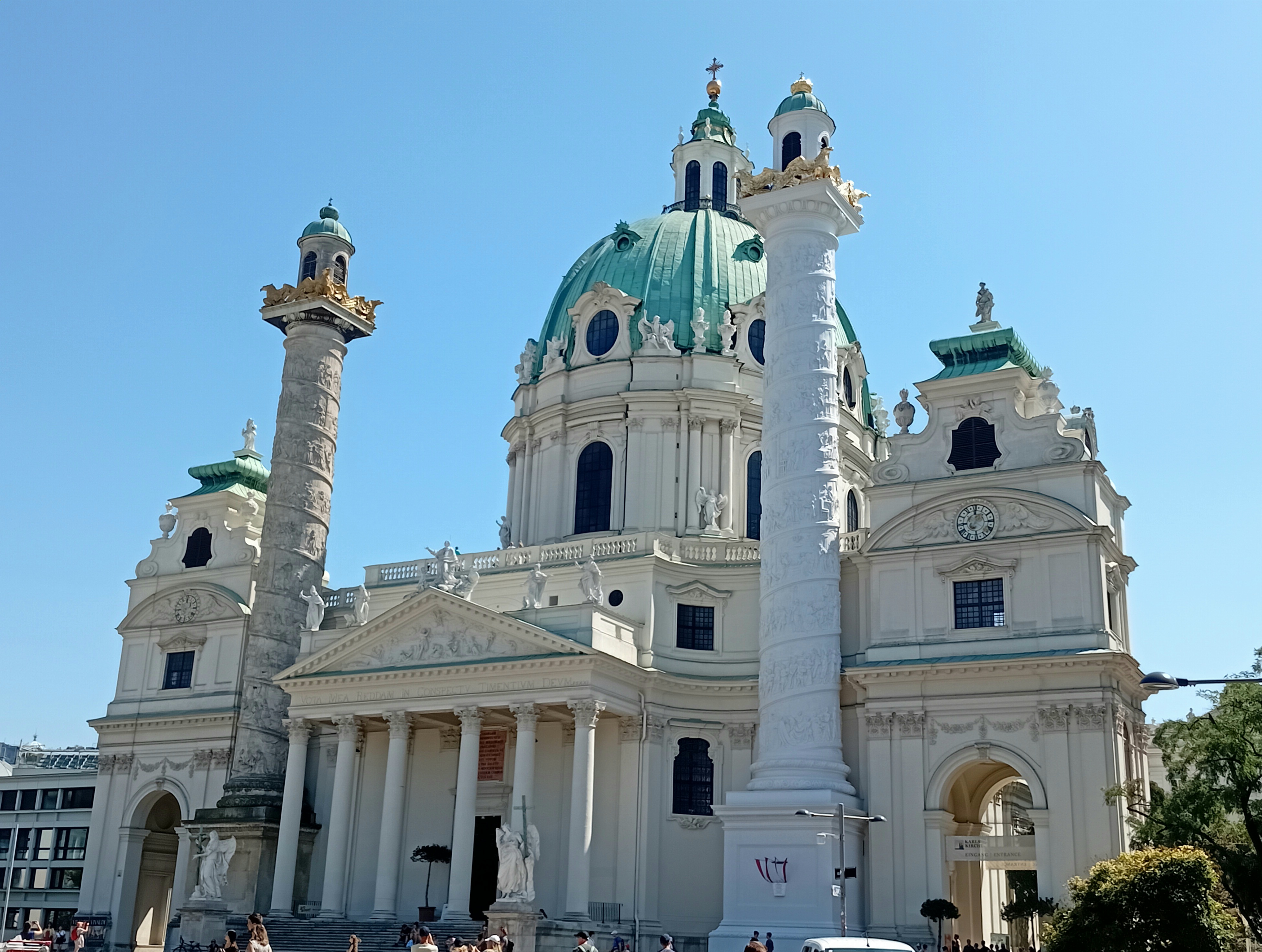
The two main churches in Vienna are the Romanesque/Gothic St Stephen’s Cathedral and the Baroque St Charles’s Church. The former is the seat of the Archbishop of Vienna and its spires dominate the Vienna skyline. It was built on an ancient Roman site and was eventually completed in 1578. The latter is dedicated to Saint Charles Borromeo, who was a leader of the Counter-Reformation. It was commissioned by Charles VI in 1713 in gratitude after a major plague epidemic and completed in 1737.
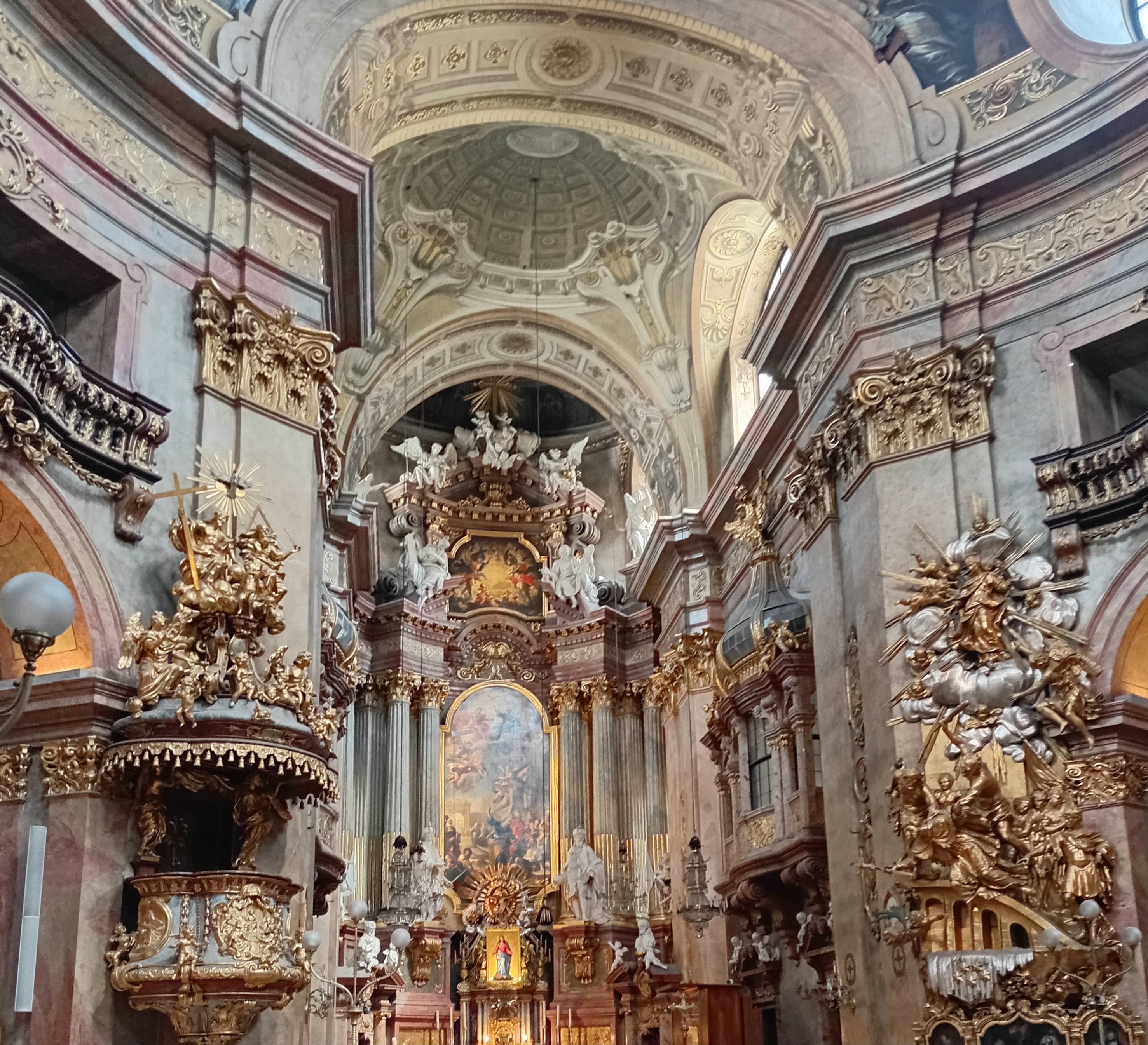
We were lucky to attend an organ recital in the Church of St Peter. Listening to music composed by Vivaldi and Bach, both of whom lived in Vienna, while gazing at the ornate Baroque interior of this 18th century church was a surreal experience. We also went to a concert of chamber music in a monastery where Mozart lived for a short while. The concert was held in a small, beautifully decorated concert hall called the Sala Terrena and was a programme of Viennese music played by a trio of violin, piano and cello. The cellist charmingly introduced the music and waxed lyrical about J S Bach – “not every musician believes in God but every musician believes in Bach”!
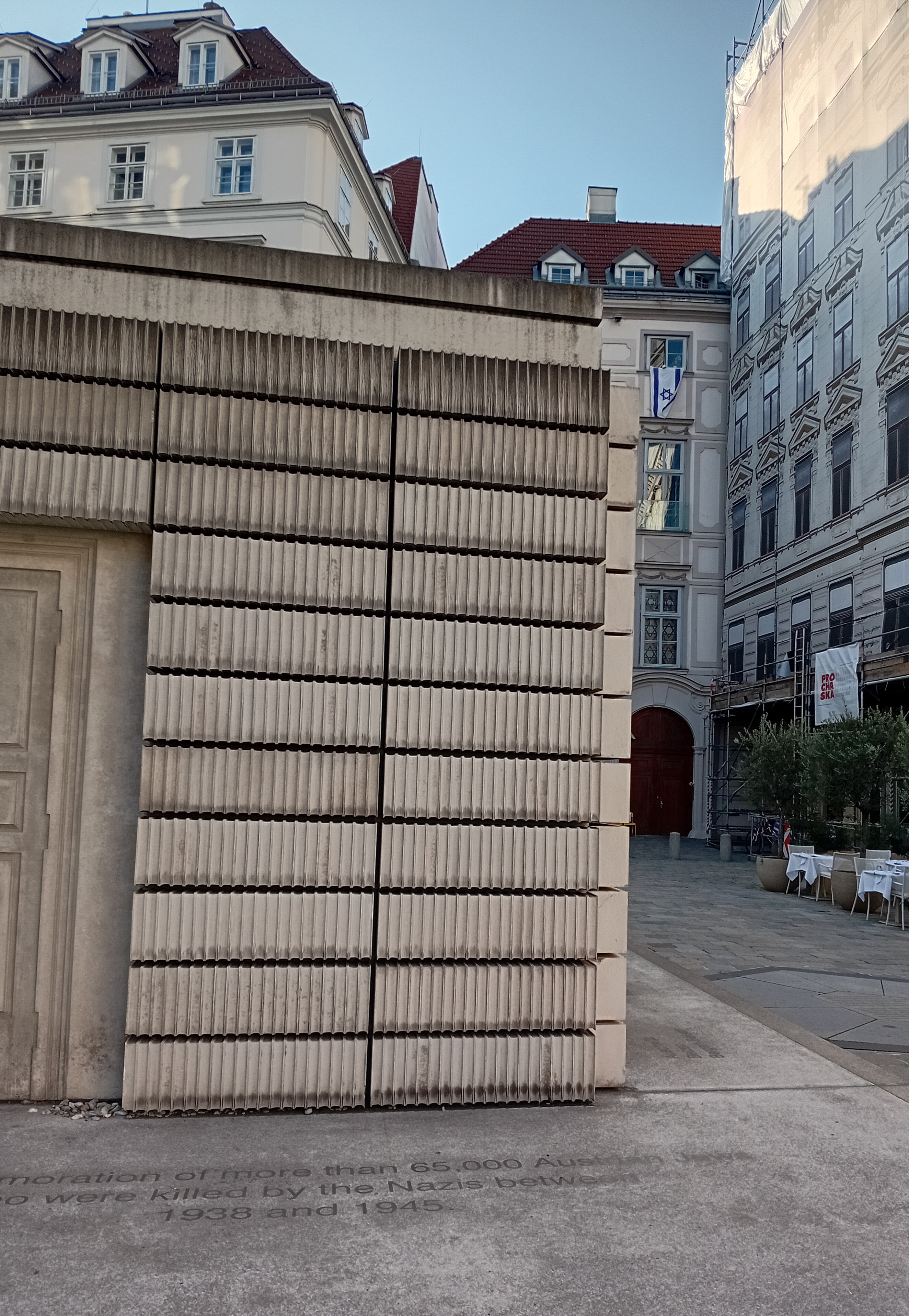
From sublime music to a reminder of Austria’s involvement in the devastation of the 1930s. The beautiful Judenplatz has a sombre memorial to the 65,000 Jewish Austrians who were killed in the 1930s. The square is on the site of a medieval synagogue, which was burned down during a pogram in 1420.
Our time in Vienna was not totally absorbed by palaces, churches and memorials. We were fortunate that our Austrian friends who live four hours away met us in Vienna and they were the most wonderful tour guides. We enjoyed delicious food in their company, including Wiener schnitzel and kaiserschmarrn (a kind of pancake served with fruit compote). We had coffee in a traditional coffee house, where Jim ordered English breakfast tea! and a drink in a roof-top bar with a splendid view of the roof and spires of St Stephen’s Cathedral.


 Travels from New Zealand